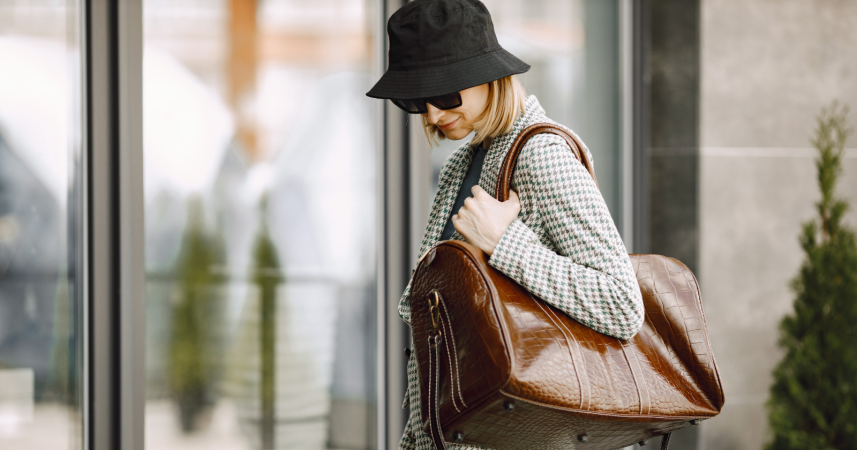
Old money doesn’t carry bags that shout for attention. They choose pieces that are subtle, lived in, and quietly well made. It’s not about proving wealth. It’s about ease, confidence, and timeless style.

Add VegOut to your Google News feed. 
I spent a good chunk of my career working with wealthy families, and one of the first things I noticed was how radically different their relationship with luxury is compared to the people trying to look wealthy.
Real wealth tends to be quiet. Stable. Comfortable.
Meanwhile, aspirational luxury is often loud and a little frantic, like it is trying to convince you of something.
You can see this dynamic clearly in handbags. Some bags project ease and generational confidence.
Others project brand worship and insecurity. And the funny thing is, the difference has almost nothing to do with the price tag.
If you’ve ever wondered why certain bags immediately give off a trying-too-hard vibe while others feel timeless and elegant.
Let’s take a walk through seven types that usually signal performative wealth rather than the real thing.
I promise this will be both fun and a little eye-opening.
1) The logo-covered tote that can be seen from space
There is a particular kind of tote that is so aggressively stamped with logos that it becomes its own form of advertising. You can spot it a mile away.
Sometimes it feels like the bag is wearing its owner rather than the other way around.
Whenever I see these totes, I always wonder what the buyer was hoping people would think.
Recognition. Status. Validation. It is rarely about function or quality.
Old money simply does not care whether strangers can identify their designer from across the room. They care about craftsmanship. Fit. A feeling of ease.
The kind of bag you forget you’re carrying because it blends so naturally into your life.
When I worked in finance, one of our wealthiest clients carried a plain canvas bag to every meeting.
Soft. Unbranded. A little worn at the corners. Not a single person questioned its value.
2) The trendy bag everyone just bought this month
Whenever a bag goes viral online, you can almost predict what happens next.
It shows up on sidewalks, brunch tables, influencer reels, and mall benches all at once. It becomes the new uniform for people who want to feel current.
The problem is that trend-heavy pieces age in dog years. They burn bright and fade fast.
Old money rarely buys anything that feels like a moment. They buy what lasts.
They lean on styles that have existed for decades and will still look good in decades.
Their relationship with fashion is slower and steadier, almost like a long-term friendship instead of a passionate fling.
When a bag depends on hype to feel relevant, it loses its power the moment the hype moves on.
3) The overly structured bag that looks like a trophy
Some bags are so stiff and polished that they look more like architectural models than something meant to be carried in daily life.
They have sharp corners, shiny hardware, and a posture so formal it almost stands up on its own.
These structured bags often appeal to people who believe luxury should look flawless. But real wealth is rarely that rigid.
Old money gravitates toward pieces that soften over time. Bags with relaxed silhouettes, natural slouching, and materials that warm to the touch.
There is an ease to them, almost like a favorite sweater that has molded itself to your shape.
Whenever a bag looks like it needs its own bodyguard, it tends to send a very different message.
More performance than comfort. More wanting to be impressive than wanting to be practical.
4) The limited edition bag designed specifically for flexing
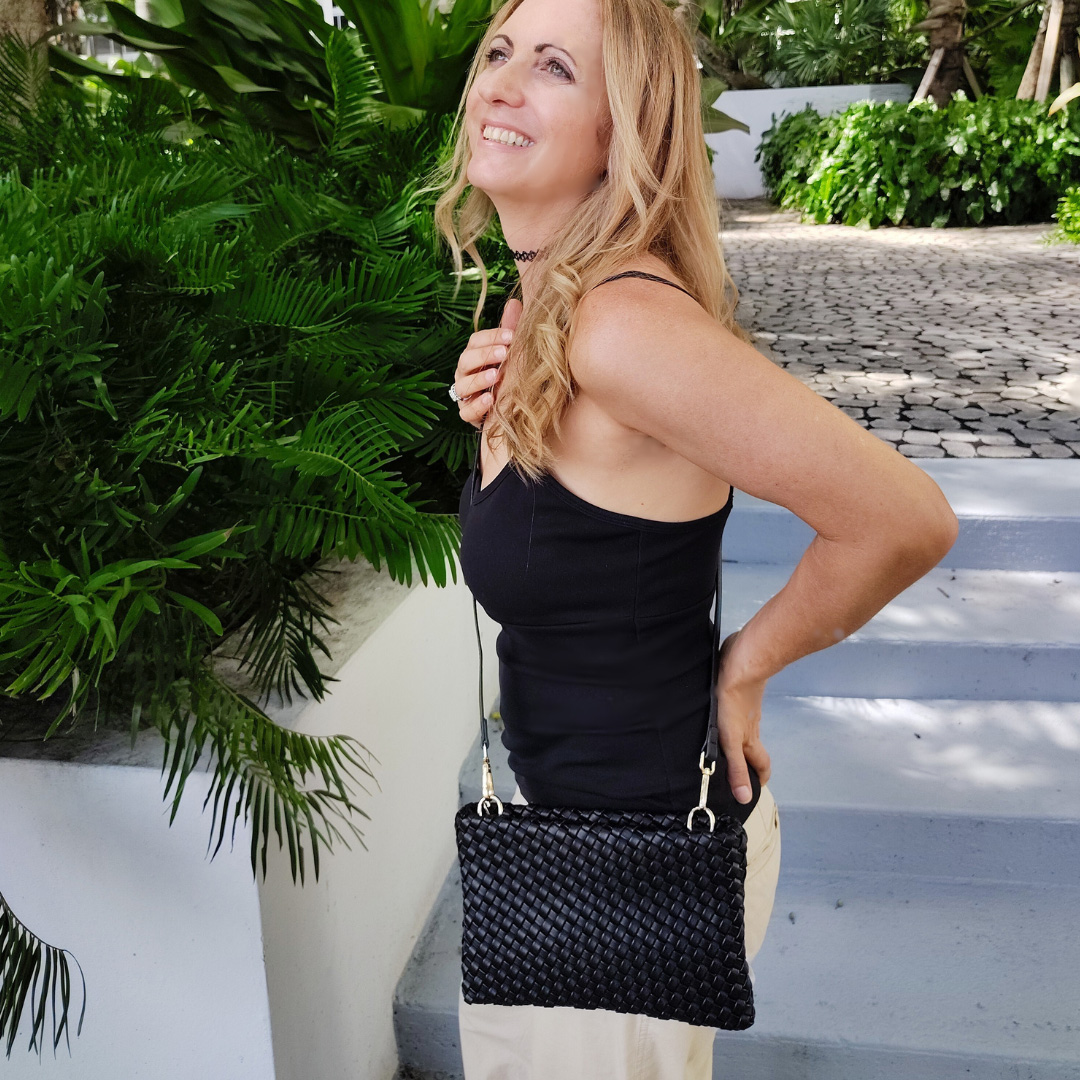
Courtesy of Green Vegan Bags
Limited edition bags are often fun, but they are also intentionally created to be attention grabbing.
Unusual shapes. Loud colors. Patterns that feel like they belong in a gallery. Sometimes even celebrity partnerships that inflate the hype even more.
They are built to start conversations, and that is exactly why new-money buyers flock to them.
But people with generational wealth rarely want their belongings to be the center of the room.
They are more interested in pieces that quietly outlast trends. Something practical enough for daily life and refined enough for any setting.
If a bag looks like it requires a spotlight to be fully appreciated, old money tends to walk in the other direction.
5) The oversized business tote that screams importance
There is a very specific kind of large, heavy tote that people buy when they want to seem important.
It is usually boxy, reinforced, and big enough to smuggle a medium-sized houseplant. You can almost hear it announcing the owner’s supposed busyness.
I used to see these constantly in the corporate world. People carried them as if the size would increase their perceived authority.
Real wealth does not need to put itself on display like this. The wealthiest clients I worked with often carried small, simple bags.
Maybe a book, keys, a wallet, nothing more. When they needed something functional, it was soft, flexible, and lived-in.
Oversized status totes often signal ambition more than comfort.
They suggest someone who wants to prove they belong in certain rooms rather than someone who already feels at home in them.
6) The entry-level luxury starter bag
Every big designer has a few bags that are meant to usher newcomers into the brand.
These bags are widely recognizable, heavily marketed, and often come with signature elements that scream the label’s name.
There is nothing wrong with them. They are often beautiful.
But they do not project old money. They project beginner energy. Training wheels. The first milestone for someone exploring luxury for the first time.
Old money tends to skip over these pieces entirely. They move straight into the quieter lines. The under-advertised collections.
The bags without logos, without signature clasps, without the branding cues that shout for attention.
Their taste was shaped by exposure, history, and familiarity. Not by marketing.
7) The heavily embellished bag that sparkles more than a holiday tree
Any bag covered in crystals, chains, charms, studs, logos, metallics, or mixed hardware sends a very specific signal. It is fun. It is expressive. But it is also very loud.
Old money rarely gravitates toward ornamentation. They prefer soft leather, canvas, linen, or suede. Materials that age gently.
Finishes that feel natural and tactile. Colors that stay in the background instead of jumping forward.
I once met an older woman at a local nursery who carried a simple, softened leather crossbody that looked like it had lived a whole life.
She told me she had owned it for nearly twenty years. She said it felt like part of her at this point.
That is what old money energy looks like in the wild. Comfort. Loyalty. Quiet excellence.
What old money actually carries
If you put all these preferences together, you start to see a pattern. Bags that project quiet wealth have a different relationship with attention.
They tend to be crafted from high-quality materials but do not advertise themselves.
They age well. They do not rely on novelty or trend cycles. They blend into a wardrobe instead of dominating it.
Many of them look almost plain at first glance. But that plainness is intentional. It asks you to look closer.
To touch the stitching. To examine the hardware. To feel the softness of the leather. The beauty is in the craftsmanship, not the branding.
This is why old money often gravitates toward brands that are more discreet. Sometimes, even small artisan makers. The value is in longevity.
Ease. Practicality. They buy items the way some people plant trees. They want them to last across seasons, moves, and chapters.
There is also an emotional component. Old money often values continuity. A bag becomes part of their story.
It accompanies them through college, work, children, travels, and old age. It carries memories and normal days, not just dinner reservations.
Compare that with the rotation of trendy or logo-heavy bags that get swapped out the second the algorithm moves on.
One approach builds a relationship. The other builds a display.
Final thoughts
Carrying a trendy or flashy bag does not make you wrong or shallow. Personal style should always be personal.
But understanding how wealth signals itself can be enlightening, especially if you are someone who appreciates timelessness, subtlety, and quiet confidence.
The most interesting thing I learned from years of observing luxury buying habits is that wealth stops needing to prove itself once it feels secure.
That is why the quietest bags often belong to the people with the deepest roots.
They do not need the world to recognize their bag. They just need it to fit their life.
And that is a completely different kind of status.