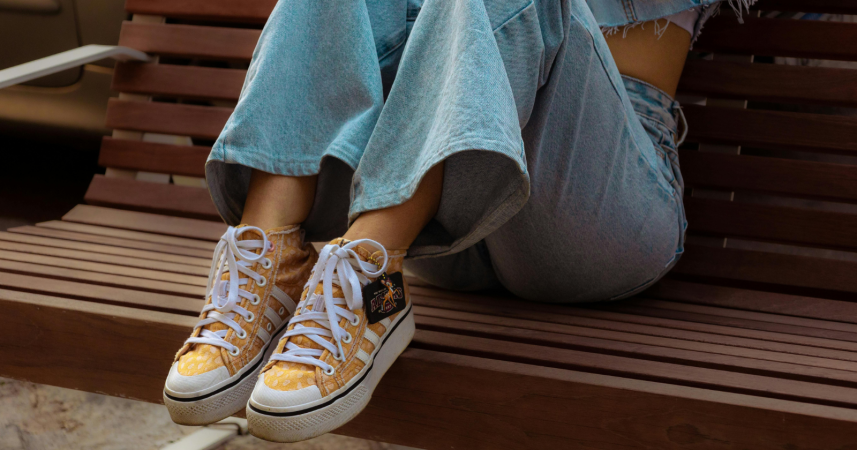
You don’t need a giant shoe wardrobe—you need a thoughtful one.

Add VegOut to your Google News feed. 
We underestimate how much our shoes speak for us.
Shoes may be close to the ground but they're high on impact.
They frame your posture, hint at how you treat your things, and—fairly or not—shape how others experience your competence and taste.
If you’ve ever felt “off” in an outfit you loved, your footwear might be the saboteur.
Here are six choices that quietly drag your whole look down, plus easy fixes so your shoes start working for you, not against you:
1) Scuffed or dirty shoes
Simple, obvious—and often ignored.
When the upper is hazy with dust, the heel is caked in sidewalk grime, or the toe box is chewed up, everything else loses sharpness.
It’s like putting a fingerprint-smudged lens on a great camera; the image will never look crisp.
There’s a psychology piece here: We instinctively map object care to self-care.
It’s not about perfectionism—it’s about congruence.
Clean shoes say, “I notice the small things.”
Dirty shoes say, “I miss them.”
Ask yourself: If I blurred out my clothes and only showed my shoes, would the impression still be “put together”?
If not, clean first, replace later.
2) Shoes that mismatch the situation
You know the look: Gym trainers with tailored trousers; glitter stilettos to a coffee meeting at 10 a.m.; beach slides at a business lunch.
The outfit and the footwear belong to different stories, and you can feel the dissonance.
Try the “rule of two”: If your shoe disagrees with your outfit in two categories (say, ultra-shiny and chunky with a linen work dress), swap it.
Keep disagreements to one, max. None of this means sacrificing comfort.
Plenty of sleek, city-appropriate walking shoes exist; plenty of sandals are structured enough for meetings.
I’m a trail runner who loves long walks to local farmers’ markets, and I promise: Your feet can be happy without broadcast sneakers in every context.
3) Shoes that fight your posture and gait
There’s the obvious discomfort of a too-small toe box, but the subtler tell—what really cheapens the look—is how ill-fitting shoes distort the way you move.
When a heel counter collapses, your ankles cave inward and your stride hesitates; when the shoe is half a size too big, your gait becomes a cautious shuffle.
People don’t always clock the shoe; they feel your awkwardness.
Confidence is embodied.
If your footwear changes your posture from open and grounded to tentative and clenched, people sense it in seconds; if you’re choosing plant-based materials, prioritize breathable linings so your foot stays dry and stable.
Consider a discreet insole to stop sliding and improve posture.
A shoe that helps you stand tall and walk naturally will make a basic outfit look intentional—and make you feel it.
4) Logos, fakes, and loud branding doing the talking for you
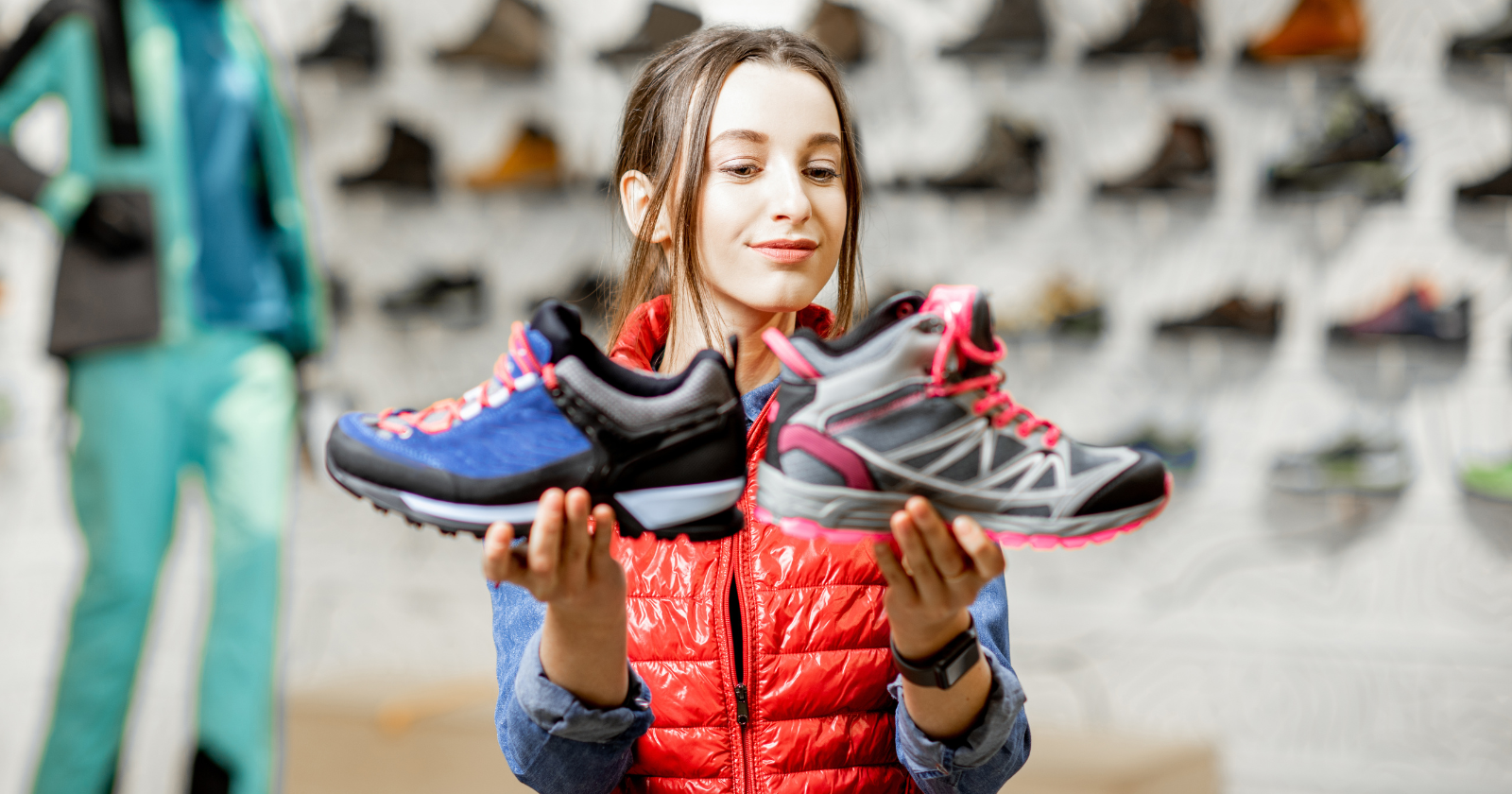
I’m not anti-logo—I’m anti-logo-doing-the-talking.
Obvious counterfeits or in-your-face branding have a way of reading insecure, even when the rest of your outfit is tasteful.
It’s not just an ethics conversation (though that matters); it’s about the signal.
When the label shouts, it drowns out your style and says, “I need you to know this is expensive,” which is, paradoxically, the quickest way to make everything look cheaper.
As one stylist friend puts it, “Quality whispers.”
The eye reads clean lines, balanced proportions, and good finishing as high-end long before it registers a logo.
If you truly love a branded style, choose the version where the logo’s integrated, not plastered.
Let your outfit—your point of view—be the headline.
5) Microtrends that overwhelm your wardrobe
We all get tempted.
Maybe it’s a mega-platform, a cartoonish square toe, or a clear PVC mule that fogs up after three blocks.
Trending shoes can be playful, but when a trend is so loud it steals focus from everything else you wear, your outfit starts to feel like a prop.
That “try-hard” energy is what cheapens the look, not the price tag.
6) Worn soles, peeling edges, and wobbly heels
Most people glance at shoes from behind or from the side.
That’s where the secrets live: Chewed-down heel tips, peeling edge paint, separating soles.
It’s like chipped nail polish—you don’t need a salon, but you do need a tidy edge.
This is where my finance brain kicks in.
The cheapest option isn’t the one with the lowest tag—it’s the one with the lowest cost per wear.
A quick repair can turn a $90 pair into a 200-wear workhorse.
Ignore the repair, and you’re buying another $90 pair in six months.
If the upper still looks good but the sole’s gone, ask a cobbler about resoling synthetics or adding protective half-soles.
It’s more possible than people think.
The result is cleaner lines and a steadier step—both read as higher quality.
Elevate your look today
You don’t need a giant shoe wardrobe—you need a thoughtful one.
Two everyday pairs, one polished pair for meetings, one weather-ready pair, and one “joy” pair that still respects your outfit and that’s enough for most weeks.
Yes, you can do all of this in a values-aligned way.
Cruelty-free materials are getting smarter and tougher every year, but they still deserve care.
In fact, caring for them well is part of the point: Stewardship, not disposability.
Your shoes don’t need to be expensive to elevate your presence.
They just need to be chosen—and maintained—on purpose.
When the foundation is right, everything you wear looks more considered: When you feel that click of congruence from head to toe?
You move through the world like someone whose time, values, and voice matter—because they do.