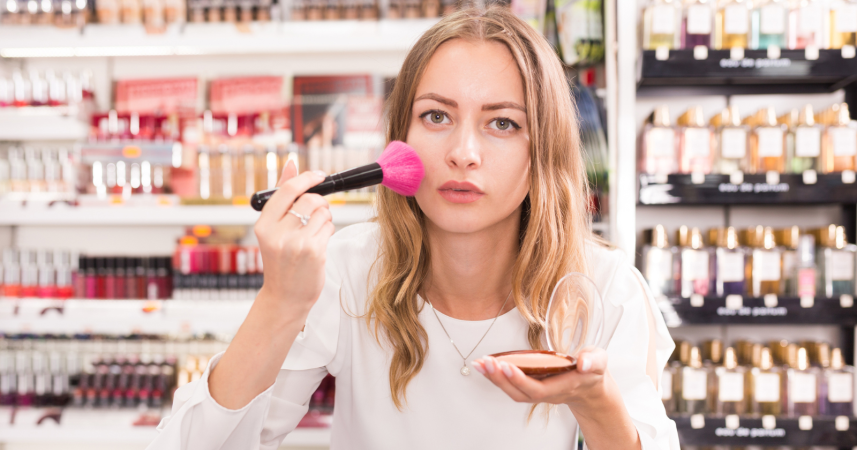
That moment when you flip over your favorite lipstick and discover carmine has been hiding there all along? Yeah, I've been there too.

Add VegOut to your Google News feed. 
When I went vegan at 35, I thought I had it figured out. I'd spent weeks researching food labels, memorizing hidden animal ingredients, and restocking my pantry. But my bathroom? That took another six months to even cross my mind.
It wasn't until I was standing in my bathroom one morning, mascara wand in hand, that I thought to flip the tube over. What I found sent me down a rabbit hole I wasn't prepared for.
Turns out, the beauty industry has been sneaking animal-derived ingredients into products for decades, often under names so scientific-sounding that most of us never think to question them. Here are eight products that caught me completely off guard.
1. My everyday lipstick
I'd been wearing the same shade of berry lipstick for three years. It was my signature color, the one Marcus always said made my eyes look brighter. Then I learned about carmine.
Carmine, also listed as cochineal, carminic acid, or CI 75470, comes from crushed cochineal insects. It takes approximately 70,000 beetles to produce one pound of this red dye. It's in lipsticks, blushes, and even some red food products.
That berry shade I loved? Full of it. Have you checked your favorite red or pink products lately?
2. My trusted nail polish
Nail polish seemed so obviously chemical-based that I never considered it might contain animal ingredients. I was wrong.
Many polishes contain guanine, a shimmery substance derived from fish scales. It gives polish that pearlescent, iridescent quality. Some brands also use carmine for red shades or keratin from animal hooves and horns. The polish I'd been using for special occasions had both.
Now I look for brands that specifically label themselves vegan and cruelty-free.
3. My anti-aging serum
After leaving finance, I finally had time to develop an actual skincare routine. I invested in what I thought was a high-quality anti-aging serum. The ingredient that made it so effective? Retinol derived from animal sources, plus collagen and elastin from animal connective tissues.
Many serums also contain squalene from shark liver oil, though plant-derived squalane (with an 'a') exists as an alternative. When I discovered this, I felt that familiar pang of realizing my values and my habits weren't aligned. It's uncomfortable, but it's also an opportunity to do better.
4. My gentle face wash
My face wash was marketed as gentle and natural. It contained honey and beeswax, which I'd somehow overlooked because they felt so benign compared to other animal products.
Whether honey and beeswax fit into your personal ethics is worth considering. For me, learning about commercial beekeeping practices helped clarify my stance. The product also contained stearic acid, which can be animal or plant-derived. Unless a product specifies plant-based stearic acid, there's no way to know for certain.
5. My conditioning shampoo
Shampoo was another product I assumed was safe. Then I learned about keratin treatments and keratin-infused shampoos. Keratin is a protein typically sourced from animal hooves, horns, feathers, or hair.
My conditioning shampoo also contained lanolin, a waxy substance from sheep's wool. While some argue lanolin doesn't harm sheep, the wool industry's practices gave me pause. I've since switched to plant-based alternatives that work just as well for my post-trail-run hair situation.
6. My waterproof mascara
That mascara moment I mentioned earlier? It was my waterproof formula. It contained beeswax for water resistance and guanine for shimmer. Some mascaras also use shellac, a resin secreted by lac beetles, to create that glossy finish.
Finding a vegan waterproof mascara that actually stays put during a sweaty trail run took some trial and error. But they exist, and they work. Sometimes the search itself teaches us to be more intentional consumers.
7. My exfoliating body scrub
Body scrubs often contain crushed shells or natural exfoliants that seem harmless. Mine contained silk powder, also called sericin, derived from silkworms. The process of harvesting silk typically involves boiling the cocoons with the silkworms still inside.
Some scrubs also contain pearl powder or ground oyster shells. These ingredients are marketed as luxurious and natural, but they're not vegan. I've found that sugar, salt, and ground walnut shells work beautifully as alternatives.
8. My everyday moisturizer
This one hurt the most because I'd been using the same moisturizer since my finance days. It was my one consistent self-care ritual during those 80-hour weeks.
It contained lanolin, glycerin from animal fats, and collagen. Three animal-derived ingredients in one product I'd trusted for over a decade. Glycerin is particularly tricky because it can come from plant or animal sources, and labels rarely specify.
When in doubt, I now contact companies directly or choose products certified vegan by organizations like Vegan Action.
Final thoughts
Discovering these ingredients in my beauty products felt like a betrayal at first. How had I missed this for so long? But I've learned to replace that self-criticism with curiosity. We can only do better once we know better.
The beauty industry isn't designed for transparency. Ingredient lists are intentionally complex, and marketing language can be misleading. "Natural" doesn't mean vegan. "Cruelty-free" doesn't always mean vegan either.
My advice? Pick one product at a time. Research it. Find an alternative if needed. This isn't about perfection or purity. It's about alignment, about making choices that reflect who we're becoming. What's one product in your bathroom you've never thought to check?