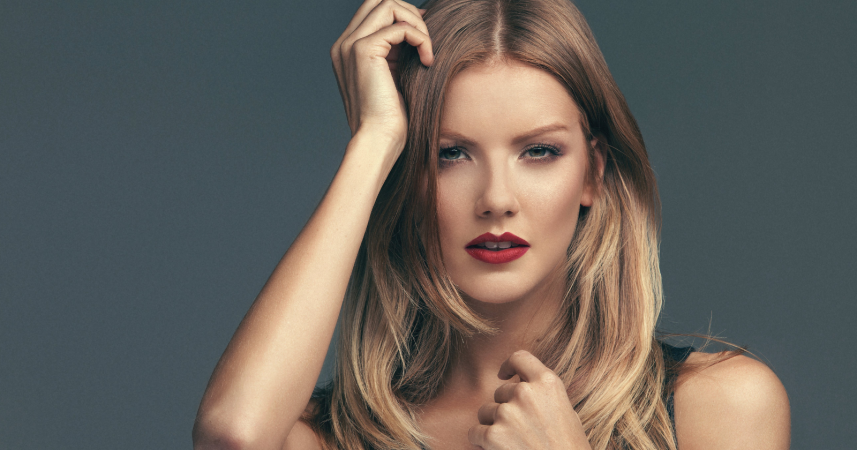
To wear these shades in the 80s was to instantly step into confidence, glamour, and authority.

Add VegOut to your Google News feed. 
My mother kept her lipsticks lined up like soldiers in her bathroom drawer—each tube a weapon in her arsenal of 1980s sophistication. The burgundy Dior for parent-teacher conferences. The frosted pink Revlon for dinner parties. That untouchable Chanel, saved for occasions that demanded its particular magic. She applied them with surgical precision and the confidence of someone who understood that in 1985, the right shade of lipstick could speak louder than a Harvard MBA.
The 1980s didn't apologize for excess, especially when it came to lips. This was the decade that transformed lipstick from cosmetic to declaration—a portable form of power you could pull from your purse and reapply after every coffee meeting, every confrontation, every small victory. Whether you were negotiating a merger or navigating the dance floor at Limelight, your lipstick announced your intentions before you opened your mouth.
1. Revlon's Cherries in the Snow
Before MAC's Ruby Woo became the red lipstick, there was Cherries in the Snow—a blue-based red that Revlon created in 1953 but which found its true purpose during the Reagan era. Women discovered that its cool undertones performed a kind of optical alchemy: teeth appeared whiter, skin looked clearer, and somehow it made shoulder pads seem less aggressive and more authoritative.
By 1987, this shade had become corporate America's unofficial uniform. It was the lipstick equivalent of the IBM dress code—serious enough for the boardroom, striking enough to be remembered. Every woman navigating the boys' club of '80s business had this in her purse, worn down to a sliver from constant reapplication between presentations and power lunches.
The shade carried its own sociology. Wearing Cherries in the Snow meant you understood the rules but weren't imprisoned by them. You could play the game while subtly signaling that you might, at any moment, flip the board.
2. MAC's Russian Red
When Madonna wore Russian Red throughout her Blond Ambition Tour, she was crystallizing what downtown New York had known since MAC released it in 1987: matte lips were rebellion. Russian Red arrived as the antithesis to the decade's glossy excess—flat, uncompromising, almost confrontational in its refusal to catch the light.
The formula was notoriously unforgiving. Makeup artists called it "the lip ripper" for its tendency to emphasize every line and dry patch. But that difficulty was precisely the point. Russian Red wasn't for casual wear; it demanded commitment. You had to earn it through exfoliation, perfect application, and the willingness to reapply without a mirror because checking would reveal the inevitable feathering.
Artists, musicians, and anyone rejecting Wall Street's vision of success claimed Russian Red as their flag. It became visual shorthand for "I'm not here to make you comfortable." The discomfort it caused the wearer was a small price for the discomfort it caused everyone else.
3. Chanel's Rouge Allure in Pirate
Pirate emerged from Chanel in 1984 as the thinking woman's red—sophisticated enough for Le Bernardin, bold enough for the Mudd Club. With its perfect balance of blue undertones and creamy finish, it was what you wore when you wanted to feel French, even if your passport said Paramus.
Fashion editors hoarded Pirate like currency. At $45 a tube—roughly $130 in today's money—it represented a significant investment in one's appearance. But the payoff was immediate: Pirate photographed beautifully under any light, a crucial quality in an era suddenly obsessed with documentation. It was the lipstick that made you look good in Polaroids, even the unflattering ones taken with flash at 2 AM.
Women would save for months to acquire it, then guard it zealously. Lending your Pirate was an act of profound friendship. Having it meant you'd arrived—or you were committed enough to the performance of arrival that the difference became moot.
4. Clinique's Black Honey
While the rest of the beauty world went neon, Clinique performed a quiet revolution with Almost Lipstick in Black Honey. The shade looked menacing in its clear tube—a purple-brown that seemed designed for witches. But on lips, it transformed into the perfect berry stain, different on everyone yet flattering to all.
Black Honey became the intellectual's lipstick of choice. It required no mirror, no precision, no performance. You could apply it in a moving taxi, during a conference call, or while reading Baudrillard at the Whitney. It was the anti-'80s '80s lipstick—which made it perfectly, paradoxically of its time.
This was the shade that lived in the bags of women who found the decade's beauty demands exhausting but still wanted to participate. It offered a way to look polished without looking like you'd tried, sophisticated without submission to trends. Black Honey suggested you had better things to think about than lipstick, while still acknowledging that lipstick mattered.
5. YSL's Fuchsia Pink (No. 19)
Yves Saint Laurent's No. 19 Fuchsia didn't request attention—it demanded it, commanded it, possibly threatened legal action if denied it. This electric orchid shade, launched in 1979 but reaching full power by 1985, was less a cosmetic choice than a lifestyle commitment.
No. 19 was for women who treated Tuesday like opening night. It required not just confidence but a certain athletic approach to femininity—you had to be fit enough to carry it. The shade turned every entrance into an event, every conversation into a performance. It was exhausting and exhilarating in equal measure.
The women who wore No. 19 understood something essential about the '80s: in a decade of excess, the only way to stand out was to be the most excessive. This fuchsia didn't just pop against the era's neutral power suits—it waged war against them. It was the lipstick equivalent of dropping a chandelier into a conference room.
6. Revlon's Toast of New York
The beauty world discovered brown lipstick in 1986, and Toast of New York became its sophisticated ambassador. This wasn't the grunge brown that would define the '90s—it was warmer, richer, with enough red undertones to keep it elegant rather than edgy.
Toast of New York succeeded because it zigged where others zagged. In an ocean of fuchsias and reds, brown lips provided visual relief while maintaining sophistication. It suggested you were too confident for color theory, too established to need attention-grabbing shades. The effect was deliberately understated—wealth whispers, after all.
Cindy Crawford made it famous, but the shade's real power was its accessibility. Unlike Chanel or YSL, Revlon's price point meant anyone could achieve that supermodel nonchalance. It democratized sophistication in a decade obsessed with hierarchy, offering a secret handshake to those who understood that sometimes the boldest choice is restraint.
7. The Frosted Pink Phenomenon
No single brand owned frosted pink because every brand needed one. Revlon's Pink Pearl, Maybelline's Crystal Rose, Estée Lauder's Pink Shimmer—these weren't different shades so much as regional dialects of the same language. The language of aspirational femininity, spoken fluently from Dallas to Manhattan.
Frosted pink operated on a different logic from other lipsticks. It didn't particularly flatter anyone—the shimmer emphasized lip lines, the pink washed out certain skin tones, and the overall effect could read either space-age or dated depending on the light. But flattery wasn't the point. Frosted pink was about participating in a collective fantasy of what sophisticated womanhood looked like in 1987.
Applied with mandatory lip gloss (always Lancôme Juicy Tubes or similar), it created that wet-look finish that defined the decade's aesthetic: artificial, obvious, and absolutely committed to its own artifice. It was drag without the subversion, performance without the wink. It was sincere in its insincerity, which might have been the most '80s thing about it.
8. Dior's Rouge 999
Christian Dior created 999 in 1953, but the 1980s transformed it from classic to crucial. This was red at its most essential—neither too warm nor too cool, just pure, saturated color that looked expensive even if you'd bought it with your rent money.
999 became a rite of passage. You didn't start with 999; you arrived at it after mastering lesser reds. It was the lipstick equivalent of graduating from costume jewelry to inherited pearls. The shade conveyed authority without aggression, sensuality without desperation, tradition without stuffiness. It was, in short, perfect.
Women collected backup tubes like insurance policies. Having 999 meant you were prepared for anything—an unexpected invitation to the Met Gala, a surprise dinner at Lutèce, or simply a Tuesday that demanded excellence. It was the shade that made you feel like the person you were still becoming.
The lasting stain
These eight shades did more than color a decade—they codified a particular relationship between women and power that we're still negotiating today. The 1980s lipstick wasn't about attracting attention (though it certainly did that); it was about commanding space, marking territory, refusing to recede into the background of Reagan-era America.
When I find my mother's old lipsticks in a drawer—the Pirate dried to a fossil, the Cherries in the Snow scraped clean—I understand them differently now. They weren't just makeup. They were tools in a careful construction of authority, worn by women who understood that in a world that constantly asked them to be less, the simple act of painting their lips bright red was its own small revolution.
Today's lipstick culture, with its nude lips and your-lips-but-better shades, seems almost apologetic by comparison. But when we occasionally reach for that perfect red, that bold fuchsia, that unapologetic brown, we're channeling something beyond nostalgia. We're remembering a time when lipstick was armor, when the right shade could change the temperature of a room, when women understood that sometimes the most radical thing you could do was refuse to tone it down.
The sophisticated woman of the '80s didn't just wear lipstick—she deployed it strategically, understanding that in the semiotics of power dressing, every detail mattered. These eight shades weren't just colors. They were declarations of intent, painted on one lip at a time.
What’s Your Plant-Powered Archetype?
Ever wonder what your everyday habits say about your deeper purpose—and how they ripple out to impact the planet?
This 90-second quiz reveals the plant-powered role you’re here to play, and the tiny shift that makes it even more powerful.
12 fun questions. Instant results. Surprisingly accurate.