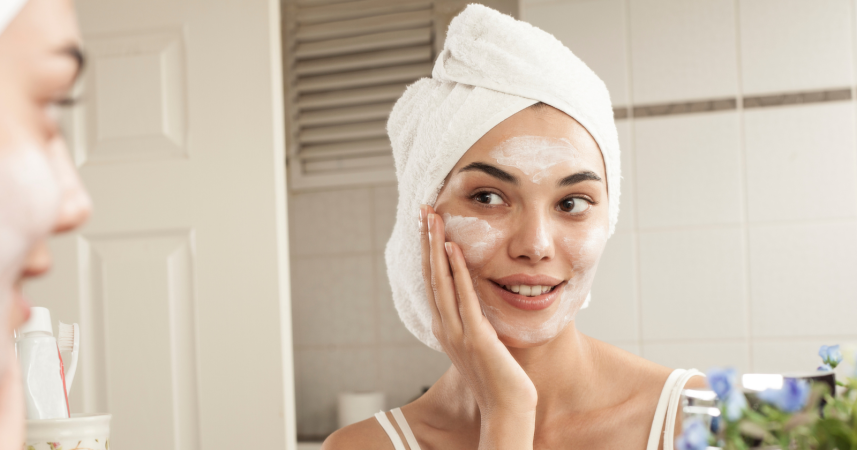
A small change in how I layer my products completely shifted my skin—and my mindset—more than any new serum ever has.

Add VegOut to your Google News feed. 
If you’ve spent any time in the skincare corners of TikTok, Reddit, or Instagram, you’ve probably stumbled across routines that sound like they belong in a cookbook rather than a bathroom cabinet.
There’s slugging (slathering your face in petroleum jelly so you look like a glazed donut). There’s skin fasting (literally doing nothing to your skin for days at a time). And then there are trends with names that make you laugh before you even know what they mean.
So when I first heard about the “sandwich method,” I rolled my eyes. Another food metaphor in skincare? Surely it was just a gimmick.
But after months of fighting with retinol and constantly dealing with red, flaky patches, my curiosity got the best of me. I thought: what if this silly-sounding method could actually solve my problem?
Spoiler: it did. And now, after a few weeks of using the sandwich method, I can honestly say I’m never going back.
What the sandwich method actually is
The sandwich method is about layering your products in a way that cushions strong ingredients between hydrating ones—like putting the spicy filling of a sandwich between two slices of soft bread.
Here’s the basic formula:
-
Cleanse your face.
-
Apply a light, hydrating product (like a toner, essence, or gel moisturizer).
-
Add your active ingredient—retinol, vitamin C, or an exfoliating acid.
-
Seal everything in with a richer cream.
Dermatologist Dr. Ev Charlott Walter describes the technique as “valid and very effective”—as long as you’re mindful of textures and layering properly.
It’s simple, but that’s what makes it genius.
My first week: small miracles
The first night I tried it, I used my usual retinol. Normally, the next morning my skin would look red and tight, especially around my nose and chin. Sometimes I’d even get little flakes on my jawline.
But this time? My skin looked calm. Smooth. Hydrated.
By day three, I realized something strange: my products weren’t fighting each other anymore. Instead of feeling like I had to choose between glow and irritation, I was getting both the results and the comfort.
And here’s the surprising part—I started to actually enjoy my nighttime routine again. The extra layering made me slow down, and instead of rushing through, I found myself paying attention to how my skin felt at each step. It was like turning a chore into a mini ritual.
Why it works: the skin (and brain) science
There’s a reason this method feels like magic, and it’s not just placebo.
Harsh actives like retinol or acids can easily overwhelm your skin barrier if you apply them directly on bare skin. By putting a hydrating layer underneath, you’re slowing down the delivery—so your skin absorbs the ingredient more gently.
The final moisturizer on top then locks it all in, preventing excess dryness.
Think of it as a buffer system. The active still does its job, but the “bread slices” keep your skin from freaking out.
That said, dermatologists are quick to point out the limits. As Dr. Walter explains, the sandwich method doesn’t make products penetrate deeper into the skin—molecule size and biology still set those rules.
What it does do is optimize things at the surface level, keeping the upper skin layers hydrated so your barrier stays strong.
And there’s another layer to this: psychology. Skincare isn’t just chemistry—it’s also ritual. When you stop dreading irritation and start expecting softness, you relax.
That mindset makes you more consistent. And in skincare, consistency is the real magic ingredient.
Mistakes I made (so you don’t have to)
Of course, I didn’t nail it on the first try. Here are a few missteps worth avoiding:
-
Using a heavy base. My first attempt involved a thick cream underneath my retinol. Big mistake—it basically blocked the retinol completely. I had soft skin, but no real results. A lighter gel moisturizer worked much better as the “bottom slice.”
-
Skipping sunscreen the next day. No matter how you layer at night, if you’re using actives, SPF the next morning is non-negotiable. Otherwise, you’re undoing all that progress.
-
Sandwiching everything. At one point, I tried sandwiching every product I owned—vitamin C, niacinamide, even hyaluronic acid. Not everything needs a buffer. Stick to the strong stuff.
Who should (and shouldn’t) try it
One thing I loved about the sandwich method is that it doesn’t require buying new products. But that doesn’t mean it’s perfect for everyone.
If you have very sensitive skin, rosacea, or a condition like perioral dermatitis, layering too much could backfire. Heavy layering can sometimes trigger clogged pores or irritation.
In other words: more isn’t always better.
The good news? You can customize. In summer, maybe you use a lightweight gel as your “top slice.” In winter, you can swap in a richer cream. Think of it as a flexible framework rather than a one-size-fits-all rule.
My results after a month
After four weeks, the changes were undeniable. My skin tone looked more even, the little fine lines on my forehead were softer, and I could finally use retinol consistently without the dreaded “retinol burn.”
My makeup went on smoother, and my skin didn’t feel like it needed constant rescue with heavy creams.
And the biggest change wasn’t even physical—it was mental. I stopped fearing my routine. Skincare shifted from something I endured to something I looked forward to. That consistency meant I was finally giving my products the time they needed to actually work.
Why I’m never going back
Before, I thought good skincare had to hurt a little—that if it stung or flaked, it meant progress. The sandwich method completely flipped that belief.
Gentle can be powerful. Hydration can be the difference between giving up and sticking with it.
And honestly? It’s refreshing to find a trend that doesn’t require spending more money. This isn’t about buying the latest serum—it’s about using what you already have in a smarter way.
So yes, I’ll happily admit I was wrong to roll my eyes. The sandwich method may have a silly name, but my skin (and my confidence) are proof it works.
Final thoughts
In a world of skincare trends that come and go faster than viral dances, the sandwich method feels different. It’s practical. It’s adaptable. And it’s backed by more than just hype—dermatologists see the value too, even if they’re careful to point out the limits.
For me, it turned skincare into something sustainable. No peeling, no second-guessing, no quitting halfway through. Just steady, calm progress.
And once you’ve had irritation-free retinol, trust me—you’ll never go back.