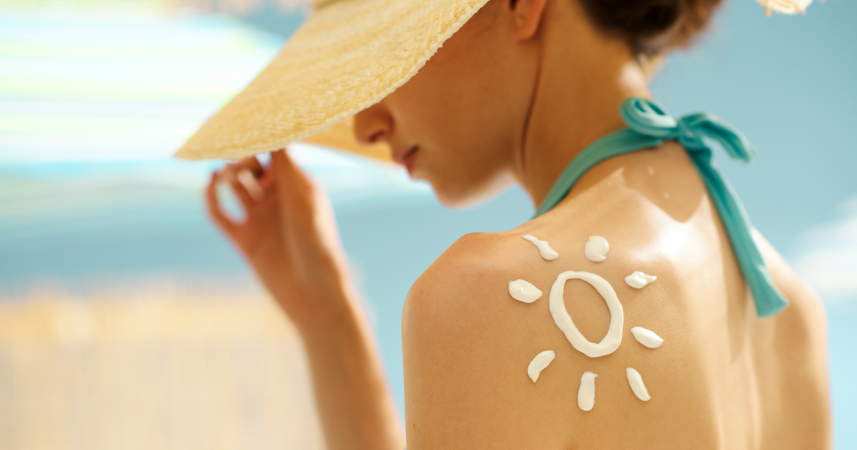
What you don’t know about your sunscreen might be affecting more than just your skin.
When you think of summer sustainability swaps, sunscreen probably isn’t the first thing that comes to mind. But maybe it should be.
In recent years, vegan sunscreens have gained traction—often shelved next to reef-safe, cruelty-free, mineral-based, and “clean” skincare products.
But with so many labels flying around, it’s easy to get confused about what vegan sunscreen actually is, what it’s not, and whether it’s worth making the switch.
The short answer? Yes. But there’s a lot of noise to cut through first.
As someone who’s spent more time analyzing product ingredients than a food label-obsessed nutritionist, I’ve learned that not all sun protection is created equal—and neither are the claims around it.
So let’s break down five of the most common myths about vegan sunscreen and why they don’t hold up to science, sustainability, or skin health.
1. “Vegan” means the same thing as “reef-safe”
It’s easy to assume that if a sunscreen is labeled vegan, it must be reef-safe, eco-friendly, or non-toxic. But here’s the kicker: those terms aren’t interchangeable—and they’re not regulated in the same way.
Vegan means the product contains no animal-derived ingredients (like beeswax, lanolin, or collagen) and typically isn’t tested on animals.
Meanwhile, reef-safe refers to formulas that avoid certain chemical UV filters like oxybenzone and octinoxate, which have been linked to coral bleaching and marine disruption, especially in warm, shallow waters.
The overlap? Some vegan sunscreens are reef-safe—but not all. Likewise, some reef-safe sunscreens still use animal byproducts.
Research shows that even trace amounts of common UV filters can cause coral DNA damage. So if you’re heading to the beach and want to protect both your skin and the ocean, read the label carefully.
Look for zinc oxide or non-nano titanium dioxide as active ingredients—and confirm that it’s both vegan and reef-safe if that’s your goal.
2. Mineral sunscreens are always better for the planet
Mineral sunscreens—also called physical sunscreens—use zinc oxide or titanium dioxide to create a barrier that reflects UV rays. Chemical sunscreens, on the other hand, absorb those rays and convert them into heat.
Here’s where the myth comes in: many assume that mineral = sustainable, and chemical = harmful. But the truth is more nuanced.
While mineral sunscreens are often reef-friendlier and less irritating for sensitive skin, they can have their own environmental concerns.
Some require intensive mining, and certain nano-particle versions may still pose risks to marine life. And not all mineral formulations are biodegradable or packaged sustainably.
The upshot? It’s less about choosing only mineral and more about the full picture: sourcing, packaging, ingredients, and company transparency. Brands like Raw Elements and ATTITUDE do a good job balancing these factors.
Meanwhile, ongoing research is evaluating how different sunscreen compounds behave in both saltwater and freshwater environments.
If you’re standing in the aisle torn between options, consider this question: How well does this product balance human safety with environmental impact across its lifecycle—from ingredient sourcing to what happens when it washes off?
3. Vegan sunscreen doesn’t work as well
This one’s persistent—and misleading.
The myth likely comes from early formulations of mineral sunscreens, which were thicker, chalkier, and harder to rub in. Some vegan brands got lumped in with those and gained a reputation for being less effective or “natural but weak.”
But SPF performance isn’t determined by whether a product is vegan—it’s about how well it’s formulated and tested.
According to the FDA and EU guidelines, SPF must be tested under controlled conditions to ensure UVB protection. And many modern vegan sunscreens (like Suntegrity, Babo Botanicals, and Kinfield) meet or exceed those standards.
So yes—your vegan sunscreen can absolutely offer strong, broad-spectrum protection. Just make sure you’re using the right amount (about a shot glass worth for your body) and reapplying every two hours, especially after swimming or sweating.
4. You don’t need vegan sunscreen unless you’re fully vegan
Let’s flip this around: Do you need to be zero-waste to use a reusable bag?
Choosing vegan sunscreen isn’t just for those who avoid animal products in every aspect of their lives. It’s a small but meaningful shift toward more ethical, cruelty-free, and often more sustainable purchasing—something many conscious consumers care about, even if they aren’t fully plant-based.
Cruelty-free skincare is increasingly part of broader sustainability conversations. Recent surveys indicate that 73% of Gen Z consumers prefer beauty products that are not tested on animals, and 65% say they’re willing to pay more for ethical sourcing.
In short: vegan sunscreen isn’t about labels—it’s about values. Whether your motivation is environmental, ethical, or skin-related, switching to vegan formulas helps reduce reliance on animal-derived ingredients and supports brands pushing for cleaner, kinder beauty.
You don’t need a perfect record. You just need a reason.
5. If it’s labeled “natural,” it must be safe and sustainable
“Natural” is a nice word. It sounds gentle, safe, and planet-approved.
But in skincare—especially sunscreen—it doesn’t always mean what you think it means.
For one, “natural” isn’t a regulated term. A product could use a single plant extract and still call itself natural, even if the rest of the ingredients are synthetic or environmentally damaging. It also doesn’t guarantee safety—poison ivy is natural, after all.
Some “natural” sunscreens skip preservatives to seem cleaner, but that can compromise shelf life or safety. Others may lack broad-spectrum protection or rely on unproven botanical ingredients in place of actual UV filters.
The better bet? Look for transparency.
Brands that list every ingredient, explain their sourcing, and back up their claims with testing or certifications (like EWG Verified, Leaping Bunny, or NSF/ANSI 305) are more trustworthy than vague “greenwashed” marketing.
Think of it like food labels: “natural” might sound good, but you still want to read the ingredients and know where they came from.
Final thoughts: It’s not just skin deep
Sunscreen isn’t just a summer staple—it’s a daily decision with ripple effects. From what goes into the bottle to where it ends up after your swim, your choice matters.
Vegan sunscreen helps reduce harm to animals, supports more ethical supply chains, and often overlaps with other important values: sustainability, health, and transparency. But it’s not perfect—and it's definitely not one-size-fits-all.
What we need most is clarity. Less marketing fluff. More science-backed claims. And a willingness to keep asking: Is this product protecting more than just my skin?
Because in the end, conscious living doesn’t mean getting it right all the time. It means paying attention—and making the kind of choices that move us toward a healthier, more compassionate world.