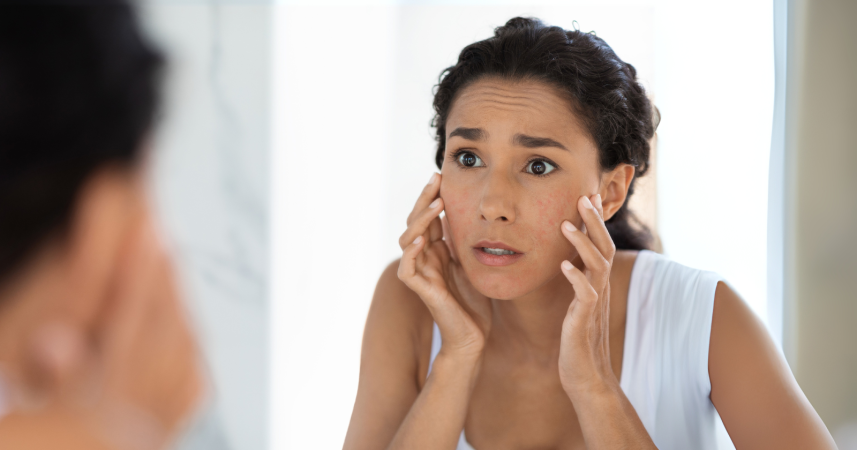
Some products claim to erase wrinkles—but end up speeding up the very thing they promise to prevent.

Add VegOut to your Google News feed. 
The beauty industry loves a good promise. “Erase wrinkles overnight.” “Turn back the clock.” “Stay forever young.”
You’ve probably seen these words plastered across a glossy jar with a price tag that makes your wallet wince.
The truth is, not everything marketed as “anti-aging” actually works. In fact, some of the most popular products do the exact opposite of what they promise: they age your skin faster.
It took me years of trial and error—and more wasted money than I’d like to admit—to realize that a minimalist, informed approach to skincare usually beats the flashy “miracle cure” every time.
If you’ve ever wondered why your skin doesn’t look better despite investing in anti-aging products, this might be the reason.
Let’s walk through seven culprits that could be sabotaging your skin more than helping it.
1. Harsh exfoliating scrubs
Remember those apricot scrubs that left your face feeling squeaky-clean? They also left it micro-torn.
Harsh scrubs with crushed shells or big, jagged particles create tiny cuts in the skin. Over time, this weakens your barrier, makes you more sensitive to sun damage, and accelerates visible aging.
Dermatologists have been saying this for years, yet drugstore aisles are still stocked with these scrubs because people equate “tingling” or “scratchy clean” with effectiveness.
The reality is, you’re better off with chemical exfoliants like lactic acid or mandelic acid, which gently dissolve dead skin without the trauma.
I learned the hard way in college when I over-scrubbed my skin before a big night out. The next morning, my face looked raw and patchy—and the fine lines around my eyes stood out even more.
2. Alcohol-based toners
If your toner leaves your face feeling tight, that’s not freshness—it’s dehydration.
Toners with high concentrations of alcohol strip away natural oils, disrupt your microbiome, and make your skin overcompensate by producing even more oil.
The result? Irritation, breakouts, and faster wrinkle formation.
The irony is that these products are often marketed to oily or acne-prone skin, but they just create a cycle of dryness and overproduction. A hydrating toner with glycerin or hyaluronic acid does far more to balance skin long-term.
Ask any dermatologist, and they’ll tell you: when your skin is consistently stripped, it doesn’t age gracefully. It gets brittle.
3. Overuse of retinol
Retinol is like fire—it can cook a delicious meal or burn down your house.
Used properly, it boosts cell turnover and stimulates collagen production. But when people slather it on every night without building tolerance, it causes irritation, redness, and peeling. And chronic irritation accelerates aging.
I once jumped straight into a prescription-strength retinoid after hearing it was the holy grail of skincare. Within two weeks, I looked like I had a sunburn that wouldn’t heal. It took months to repair the barrier damage I caused in the name of “anti-aging.”
If you want to use retinol, start slow. Once or twice a week. Pair it with moisturizer. Respect the process.
4. Heavy, pore-clogging creams
Ever wondered why some “luxury” anti-aging creams feel like frosting on your face?
Many of them are packed with mineral oils, petrolatum, and comedogenic ingredients that suffocate your skin. Instead of hydrating, they trap sweat and bacteria, leading to breakouts and dullness.
The kicker? They create a short-term illusion of plump skin because they sit on top as a film. But long-term, they can clog pores, weaken elasticity, and make your skin texture worse.
Lightweight moisturizers with ceramides or squalane nourish without smothering. Think breathable hydration, not heavy armor.
5. Collagen creams
This might sting a little, because who hasn’t been tempted by the word “collagen” on a label?
Here’s the catch: according to dermatologists, collagen molecules in creams are too big to penetrate your skin. That expensive jar is mostly acting as a moisturizer. The marketing tricks you into thinking you’re rebuilding collagen when you’re not.
The best way to protect your collagen is sunscreen, and the best way to stimulate new collagen is with ingredients like vitamin C or retinoids used correctly. But slathering on “collagen cream” is just an overpriced placebo.
It’s frustrating, but once you know this, you’ll never waste your money again.
6. Peel-off masks
Here’s a question: have you ever peeled off one of those charcoal masks and thought, “Wow, I feel so clean”?
That feeling is your skin barrier screaming. Peel-off masks don’t just pull out dirt; they yank off the natural oils and protective layers your skin actually needs. Do it often enough, and you’ll notice more redness, sensitivity, and premature fine lines.
The glow you see after a peel-off mask is just temporary inflammation. The long-term payoff? Fragile skin that doesn’t bounce back.
Instead, try a clay or enzyme mask. They clear gunk without ripping your skin apart.
7. Fragrance-heavy products
I used to love a certain “high-end” moisturizer that smelled like citrus. For weeks, I thought I was treating myself. Then the dry patches started. It turns out my skin was reacting to the very thing that made the cream smell expensive.
That rose-scented night cream or lavender-infused serum might feel luxurious, but added fragrance is one of the top causes of irritation and allergic reactions in skincare. Chronic irritation equals chronic aging.
If you want your products to feel indulgent, look for naturally calming ingredients like chamomile or oat extract. Your skin will thank you.
8. Heavy, matte foundations
Why do so many of us cling to matte formulas? Maybe because they promise a “flawless” finish.
The truth is, heavy, matte foundations often do the opposite of what they’re supposed to—they cake into lines, flatten the face, and emphasize texture you didn’t even notice before.
Skin naturally has dimension, movement, and light. When you smother it under a thick, powdery layer, you lose all of that. And ironically, it makes you look older, not smoother.
Here's a safer alternative: reach for lightweight, hydrating bases that enhance your glow instead of muting it. Dewy or luminous-finish foundations and primers make skin look alive, not masked.
9. Botox and fillers at a young age
What happens when you start freezing muscles in your face before they’ve even had time to move naturally? More often than not, it backfires.
Using Botox or dermal fillers excessively—or starting too early—can lead to muscle atrophy, distorted proportions, and an unnatural appearance. Instead of delaying aging, you risk accelerating it.
A frozen forehead at 25 doesn’t prevent wrinkles—it just changes the way your face expresses itself. And over time, the lack of movement can make you look stiff and even hollow.
Dermatologists often recommend waiting until lines are static (visible even when your face is at rest) before considering Botox. Before then, focus on sunscreen, hydration, and strengthening your skin barrier—those are the real age-delayers.
10. Skin-bleaching or whitening products with toxic chemicals
This one makes me cringe the most because of how damaging it can be. Many skin-lightening creams on the market—especially unregulated ones—contain ingredients like mercury, hydroquinone, or corticosteroids.
These are not just bad for your skin; they’re dangerous for your entire body.
The risks include permanent skin thinning, discoloration, heightened sun sensitivity, infection, and even systemic issues like kidney damage or neurological problems. That’s a pretty steep price to pay for an “even” skin tone.
If pigmentation is a concern, talk to a dermatologist about safe alternatives like vitamin C, niacinamide, or azelaic acid. These brighten without poisoning you in the process.
11. Anti-aging supplements and hormone treatments
There’s a saying in dermatology: “There’s no fountain of youth in a bottle.”
That especially applies to hormone-based “anti-aging” treatments like human growth hormone (HGH) or unregulated supplements.
They’re often marketed as miracle cures—promising more collagen, better skin elasticity, or renewed energy. But research shows they come with heavy risks: cancer, metabolic imbalance, and unpredictable long-term side effects.
A better route? Focus on evidence-backed topical treatments and lifestyle shifts. Sunscreen, sleep, a nutrient-dense diet, and regular movement do far more for your skin than any pill or hormone injection ever could.
Conclusion
Aging is natural—trying to fight it with the wrong tools only speeds it up. So instead of chasing miracles in a bottle, choose products that protect, nourish, and support what your skin is already doing.
Because the real “anti-aging secret” isn’t about turning back time. It’s about taking care of yourself in a way that makes time your ally, not your enemy.