Nine quiet habits turn restraint into that unmistakably French kind of effortless chic.
There’s a reason “How do they do it?” echoes across sidewalks from Paris to Provence.
The French version of chic isn’t louder or richer — it’s quieter, more edited, and deeply habitual. It’s not magic, and it’s not a shopping list. It’s a handful of small choices repeated so consistently that style becomes a reflex.
Think restraint over spectacle, patina over pristine, posture over perfection.
Below are 9 elegant micro-habits I’ve watched and borrowed—the kinds of things you can install without moving to the 7th arrondissement or memorizing every fashion week look.
Each is simple. Together they’re unmistakable.
1. They dress to a palette, not a trend
French wardrobes hum in a limited key: navy, black, cream, camel, charcoal, with one or two accents (oxblood, forest, ink blue). The palette is the backbone; silhouettes play on top.
That means separates can mix in the dark at 6 a.m. and still look intentional.
By keeping color quiet, texture and cut do the talking—tweed against silk, denim against cashmere, cotton poplin under a soft blazer.
The effect isn’t austere; it’s cohesive.
Buying becomes calmer, too. When every new piece must earn its place inside a defined color story, impulse fades and longevity rises.
You end up repeating on purpose, which is the root of recognizable style: people clock the harmony before they clock the hemline.
2. They invest in fit—and let tailoring finish the sentence
Nothing looks expensive if it doesn’t fit, and nothing needs to be expensive if it does.
French chic is ruthless about hems that graze the shoe, sleeves that show a whisper of wrist, waistbands that sit where your torso actually bends. Off-the-rack is just a draft; a tailor writes the final.
Trousers skim, they don’t squeeze. Blazers close without strain and open without collapse. Even denim gets a hem so the break is intentional, not negotiated with a roll.
This habit has a side effect: posture. When clothes fit, you stand like yourself instead of constantly adjusting. The takeaway isn’t “buy designer.” It’s “buy once, tailor always.” A €20 repair can do what logos never will—make the garment belong to you.
3. They repeat great outfits unapologetically
The myth is that chic equals novelty. The French counterargument is uniform theory: find combinations that flatter you—and wear them again, again, again.
Tuesday’s black turtleneck, cigarette trouser, and loafers are Friday’s, too, with a red lip. A trench over a Breton and dark denim can anchor a month.
Repetition frees attention for the person inside the clothes. It’s also an ethics of care: favorites get worn properly, repaired promptly, and retired gently. When you stop auditioning in your closet every morning, your style stops performing and starts existing.
The “effortless” part isn’t pretending you didn’t try — it’s building a small library of looks that remove the need to try each time.
4. They edit accessories to one beautiful thought
French accessorizing is a single, deliberate sentence — not a paragraph.
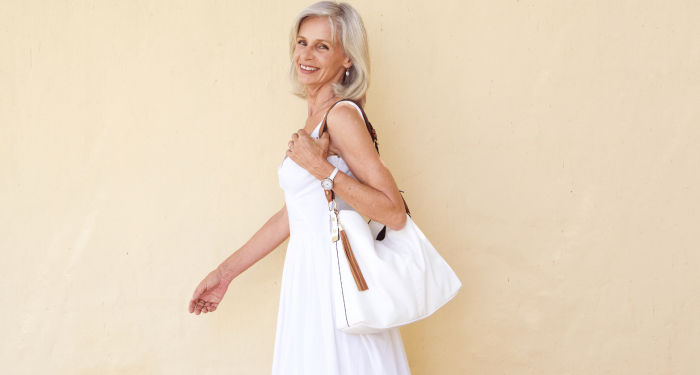
One gold hoop and a watch
. A silk scarf in a low knot. A structured bag with clean hardware and nothing dangling. The rule is not minimalism for its own sake; it’s focus.
Let one thing sing and mute the chorus.
This is why their everyday bags look kept: they aren’t loaded with keychains, redundant straps, or orphaned receipts. Shoes follow suit—polished loafers, slim ankle boots, a crisp sneaker—chosen for silhouette and kept immaculate. The quietest signal of taste is maintenance.
A brushed leather, a de-pilled knit, a scarf pressed after travel: these are the details that whisper “I noticed,” which is the essence of elegance.
5. They treat outerwear as the outfit
In a walking culture, the coat carries the story. A camel wrap, a navy peacoat, a trench with drape—these pieces are not afterthoughts; they’re the main event.
French women choose cuts that create shape from the shoulder and skim the line below, then repeat them over everything from jeans to silk skirts.
Belts get used. Collars stand or fall with intention. And because the coat is doing heavy lifting, what’s under it can be simple.
The lesson isn’t to hoard coats — it’s to pick one or two impeccable ones and give them star billing.
When outerwear is right, you can step out in a tee and look finished. Passersby remember the movement of the fabric more than the price of the dress you didn’t wear.
6. They prefer patina to perfection
The French affection for lived-in things is visible: softened denim, well-loved knitwear, a leather bag that’s been conditioned instead of replaced.
This isn’t neglect — it’s intimacy with your belongings.
Newness is less prized than rightness. You’ll see resoles, re-stitching, buttons replaced with better ones, scarves re-blocked, bags sent to the cobbler for a tune-up.
Patina gives depth — it also keeps taste from curdling into preciousness. When items are maintained rather than worshipped, you look like a person living a life, not a display case. The habit shifts how you shop, too. You start asking, “Will this age beautifully?” not “Will this photograph well?”
The former builds a wardrobe, the latter builds a feed.
7. They embrace restraint with one point of drama
A French look often has a single voltage point: a red lip against a navy sweater; a kohl-rimmed eye with an otherwise bare face; an ecru suit with a cognac belt; a crisp white shirt with deliberately undone cuffs.
The rest stays quiet so the highlight can glow. This ratio—ninety percent calm, ten percent spark—keeps romance in check and practicality in reach. It also travels well.
With one tube of lipstick or one scarf, an outfit flips from market morning to late dinner without a costume change.
If color isn’t your language, play with texture instead: satin with chunky knit, tweed with silk, suede with polished leather. Either way, the elegance lies in editing, not in maximal layering.
8. They cultivate small grooming rituals (and then forget about them)
Hair looks like hair—glossy, brushed, maybe air-dried into its natural bend—because cut and condition are handled before the day begins.
Skin shows through light base and a believable flush. Nails are short and neat or gently buffed. Fragrance is a signature, not a fog; it wafts when you reach, not when you arrive.
None of this reads as “done.” It reads as “kept.”
The secret is scheduling: trims every 8–10 weeks, a quick steam and press the night before, a lint brush by the door.
When the foundation is handled as routine, you don’t have to monitor yourself in reflective surfaces. Your attention can leave your appearance and rejoin the conversation, which might be the chicest habit of all.
9. They move with unhurried purpose
Chic is kinetic. Watch the stride across a crosswalk, the way a bag is held close to the body, the pause before descending Metro steps.
There’s a tempo—unrushed, alert, economical.
Phones stay mostly out of sight while walking; hands are free, posture is present. This isn’t performance; it’s harmony between clothes and conduct.
When your outfit allows a natural gait, when your shoes support a day on stone, when your coat closes against a gust without fuss, you look composed because you are.
The French protect that composition with small habits: leaving five minutes early, choosing routes that let them walk, defaulting to stairs. The elegance you notice isn’t choreography. It’s what ease looks like on the move.
Final thoughts
Effortless style is a paradox resolved by practice. You choose fewer colors, tailor the clothes, repeat the winners, edit your accents, honor outerwear, welcome patina, highlight one note, maintain quietly, and move like time belongs to you.
None of these habits requires Paris. They require attention—and then, wonderfully, they return it.
Build them, and your reflection gets calmer while your life gets bigger.
That’s the point: to look like yourself, only more at ease.
VegOut Magazine’s November Edition Is Out!
In our latest Magazine “Curiosity, Compassion & the Future of Living” you’ll get FREE access to:
-
- – 5 in-depth articles
- – Insights across Lifestyle, Wellness, Sustainability & Beauty
- – Our Editor’s Monthly Picks
- – 4 exclusive Vegan Recipes