My relationship with clothes has completely transformed—getting dressed takes five minutes instead of twenty, and I never feel overdressed or underdressed because everything in my closet suits my lifestyle.

Add VegOut to your Google News feed. 
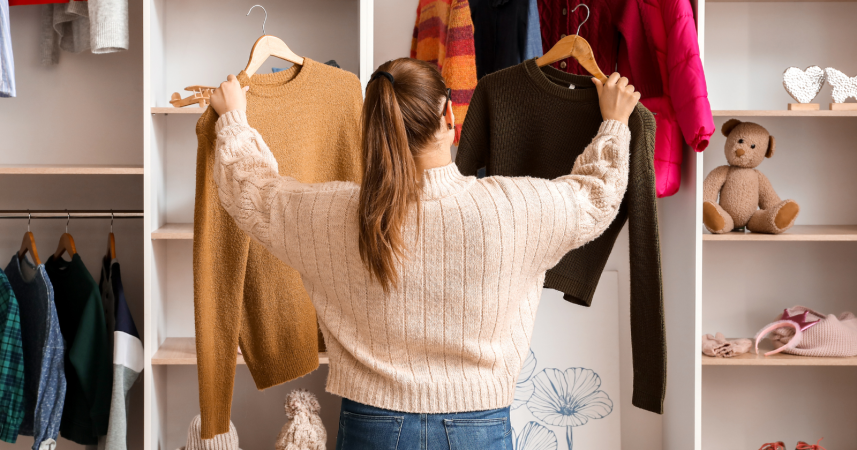
I used to be that person who stood in front of a bursting closet every morning, genuinely convinced I had "nothing to wear."
Sound familiar?
My wardrobe was a graveyard of impulse purchases. That trendy blazer I wore exactly once. Three nearly identical black tops because I couldn't remember what I already owned. Jeans in four different washes that I cycled through like some kind of denim roulette.
The breaking point came one day when I was running late for a client meeting, surrounded by piles of clothes I'd tried on and rejected. In that moment of frustrated chaos, I did something I'd never done before: I calculated how much money was hanging in my closet, unworn and unloved.
The number made my stomach drop.
As someone who spent years as a financial analyst, I should have been better at tracking my spending. But clothes felt different somehow—like small purchases that didn't really count. Except they absolutely did count, and they were adding up fast.
The uncomfortable truth about clothing spending
Here's what I discovered when I finally faced the numbers: we spend significantly more on clothes than we often realize.
According to the U.S. Bureau of Labor Statistics, in 2023, household spending on women's apparel averaged $655, compared with $406 for men's apparel. That's just the average—I was spending way more than that.
But the real cost wasn't just financial. It was the mental energy I was burning every single day.
Decision fatigue is real, and I was experiencing it before I even left my bedroom. How much creative energy was I wasting on outfit anxiety instead of channeling it into my work? How many mornings started stressed because I couldn't find something that felt right?
The irony hit me hard: I had more clothes than ever, but I felt less confident in how I looked.
Why I decided to try something radical
After that closet meltdown, I started paying attention to what I actually wore. Not what I thought I should wear, or what looked good on the hanger, but what I genuinely reached for when I wanted to feel like myself.
The pattern was obvious once I looked for it. I had about ten pieces that I wore constantly, and everything else was just... there. Taking up space, creating visual noise, making me feel overwhelmed instead of inspired.
That's when I stumbled across the concept of a capsule wardrobe.
What a capsule wardrobe actually means
When I first heard "capsule wardrobe," I pictured boring beige outfits and a life drained of style. I couldn't have been more wrong.
A capsule wardrobe isn't about wearing the same thing every day or giving up on looking good. It's about curating a small collection of pieces that all work together, fit your actual lifestyle, and make you feel confident every time you put them on.
Think of it like this: instead of having 80 pieces you kind of like, you have 30 pieces you absolutely love.
The magic isn't in the number—it's in the intentionality.
How I built my 30-piece system
I didn't go cold turkey and donate half my closet overnight. That felt too drastic, and honestly, too scary. Instead, I treated it like an experiment.
First, I did what I called a "reality audit." For two weeks, I photographed every outfit I wore. No judgment, just data collection. By the end, the patterns were crystal clear. I lived in three pairs of pants, rotated between five tops, and had one jacket I grabbed constantly.
This became my foundation.
Next came the hard part: defining my actual lifestyle. Not the lifestyle I aspired to or the one I had five years ago, but the one I was actually living right now.
I work from home most days, with occasional meetings and social events. I love trail running and spending weekends at farmers markets. I needed clothes that could handle my laptop-to-coffee-shop routine and transition to dinner with friends without looking out of place.
Once I got honest about what my days actually looked like, building the capsule became much easier.
The categories that changed everything
I organized my 30 pieces into five simple categories: tops, bottoms, layers, shoes, and what I call "statement pieces."
Here's how it broke down: 12 tops (mix of t-shirts, blouses, and sweaters), 6 bottoms (jeans, trousers, and one dress that works like pants), 4 layers (cardigan, blazer, denim jacket, and a coat), 6 pairs of shoes (sneakers, boots, flats, one dressy option, running shoes, and sandals), and 2 statement pieces that add personality.
The key was making sure every single piece could work with at least five other items. If something only paired with one or two pieces, it didn't earn a spot.
This wasn't about following someone else's capsule formula—it was about creating a system that worked for my specific life, body, and preferences.
The money I stopped hemorrhaging
Three months into my capsule experiment, something remarkable happened: I stopped buying clothes impulsively.
When you know exactly what's in your closet and how each piece fits into your system, random shopping becomes almost impossible. That cute top at Target? I could immediately see that it didn't work with any of my bottoms. The sale blazer online? I already had a blazer I loved.
Instead of buying clothes to fill emotional gaps or chase trends, I was only adding pieces that genuinely improved my existing wardrobe. And since I was being so selective, I started investing in better quality items that lasted longer.
The numbers tell the story. In the year before my capsule wardrobe, I spent over $1,200 on clothes. In the year after? Less than $300, and those were mostly replacements for worn-out basics.
But here's what surprised me most: I felt better dressed than I had in years.
What nobody warns you about
Building a capsule wardrobe isn't just a organizational project—it's an identity shift.
For the first few weeks, I felt anxious about having fewer options. What if I got bored? What if people noticed I was repeating outfits? The fear was real, but it was also completely unfounded.
People didn't notice my "limited" wardrobe. They noticed that I seemed more put-together and confident. When you're wearing clothes you genuinely love instead of settling for whatever's clean, it shows.
The boredom I worried about never came. Instead, I discovered creativity I didn't know I had. With fewer pieces, I started paying attention to how I combined them. I found new ways to style the same cardigan, discovered that my favorite jeans worked with way more tops than I'd realized.
Constraints often breed creativity rather than limit it. Having boundaries forced me to be more thoughtful about how I got dressed.
How you can start your own capsule
You don't need to overhaul everything at once. Start with that reality audit I mentioned—track what you actually wear for two weeks.
Then ask yourself the hard questions. What does your real life look like? Not your Instagram life or your someday life, but your Tuesday morning life. What activities fill your calendar? What makes you feel confident when you put it on?
Use those insights to identify your non-negotiable pieces. Build around those anchors.
When you're ready to shop, adopt the "five-piece rule"—anything new has to work with at least five existing items in your closet. This single filter will save you from countless purchases you'll regret later.
The freedom I found
Two years in, my relationship with clothes has completely transformed. Getting dressed takes five minutes instead of twenty. I never feel overdressed or underdressed because everything in my closet suits my lifestyle.
The mental space I reclaimed has been the biggest gift. Instead of decision fatigue about what to wear, I channel that energy into work that matters to me.
My capsule wardrobe gave me something I didn't expect when I started: the freedom to focus on everything else. And honestly? That's worth more than any amount I saved on clothes.