
Are your clothes echoing your real identity… or just your default one? Your closet doesn’t just hold clothes — it holds stories waiting for you to uncover them.

Add VegOut to your Google News feed. 
Let me start with a question.
Have you ever looked at your closet and wondered, Is this really my style… or just the style I absorbed without noticing?
I ask myself this fairly often, especially when I’m sorting through clothes before donating a pile to the local thrift store near the farmers’ market where I volunteer.
I see the same patterns over and over.
Comfortable. Practical. Predictable.
The wardrobe of the classic middle-class American is less about fashion statements and more about staying safely in the middle lane.
There’s nothing wrong with that, of course.
But if you’re someone who’s trying to understand yourself better, or simply curious about how your habits reflect your identity, what you choose to wear can reveal more than you might think.
So let’s talk about the ten items that show up in almost every middle-class American closet.
And more importantly, what they might say about you.
1) The reliable pair of jeans
There’s always that pair.
Not the trendy ones, not the distressed ones, not the “I bought these because I felt adventurous for 15 minutes” ones.
I’m talking about the safe, mid-wash, straight-leg jeans you can wear anywhere without thinking too hard.
I grew up in a small suburban neighborhood, and this was practically the uniform.
You could spot parents at Little League games, couples at Target, and coworkers on casual Fridays all wearing some version of the same denim.
Jeans like this signal practicality.
They say, “I want to look fine, but I’m not trying to impress anyone.”
They’re comfortable and familiar.
Almost like the sartorial equivalent of comfort food.
Nothing wrong with that.
But if you never stray from this default, it’s easy to forget you have other options.
2) A basic black or navy blazer
There’s something about a blazer that whispers responsibility.
You might not love it. You might not wear it often.
But it’s there, hanging somewhere near the “slightly nicer” section of your closet, ready for job interviews, presentations, or the occasional semi-formal dinner.
This is one of those pieces that screams middle-class stability.
It’s a safety net more than a style statement.
And I get it.
Years ago, when I was still a financial analyst, I kept a blazer on the back of my office chair for those unexpected pop-up meetings with executives.
Even after I left that world, the blazer stayed in my closet much longer than the job did.
It took a while to realize I was keeping it not for fashion, but out of habit… and maybe a lingering sense of who I used to be.
Sometimes the clothes that cling to us the longest are the ones tied to old identities.
3) Graphic tees from random places
Vacation destinations. Charity runs. Festivals. Family reunions. Corporate retreats. You name it, there’s a shirt for it.
If you want a quick snapshot of someone’s life journey, follow the trail of their graphic tees.
I once helped a friend unpack after her move, and she had shirts from events she didn’t even remember attending.
But they still made the cut because they felt sentimental, or just too “useful” to toss.
Middle-class wardrobes tend to rely heavily on free or cheap graphic tees because they tick all the boxes: practical, versatile, low-effort, and emotional enough to feel worth keeping.
The question is: do these shirts reflect who you are now, or who you were then?
4) A pile of neutral-colored sweaters
Beige. Gray. Navy. Black.
There’s always a stack of sweaters that could all star in the same minimalist catalog.
If you’ve ever stood in a department store, touching soft sweaters and thinking, "This feels cozy," you already know exactly how these end up dominating closets.
These sweaters are comfortable, safe, and endlessly matchable.
But when every sweater looks the same, your wardrobe starts to feel like a loop of sameness.
Sometimes I wonder if we gravitate toward neutrals not because we love them, but because they make decisions easier.
And sure, efficiency is wonderful. But so is self-expression.
5) Athletic sneakers for “everyday wear”
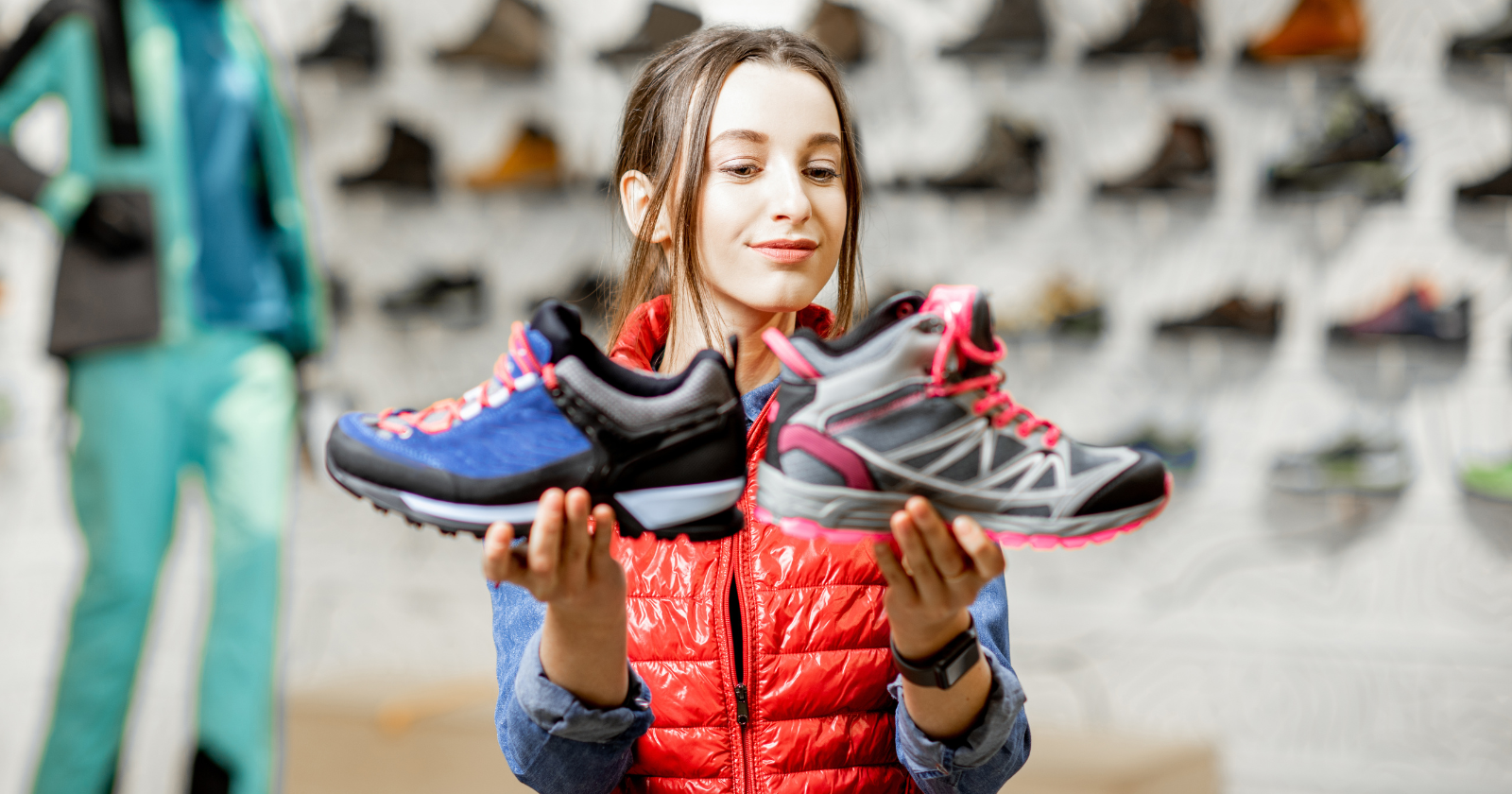 These aren’t running shoes worn by runners.
These are running shoes worn by everyone.
You see them at the grocery store, on PTO board members, at the post office, and at brunch. They’re not bad.
In fact, they’re comfortable and supportive, which is probably why they’ve become essential.
But they’re also a symptom of the American tendency to prioritize function over expression.
We want our feet to feel good.
We want to get things done.
And we don’t necessarily need our shoes to tell a story.
But what if they did?
6) A stack of old hoodies
There’s the college hoodie. The team hoodie. The “I bought this at Costco” hoodie.
The random hoodie you don’t remember acquiring but somehow wear more than anything else.
Hoodies are beloved in the middle-class lifestyle because they’re the clothing version of a warm hug.
They’re also tied to nostalgia, comfort, and routine.
I have one from my early trail-running days that I’ll probably keep forever, even though it’s frayed and faded.
Yes, I’m vegan and genuinely enjoy minimalist living, but even I have a few sentimental hoodie attachments.
Sometimes clothes stick around because they hold little pockets of our history.
And honestly, there’s beauty in that.
7) A “nice” pair of going-out shoes that hurt like hell
Most middle-class wardrobes contain that one pair of dress shoes, heels, or loafers that look great in theory but feel like punishment in practice.
They get worn only for special occasions.
Weddings. Graduations. The annual holiday dinner where everyone pretends they aren’t uncomfortable.
These shoes tell an interesting story.
They reflect an old-fashioned belief that looking “put together” sometimes requires suffering.
But personal style doesn’t have to be painful.
And if the only thing that makes these shoes “nice” is tradition, maybe it’s worth reconsidering whether they deserve closet space.
8) A cozy zip-up that goes with everything
This one might be the most universal of all.
The everyday zip-up has become the middle-class American security blanket.
It’s warm, durable, a little outdoorsy, and blends into almost any environment.
Errands? Yes. Work-from-home? Definitely. A quick walk around the neighborhood? Always.
What I find interesting is how pieces like this make people feel prepared.
Ready for shifting weather, surprise outings, or a burst of activity.
There’s a psychological comfort in that level of readiness.
Almost like saying, “I might not know what the day holds, but at least I’ll be comfortable.”
9) Business-casual tops that all look vaguely similar
Collared shirts.
Blouses with tiny floral prints.
Thin knit tops.
Slightly dressier tops reserved for work or “adulting events.”
These are usually bought in a moment of hopeful responsibility.
A job interview coming up, a conference, or a desire to “have better things to wear.”
But here’s the funny part: most people rarely wear them.
They sit neatly folded or hung in a tidy row, reminding us of our aspirations more than our realities.
If your closet contains a cluster of these tops that you keep “just in case,” you’re definitely in the average zone.
10) The “multi-purpose” jacket
Almost every middle-class closet has a jacket meant to function in as many situations as possible.
Not too sporty, not too formal, not too trendy, not too basic.
Something that can go from errands to casual dinner without drawing attention.
This jacket says, “I want to fit in almost anywhere.” And honestly, many of us grew up wanting exactly that.
But when you’re trying to grow into a deeper sense of individuality, it can be worth asking whether blending in is still serving you.
Final thoughts
So, did you recognize your closet in any of these items?
If so, you’re far from alone. These ten pieces show up again and again in the wardrobes of middle-class Americans because they’re comfortable, predictable, and easy.
They help us move through our days with minimal friction.
But here’s the bigger question:
Are your clothes echoing your real identity… or your default one?
Wardrobes are rarely just about fabric and function.
They’re about self-perception, personal history, convenience, and sometimes even emotional safety.
The real power comes from noticing what’s intentional and what’s just leftover habit.
You don’t need to overhaul your wardrobe to express yourself more fully.
You just need to get curious.
Ask yourself what feels authentic, what feels outdated, and what feels like it belongs to an older version of you.
Because your closet doesn’t just hold clothes.
It holds stories. And you get to decide the next chapter.
If You Were a Healing Herb, Which Would You Be?
Each herb holds a unique kind of magic — soothing, awakening, grounding, or clarifying.
This 9-question quiz reveals the healing plant that mirrors your energy right now and what it says about your natural rhythm.
✨ Instant results. Deeply insightful.

Avery White
Formerly a financial analyst, Avery translates complex research into clear, informative narratives. Her evidence-based approach provides readers with reliable insights, presented with clarity and warmth. Outside of work, Avery enjoys trail running, gardening, and volunteering at local farmers’ markets.
More Articles by Avery