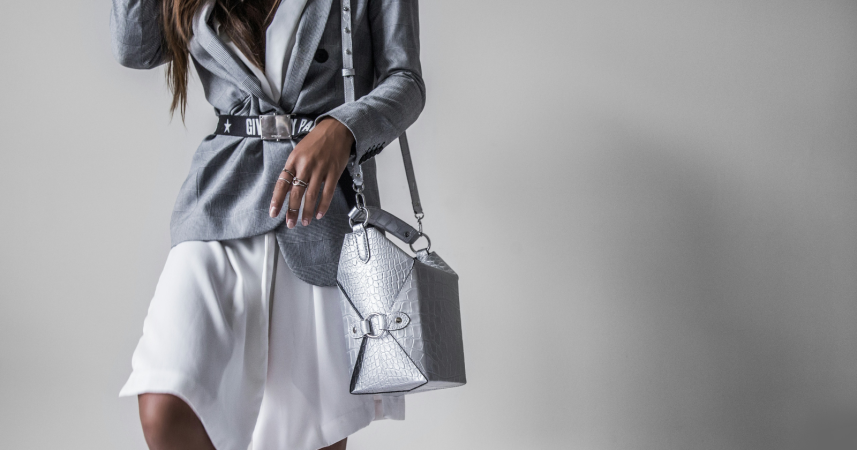
The most expensive fashion mistake is free. It’s wearing clothes that don’t fit and hoping no one notices.
Let’s talk about the insecure flex. I’ve been there: overthinking an outfit, chasing “rich” energy, then wondering why it reads awkward instead of effortless.
Looking polished isn’t about price tags; it’s about proportion, context, and restraint. If you’ve ever felt like your clothes are wearing you, not the other way around, this one’s for you.
Below are eight choices that broadcast try-hard vibes, plus what to do instead.
1. Logo overload
One logo? Fine. Two? Maybe. A walking billboard? That’s a hard no.
When every piece screams brand, it stops being style and starts being advertising. Loud monograms can tip an outfit from chic to shouty because attention gets pulled in five directions at once. Your look loses harmony.
If you love logos, anchor them with quiet pieces. Pair a statement belt with a plain knit and tailored trousers. Let one hero lead and keep everything else in a supporting role.
Think “headline and subhead,” not eight competing headlines. The irony of “expensive” is that the most luxurious outfits rarely tell you they’re luxurious; they let the cut, fit, and finish do the talking.
2. Head-to-toe trend stacking
Ever see an outfit that’s all at once: micro-bag, sock boots, megawatt sunglasses, baseball cap, and a viral jacket silhouette, plus a hot-off-TikTok color? That’s trend stacking.
It reads like you’re trying to buy taste by the bundle. I love keeping a pulse on what’s new, but style breathes when you edit.
Pick one trend and treat the rest like a gallery wall of timeless pieces: great denim, clean sneakers, a crisp shirt, a simple coat. When I travel, I keep a base uniform I can remix in different cities, then plug in one local trend to learn from the vibe without cosplay.
The result looks considered rather than costume-y.
3. Stiff formality for casual settings
Overdressing isn’t the flex you think it is. A double-breasted blazer, pocket square, and sleek loafers…to a farmers’ market?
That mismatch makes you look like you’re auditioning for a role. True polish is contextual. The best-dressed person at a backyard hang isn’t the fanciest; it’s the one who looks like they belong.
I’ve mentioned this before, but context is the most underrated style principle. Dress one notch up from the room, not five. If everyone’s in tees and shorts, a neat knit polo and cleaner sneakers quietly level you up.
If it’s a creative office, trade the full suit for unstructured tailoring and a breathable tee. Clothes aren’t just fabric; they’re social cues.
4. Flashy, fragile, and impractical
White suede loafers at a rainy outdoor event. A tiny bag that fits exactly one key and a hope. A dress you can’t sit in without choreography.
Nothing says “trying too hard” like choosing aesthetics that sabotage your life. The moment you tiptoe through your day, the outfit owns you.
Here’s the switch: buy the beautiful version of what you actually do. If you commute, a sharp weatherproof jacket beats a delicate coat you’ll baby. If you walk a lot, look for shoes with low-profile cushioning and a refined upper.
I shoot street photos on weekends, and my favorite “expensive” look is a black nylon bomber, straight-leg jeans, and leather trainers that can handle three neighborhoods. Quietly functional reads wealthier than fragile.
5. New-everything energy
There’s a specific gleam to brand-new head to toe: sneakers still creaking, jacket tags just removed, denim so crisp it crackles. Ironically, that squeaky-clean signal can look less expensive because it lacks patina, the subtle wear that high-quality pieces earn. The best wardrobes feel lived-in, not just purchased.
You don’t need distressing kits or fake creases. You need time and consistency. Re-wear favorites until they mold to you. Rotate two quality belts instead of five flimsy ones. If you’re starting fresh, build around textures that age well: full-grain leather, wool, cotton twill, raw or rinsed denim. A two-year-old pair of well-kept boots looks more “old money” than brand-new shiny ones you’re scared to scuff.
6. Over-accessorizing the flex
Stacked rings, bold watch, chain, cuffs, statement belt, giant sunglasses, designer hat, logo scarf…on a Tuesday. Accessories are spice. Too much and the meal burns.
I once wore a gold-tone watch, a wide belt, and metal-framed shades to brunch, then caught my reflection and thought, “Who invited this walking hardware store?” I took off the belt, swapped the watch for a slim one, and instantly looked more put together.
Use a simple rule: one focal point above the waist, one below. If your bag is loud, keep jewelry minimal. If your shoes are art, let your pants be calm. And think materials harmony.
If your jacket hardware is silver, silver jewelry ties the story together better than mixing five metals that compete with each other.
7. Counterfeit vibes and obvious dupes
Nothing cheapens a look faster than pieces that pretend to be something they’re not. I’m not moralizing; I’m talking outcome.
Counterfeits and super-obvious dupes carry that “almost right” energy: odd spacing on a logo, plastic-like finishes, hardware that feels hollow. People might not clock the exact brand, but they sense the mismatch.
If luxury pricing isn’t your lane, aim for brands that major in materials and cut rather than marketing. Seek natural fibers, weighty hardware, and clean stitching.
A plain, well-cut coat from a mid-tier label will always outclass a fake monogram trench. The real flex is discernment: knowing which details matter and saying no to the rest.
8. Fit that fights your body
The most expensive fashion mistake is free: ignoring fit. Too-tight skinny jeans that cut into your waist. A blazer that pulls at the button. Trousers puddling over shoes.
When garments argue with your body, you look uncomfortable, and nothing reads “trying too hard” like discomfort.
Tailoring changes the game. Hem pants to a single break. Nip the waist of a jacket so it follows your shape without strangling your shoulders. If you’re between sizes, buy for the largest measurement and tailor down.
A $150 suit with $60 of alterations can look better than a $2,000 suit straight off the rack. The goal isn’t to look smaller or bigger; it’s to look aligned, as if the clothes and the body agreed on a plan.
What to do instead (the quiet-rich checklist)
- Edit for one focal point. If the shoes speak, the jacket listens.
- Align with context. Where am I going? What are the vibes?
- Prioritize fit and fabric. Let touch and drape beat logos.
- Choose function that looks good. Beauty you can move in.
- Repeat winners. Outfit formulas signal confidence, not laziness.
Two personal cheats I use: First, I pre-commit to neutrals for big days. They mix easily and don’t ping the room like a fire alarm. Second, I let grooming and posture do more work than clothes. A clean haircut, tidy nails, and standing tall will elevate a tee and jeans faster than any belt buckle.
I write a lot about the psychology behind everyday choices, and style is one of the clearest mirrors. We want belonging and status, but we overshoot when we confuse display with identity.
The people who look “expensive” without trying don’t chase signals; they curate them. They treat clothes as tools for clarity rather than costumes for approval.
If you take anything from this, let it be this: affordability and elegance are not enemies. You don’t need head to toe designer to look elevated. You need taste, context, and a respect for your real life. Buy fewer, better. Edit harder. Move like yourself.
The best compliment I’ve ever gotten about an outfit wasn’t “What brand is that?” It was “You look like you.” That’s the real luxury.
What’s Your Plant-Powered Archetype?
Ever wonder what your everyday habits say about your deeper purpose—and how they ripple out to impact the planet?
This 90-second quiz reveals the plant-powered role you’re here to play, and the tiny shift that makes it even more powerful.
12 fun questions. Instant results. Surprisingly accurate.