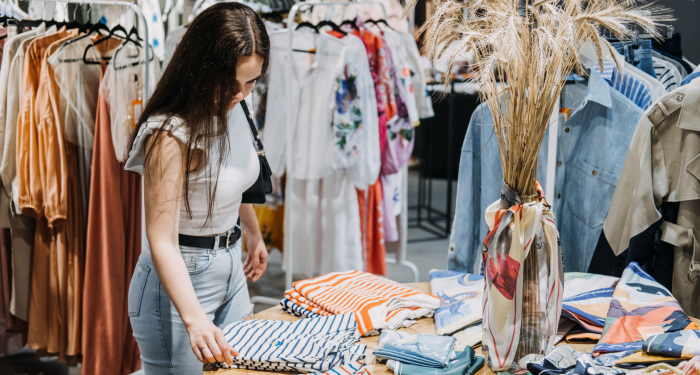
When tailoring is your secret weapon, even a $20 hem can change your posture.
Retirement is a closet reset as much as a lifestyle one.
Suddenly, you’ve got more choice—about where you spend your time, what you say yes to, and (my favorite) what you wear when no HR calendar is telling you what day is “business casual.”
If you want that quietly polished, I-woke-up-like-this vibe, the trick isn’t more stuff.
It’s better stuff—pieces that do the heavy lifting so you don’t have to. As a former financial analyst, I think in terms of ROI and cost-per-wear.
The nine investments below are high return: they streamline decisions, elevate everything you already own, and signal refinement without shouting.
Let’s build a wardrobe that whispers “quality.”
1. Start with tailoring
Nothing reads refined like good fit. Most clothes are made to fit “many,” not you.
A simple hem, a nipped waist, a shortened sleeve—these small alterations can make a mid-range piece look bespoke.
I keep a modest “tailoring fund” the way I kept a coffee budget when I was working full-time. A $20 hem on trousers I wear weekly beats another pair sitting unworn.
And because tailoring fixes proportion—shoulders, inseams, sleeve length—it makes your posture look better too. You’ll stand differently when a blazer closes cleanly and pants skim your shoe just right.
If you’ve never worked with a tailor, start with one garment you already like. Ask them to pin two options: conservative and slightly more fitted.
Walk, sit, reach. Choose the one that feels like you on your best day.
2. Buy a navy blazer that fits
A navy blazer is the Swiss Army knife of polish. Over a tee and jeans for errands, a knit dress for lunch, or tailored trousers for an event—you get instant structure.
Look for medium-weight wool or a wool–silk blend, a clean shoulder (no linebacker padding), and a sleeve you can push up.
I bought mine at 42 after avoiding blazers for years.
The first week I wore it to the farmers’ market with a striped tee, dark denim, and loafers. Three different people complimented “my style,” not the blazer.
That’s the goal: people see you, not the brand.
As noted by researchers Hajo Adam and Adam D. Galinsky, what we wear doesn’t just change how others see us; it changes how we think and perform—what they call enclothed cognition.
A well-cut blazer cues presence and focus, even on a grocery run.
3. Choose a structured leather bag
Logos shout. Structure whispers.
A medium-sized, top-handle or clean crossbody in smooth leather—no giant hardware, no quilting overload—pairs with everything and holds its shape for years.
Pick a neutral that flatters your hair and wardrobe base: chocolate, espresso, taupe, navy, or a deep olive can be surprisingly versatile.
There’s science behind the “quiet” route.
Research on brand prominence shows higher-status consumers often prefer subtle, logo-light pieces—signals understood by those who notice quality, not just branding.
In other words, understated reads as assured.
Practical tip: treat your bag like a leather jacket. Condition it twice a year and stuff it to store. A pristine silhouette says “I take care of what I own,” which always looks luxe.
4. Invest in quality shoes you can repair
Shoes carry more than you think—literally and visually.
A sleek leather loafer, low block heel, or almond-toe flat in black, chocolate, or cognac will outclass a trend sneaker nine times out of ten.
Look for leather uppers and leather soles (or at least welts) so a cobbler can resole them.
When I shifted to resolable pairs, two things happened: my cost-per-wear dropped, and my outfits looked instantly more intentional. Keep toes polished, heels un-scuffed, and soles maintained.
Even the most casual outfit reads finished when the shoes are immaculate.
5. Keep a cashmere twinset in rotation
You don’t need a closet full of cashmere. One cardigan + one shell or crew in a flattering neutral is enough to look pulled together year-round.
Wear them together for a refined set, or separate them—shell under a blazer, cardigan over a tee, wrapped around your shoulders on chilly evenings.
Fit matters: you want skim, not squeeze. If cashmere isn’t in budget, merino or a cashmere blend is excellent.
Choose a tone that flatters your complexion (I reach for soft camel or navy). Paired with denim or tailored pants, a knit set says “I know what works, and I repeat it.”
“Buy less, choose well, make it last,” as designer Vivienne Westwood put it. It’s the north star for this entire list.
6. Tie on a real silk scarf
A silk scarf is the ultimate quiet upgrade. The sheen is subtle, the drape is elegant, and it’s seasonless.
Fold into a triangle and tie loosely at the collarbone with a tee, loop it through your bag handle, or knot it onto a ponytail.
One scarf can pull colors in your wardrobe together like a good rug does for a living room.
If prints feel intimidating, start with a two-tone geometric or a soft floral in your favorite neutral + one accent color.
And yes, silk really is different from polyester—it moves and catches light in a way that reads elevated without effort.
7. Pick one impeccable coat
Outerwear sets the tone before you say hello. If you live somewhere with cool seasons, a single, impeccably cut coat in camel, navy, or charcoal will carry you through most occasions.
Think clean lines, mid-thigh to knee length, with enough room for a sweater.
I treated myself to a camel coat the year I fully retired from office life. It made early morning walks and quick dinners out feel special, even over leggings.
The coat did the work; I just added lipstick.
For rainy climates, a classic trench is equally effective. Belted or worn open, it frames the body and adds structure to the simplest base.
8. Upgrade your underpinnings
A refined look starts under the outfit. A supportive, well-fitted bra, a smoothing slip, and seamless underwear can transform how clothes drape.
Most of us are wearing bras from a different chapter of our lives—body changes are real and normal. A professional fitting every couple of years is worth it.
I also keep a small collection of “base layers” in skin-adjacent tones: a stretch camisole, a longline tank, and a thin tee.
These let me wear lighter blouses and knits without worrying about show-through or clinging.
When the foundation is right, everything on top looks more expensive.
9. Edit with fine, quiet jewelry
Upper crust without trying is less about “more diamonds” and more about restraint.
Pick a daily set: small gold hoops or studs, a delicate chain, a slim bangle, maybe a signet ring. Pearls—whether a single pendant or a short strand—bring light to the face without feeling costume-y.
I think of jewelry as punctuation. Full stop periods, not exclamation marks.
If you love silver, do silver. If you prefer gold, do gold. Mixed metals can work, but keep shapes simple so the overall effect is coherent.
When in doubt, remove one piece before heading out—the old rule still works.
Putting it all together (without trying)
Notice what these investments share: clean lines, beautiful materials, perfect fit, and subtle details. They play with your life—volunteering, traveling, lingering in bookstores—not against it.
Here’s how to make them work on autopilot:
-
Create a uniform. For me: navy blazer + white tee + dark straight denim + loafers + small gold hoops. It’s not boring; it’s reliable. Uniforms are a kindness to your future self.
-
Stay in your color lane. Choose two darks and two lights that flatter you (say, navy and olive; ivory and camel). Buy within that palette and everything mixes.
-
Mind the “quiet signals.” Flashy logos can be fun, but subtlety reads assured.
-
Track cost-per-wear. Old analyst habit: take the price, divide by estimated wears. That $300 coat worn 100 times costs $3 per wear. If a $60 blouse sits in your closet, its cost is $60 per wear. Suddenly the “expensive” choice is the smart one.
-
Maintain, don’t replace. Condition leather, de-pill knits, resole shoes, dry-clean sparingly, and steam instead of ironing. Care is an investment multiplier.
And remember the psychology: when you feel good in your clothes, you carry yourself differently. That subtle confidence is the most “upper-class” thing you can wear—and it doesn’t cost a thing. The clothes just help you get there.
If you try just one thing this month, let it be the tailoring fund. Take one pair of pants and one blazer to a tailor. Wear them three times in two weeks.
Watch what happens. Compliments aside, you’ll likely notice an internal shift: an easy, quiet sense that you look like you—only sharper.
That’s the whole point. Not trend-chasing. Not performance.
Just choosing well, caring for what you choose, and letting your clothes tell the softest version of your story.
What’s Your Plant-Powered Archetype?
Ever wonder what your everyday habits say about your deeper purpose—and how they ripple out to impact the planet?
This 90-second quiz reveals the plant-powered role you’re here to play, and the tiny shift that makes it even more powerful.
12 fun questions. Instant results. Surprisingly accurate.