We buy “essentials” because we want to feel like we’ve handled every possible scenario, but experienced travelers know something that beginners don’t.

Add VegOut to your Google News feed. 
You know the feeling.
Your trip is two weeks away, your brain is already in vacation mode, and suddenly your algorithm is basically one long infomercial.
“This $39 travel essential will change your life.”
“This gadget is what experienced travelers swear by.”
“This thing will keep you safe, clean, organized, hydrated, and probably also emotionally healed.”
Since travel is exciting and slightly chaotic, it’s easy to panic-buy stuff that looks smart in a TikTok but ends up living in the bottom of your bag like a forgotten salad dressing packet.
I’ve done it too.
Back when I was working in luxury hospitality, I used to pack like I was preparing to host a five-star dinner service in a foreign country.
Extra tools, extra backups, and extra “what ifs.”
Now I pack the way experienced travelers actually do: Light, simple, and with a healthy disrespect for anything marketed as “must-have.”
So, let’s talk about seven travel “essentials” people buy before trips that look useful, feel responsible, and are usually a complete waste of money:
1) The money belt
Can we be honest for a second? Most people don’t buy a money belt because it’s practical.
They buy it because they’re anxious.
It’s the travel version of carrying a protein bar in your pocket at all times because you’re afraid of being hungry for 45 minutes.
Here’s the problem: Money belts are uncomfortable, sweaty, and weirdly obvious.
You’ll be in a café trying to casually pay for an espresso while digging under your shirt like you’re adjusting a microphone pack.
Also, if someone actually wants to rob you, the money belt doesn’t magically make you invisible.
Experienced travelers do something much simpler: They split up their valuables.
A little cash in one spot, card in another, passport in a safe place, digital backups in the cloud, and they don’t treat every destination like an action movie.
What to do instead: Use a normal crossbody bag with a zipper, keep your phone accessible, carry only what you’ll need that day, and put the rest in your accommodation.
2) The giant pre-packed toiletry kit
These always look so satisfying online.
Perfect little bottles, mini containers, tiny labels; a portable pharmacy that says, “I have my life together.”
Then you get to your destination and realize: You used exactly three things, yet TSA still made you take it out.
Half the bottles leaked anyway, and now your bag smells like peppermint mouthwash and betrayal.
Unless you’re camping in the wilderness, you can buy shampoo, sunscreen, and toothpaste almost anywhere on Earth.
If you’re traveling somewhere that doesn’t have your favorite brand, that’s a story.
Some of my best travel food moments happened because I walked into a local pharmacy or grocery store for something “basic” and ended up discovering snacks I’ve never seen back home.
What to do instead: Bring the essentials for the first 48 hours, plus any true non-negotiables (meds, contact solution, specific skincare if you’re picky).
Buy the rest there.
It’s lighter, cheaper, and you’ll stop treating personal care like a logistics mission.
3) The inflatable neck pillow
If you’ve ever bought one of these, you already know how this goes.
At home, it feels fine.
On the plane, it becomes a rubbery collar of disappointment that forces your head into a strange angle.
You sweat, drool a little, or wake up with a sore neck and the emotional clarity of someone who has been scammed by foam.
The truth is most people need better sleep habits and a less chaotic travel day.
Experienced travelers hack plane sleep with what they already have: a hoodie, a scarf, a jacket, or even a small packing cube wrapped in a soft shirt.
Not glamorous, but it works.
Bring a soft scarf or hoodie you’d pack anyway, and use it to support your neck.
If you must buy something, buy a decent eye mask and earplugs.
Those actually change the game!
4) The portable luggage scale
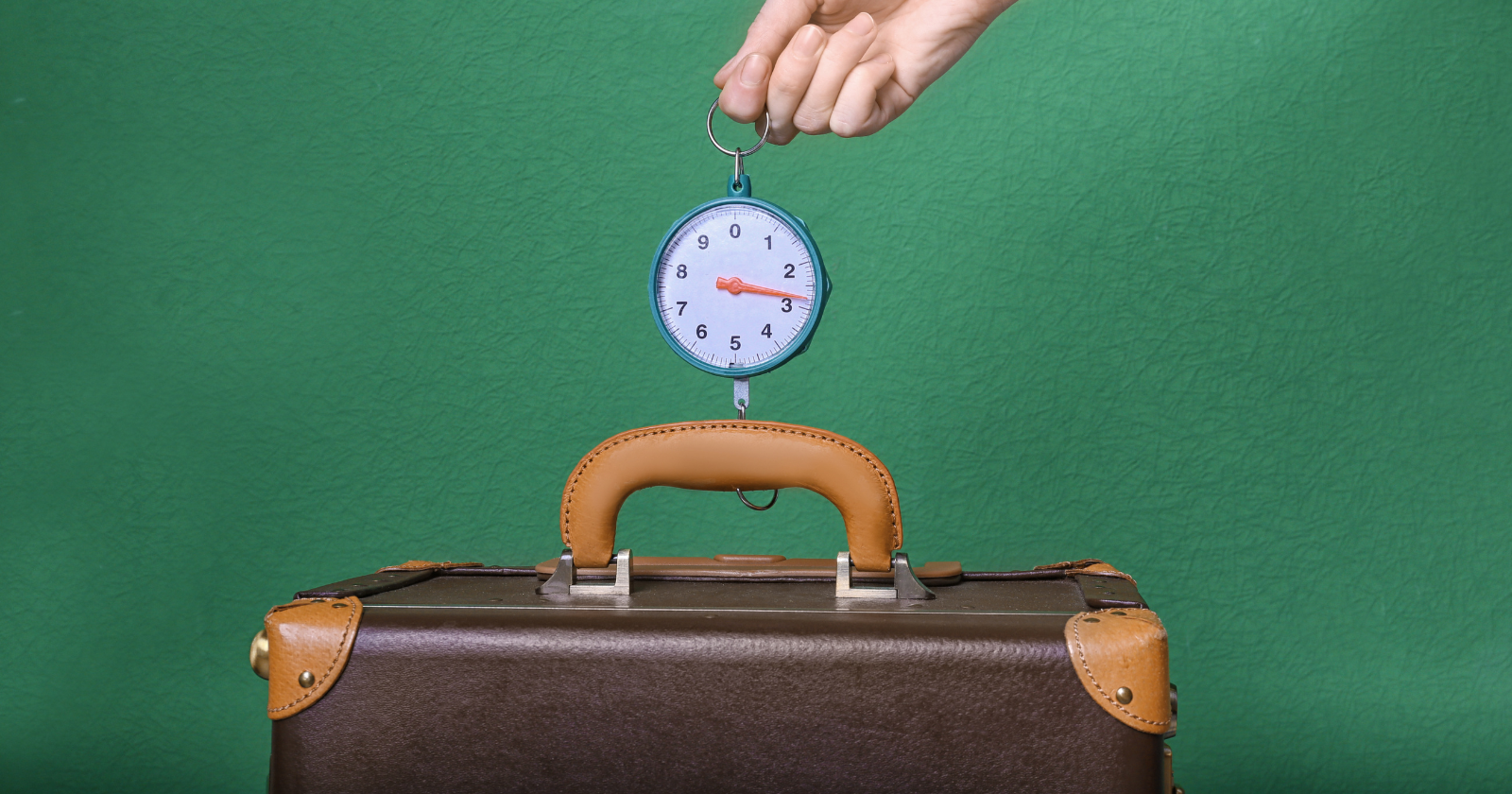
I get why people buy this one.
Overweight baggage fees are annoying.
Nobody wants to repack their life on the airport floor next to a guy eating a tuna sandwich.
But here’s what usually happens with luggage scales: You weigh your bag ten times, you get ten different numbers, and you still panic.
Most airlines also have slightly different scales at different counters, and the accuracy of a cheap handheld scale is… optimistic.
Experienced travelers reduce the variables, pack less, avoid “maybe” items, and stop bringing three pairs of shoes like they’re starring in a fashion montage.
Also, here’s the quiet truth: If you’re shopping on a trip (food gifts, skincare, that random ceramic bowl you swear you’ll use), you’re going to gain weight in your luggage anyway.
What to do instead: Know your airline’s allowance, do a rough check using a bathroom scale at home, and leave a little space for the return trip.
If you’re right on the edge, you packed too much (so, the scale isn’t the problem).
5) The “universal” travel adapter with every feature
These are marketed like they’ll save your trip.
Universal sockets, multiple USB ports, built-in surge protection, and a little LED light for no reason.
Sometimes they even come with a weird pouch like you’re carrying sensitive equipment.
Two issues:
- First, a lot of the cheap ones are bulky and flimsy. They wiggle in the wall, don’t charge quickly, overheat if you plug in more than one thing, and suddenly your “essential” is the most stressful item you own.
- Second, most experienced travelers don’t need a transformer disguised as a plug. They need one solid adapter and a small power strip, or just a multi-port charger with the right plug type.
Also, many hotels, cafés, and airports now have USB ports everywhere.
Not always reliable, but common enough that you don’t need to bring a gadget shaped like a brick.
What to do instead: Buy one high-quality adapter that matches the regions you actually travel to, plus a compact multi-port charger.
Keep it simple because the goal is to charge your stuff.
6) The “special travel outfit” you wouldn’t wear at home
This one hits close to home.
People buy travel pants with seventeen pockets, a zip-off convertible leg situation, and fabric that somehow looks both shiny and tired at the same time.
Or they buy brand-new shoes right before a trip, convinced they’ll “break them in” during the vacation.
That is a fun way to spend your fourth day walking around with blisters and regret.
Experienced travelers wear what they already know works.
Comfort beats novelty and, from a food perspective, it matters more than you think.
If you’re uncomfortable, you’ll skip walking to that hidden noodle spot.
You’ll bail on the night market, and you’ll say no to the extra block that leads to the best bakery in the neighborhood.
Good travel is often just: Walking more, stress less, and eating well.
Pack clothes you can wear all day without thinking about them, and bring shoes you’ve already tested on long walks.
If you want one “nice” outfit, make it something versatile you actually like and not a costume.
7) The fancy water bottle with a built-in filter for normal trips
I’m all for hydration, and I’m also all for not turning every trip into a survival challenge.
A lot of people buy expensive filtered bottles or purifier straws for trips where the tap water is perfectly fine, or where they’ll mostly be drinking coffee, tea, and bottled water anyway.
It’s the same mindset as buying a tactical flashlight for your walk to the grocery store.
It feels prepared and adult but, if you’re traveling to major cities with safe water systems, you don’t need a purifier.
If you’re going somewhere with questionable water, you probably won’t rely on a single bottle filter as your only strategy.
Also, let’s be real: Those bottles are annoying to clean.
They take up space and, if you forget to maintain the filter properly, you’ve basically purchased a very expensive petri dish.
Finally, there’s a bigger lesson here that applies beyond packing: We love buying solutions instead of building good judgment.
Buying gear feels like progress, but it’s actually not.
Check the water situation for your destination, then choose the simplest option.
If the water is safe, bring a normal reusable bottle; if it’s not, buy bottled water locally and use it for brushing your teeth too.
Practical beats performative.
The bottom line
Here’s the uncomfortable truth: A lot of travel shopping is just anxiety with a price tag.
We buy “essentials” because uncertainty makes us itch, we want control, and we want to feel like we’ve handled every possible scenario.
However, experienced travelers know something that beginners don’t: Most problems are solved with a calm brain, a little flexibility, and the willingness to figure it out as you go.
Before you buy anything for your next trip, ask yourself one simple question: “Am I buying this because I need it, or because I’m nervous?”
If it’s the second one, save your money for something that actually improves your trip.
Like a really good meal, in a place you’ve never been, with someone you’ll remember years from now.