The way you move through unfamiliar places reveals more about your mindset than your itinerary ever will.

Add VegOut to your Google News feed. 
Let’s be honest: most of us have fallen into a tourist trap at least once. Maybe it was a wildly overpriced gondola ride in Venice or a “cultural” dance performance that was basically just a photo op with a guy in costume.
No judgment—I’ve been there.
But the more you travel, the more you start spotting the patterns. You learn to dodge the overpriced, the overhyped, and the inauthentic. You stop traveling like a consumer and start moving more like a local (or at least like someone who’s paying attention).
If you’ve managed to sidestep the following seven traps, you’re already doing better than most.
1. Paying for “views” that are easily free elsewhere
Let me guess: someone recommended a rooftop bar with “the best panoramic view in the city”—but the drinks are $20, there’s a line out the door, and the actual view? Mostly construction cranes and overpriced hotels.
Don’t get me wrong, I love a good view. But some of the best ones are totally free.
In Lisbon, for example, most people crowd into a touristy miradouro and snap the same photo. Meanwhile, I once wandered down an alley near Alfama and ended up on a quiet rooftop where a local was playing guitar to no one in particular. That’s a memory. And it cost nothing.
Smart travelers know this: if you’re being charged for a view, there’s usually a better one a few blocks away—without the markup or the Instagram crowd.
2. Getting sucked into a “must-see” list that doesn't fit your vibe
Who made the rule that you have to see the Mona Lisa if you’re in Paris?
Honestly, the last time I was at the Louvre, I spent more time looking at people’s phones than the art itself. A massive crowd swarmed a painting the size of a magazine cover while hundreds of other incredible works were ignored down the hall.
Here’s the thing: if you don’t actually enjoy art museums, why spend three hours in one just because a travel blog told you to?
As noted by travel writer Rolf Potts, “Vagabonding is about not merely seeing the world but experiencing it in a meaningful way.” That doesn’t happen when you're ticking boxes. It happens when you listen to your gut.
3. Overplanning your itinerary down to the minute
This one hits close to home because I used to be that guy. Color-coded spreadsheets. Maps with 17 starred locations. Restaurant reservations weeks in advance.
And then one trip to Japan changed everything.
I missed a bullet train, ended up in a totally different town, and stumbled into a little tofu shop that wasn’t on any list. The owner, an elderly man with no English, served me a dish I still think about. No photos, no crowds, no reviews. Just connection.
Since then, I leave space in every trip for the unplanned. That’s where the good stuff lives.
Over-scheduling is a trap because it leaves no room for the actual experience of being there. It turns travel into a checklist—and you into a project manager.
4. Eating near major tourist attractions
Here’s a quick hack: the closer the menu is to a landmark, the worse (and more expensive) the food probably is.
As chef Anthony Bourdain once said, “You don’t find the best eats where the guidebook tells you to go. You find it where the locals actually eat.”
I’ve lost count of how many “authentic” meals I’ve seen served with laminated English menus, cartoon mascots, and a bill that would make a New Yorker blush.
Now I follow one rule: walk at least three blocks away from the main attraction, turn down a quieter street, and look for places that seem like they don’t care about tourists. If there’s a handwritten menu and the staff seems confused you’re there? Jackpot.
5. Falling for “cultural shows” that are designed purely for tourists
It’s easy to be lured in by a colorful flyer promising “traditional dancing” or “tribal ceremonies.” But more often than not, these experiences are carefully staged, looped three times daily, and designed more for your camera than for cultural insight.
I’ve mentioned this before, but during a trip to Thailand, I skipped the heavily promoted elephant “sanctuary” experience and spent the day with a local family instead. I learned how to cook actual street dishes, listened to stories about their history, and yes—got zero photos for Instagram. But it was the highlight of my trip.
Smarter travelers question what’s real and what’s performance. They look for experiences that aren't designed to be monetized in 45-minute windows.
6. Taking “hop-on hop-off” buses instead of learning the local transit system
Sure, those big red double-decker buses are convenient. You don’t have to think, plan, or figure anything out. But they also keep you at arm’s length from the place you’re trying to explore.
One of the best ways to understand a city is to get lost in its rhythm—and nothing puts you in the flow like public transport.
Whether it’s figuring out Tokyo’s rail system or navigating the chaotic jeepneys in Manila, these moments teach you patience, presence, and how locals actually move through their lives.
And as behavioral economist Dan Ariely noted, “We fall in love not with places, but with the small, unexpected rituals they reveal.” Transit is one of those rituals. You miss it entirely on the tour bus.
7. Buying souvenirs in the first shop you see
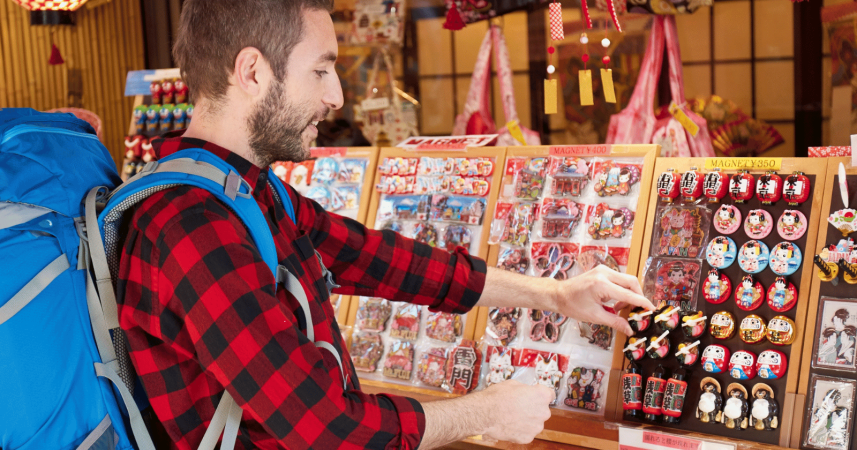
You land. You wander. You spot a market. And boom—you’re buying keychains, magnets, and “local crafts” that were mass-produced somewhere miles away.
I get it. The urgency hits early. You want to bring something home. But the first shop is rarely the best one.
If you take your time, ask around, or wander into a side street, you’ll often find a little workshop run by someone actually making what they sell. The stuff might be weirder, less polished, or harder to pack—but it has a story. And it supports someone who isn’t just reselling to tourists all day.
Smart travelers don't buy for the souvenir shelf. They buy for the memory.
The takeaway
There’s no one right way to travel. But there are definitely smarter ways.
If you’ve managed to sidestep even a few of these traps, you’re already ahead of the curve. You're traveling with intention, curiosity, and your eyes wide open.
And that’s the whole point, isn’t it?
Let the influencers chase the perfect shot. Let the buses roll by. Let the overpriced cafes fill up.
You’re off on your own path. And that’s where the real stories live.
What’s Your Plant-Powered Archetype?
Ever wonder what your everyday habits say about your deeper purpose—and how they ripple out to impact the planet?
This 90-second quiz reveals the plant-powered role you’re here to play, and the tiny shift that makes it even more powerful.
12 fun questions. Instant results. Surprisingly accurate.