Sometimes the most expensive getaways leave you emptier than before—proof that hype and price don’t always equal meaning or magic.

Add VegOut to your Google News feed. 
Vacations are supposed to recharge us. You spend months saving, scrolling through Instagram-worthy photos, and daydreaming about sipping cocktails with a perfect view. But then you arrive, and reality hits—you just dropped a small fortune for something that feels…meh.
It’s a common trap. Some destinations lean more on hype and status than genuine experience. And while I’m all for indulging in good food, great wine, and beautiful scenery, there’s nothing worse than realizing you’ve paid premium prices for mediocrity.
Let’s get into the spots that too often leave travelers regretting their credit card bill.
1. The Maldives
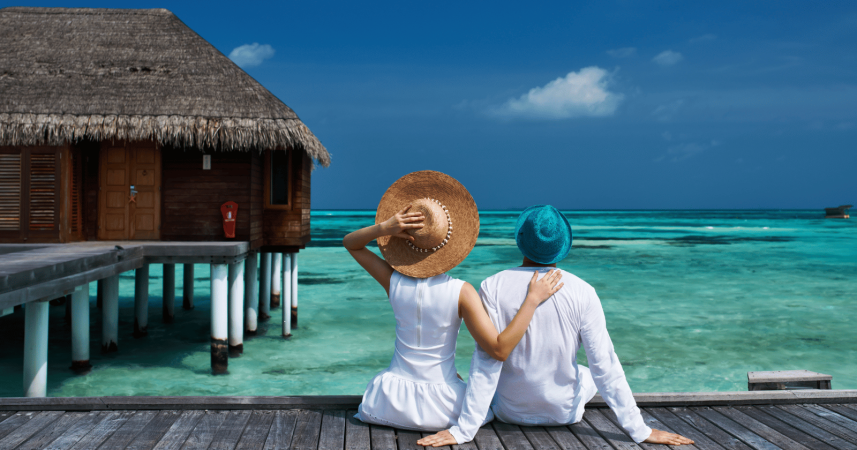
The Maldives look like a screensaver come to life: turquoise lagoons, overwater villas, and white sand that feels like flour under your feet. And yes, it’s gorgeous—for the first 48 hours.
Here’s what most people don’t talk about: you’re stuck. These resorts are isolated, meaning there’s no wandering down a street to find a hole-in-the-wall café or grabbing street food.
You eat at the same two or three restaurants every day, and the prices are eye-watering. A simple cocktail can set you back $25–$30, and buffets cost more than fine dining in Europe.
At first, the exclusivity feels glamorous. But after a few days of lounging, you start itching for variety. You realize you’ve paid thousands to sit in one spot and scroll Instagram—something you could’ve done on your own balcony back home with a bottle of wine.
If you’re honeymooning and just want to switch off, it works. But if you’re someone who craves culture, spontaneity, or a food adventure, you’ll feel boxed in.
2. Times Square, New York
Times Square is proof that not everything that glitters is gold. It’s promoted as the beating heart of New York, but locals will tell you it’s the armpit of the city.
Every corner is packed with tourists snapping the same selfies under the flashing billboards. Restaurants are mostly chains charging double what they charge anywhere else. Even the street performers seem more aggressive here, hustling you for cash after a rushed photo.
I once had a friend visit New York for the first time. She spent her first two days around Times Square and came back saying she “didn’t get the hype.”
When I took her to Queens for authentic dumplings and Brooklyn for a cozy wine bar, her whole perspective flipped. She finally saw why New Yorkers love their city—and it had nothing to do with Times Square.
Psychologically, it's like buying that over-the-top designer logo to flex what you’ve got. But as noted in The Fashion Law, research across the UK, Turkey, and China shows that prominent logos often backfire, making brands seem inauthentic and less cool. Times Square is exactly that—loud, overpriced, and trying way too hard.
3. Dubai
Dubai is the definition of manufactured luxury. You’ve got skyscrapers shaped like sails, indoor ski slopes, and malls that are basically small cities. It’s shiny and impressive at first—but after a day or two, it starts to feel hollow.
Here’s the thing: you don’t really get to know a place through air-conditioned malls and five-star hotels. Travel should expand your worldview, but in Dubai, it often feels like you’re in a giant luxury showroom. The cultural side takes a backseat to consumerism.
Even the food scene can disappoint. Yes, there are high-end restaurants run by celebrity chefs. But they’re often the same ones you’ll find in London or Vegas, just with a heftier price tag. Meanwhile, the local food culture—kebabs, shawarma, spiced rice dishes—gets overshadowed.
If you’re in it for glitz, Dubai delivers. But if you’re craving depth, it leaves you hungry.
4. Venice
Venice has an image problem: it’s too beautiful for its own good. Everyone wants a slice of it, and the crowds make it nearly impossible to enjoy.
The gondolas are a prime example. They’re undeniably romantic, but when you’re sitting elbow-to-elbow with strangers waiting your turn, romance fades. The ride itself? About $100 for half an hour. You float past buildings that are crumbling and canals that sometimes smell like stagnant water in summer.
Don’t get me wrong—I adore Italian food. But here, many restaurants in the tourist areas serve up reheated pasta for triple the price of what you’d pay in Bologna or Florence. The saddest plate of lasagna I’ve ever eaten was in Venice. It looked good on the menu but tasted like airplane food.
The irony is that Italians know better. They skip Venice in favor of coastal towns with better food, fewer crowds, and real hospitality.
5. Monaco
When people think Monaco, they picture James Bond casinos, F1 racecars, and billionaires sipping champagne on yachts. The reality? Unless you’re part of that billionaire club, Monaco is more awkward than glamorous.
The city is small, the attractions are limited, and the cost of everything is astronomical. Want a coffee at a café overlooking the harbor? That’ll be $12. A simple dinner? Prepare to spend what you’d pay for fine dining in Paris, minus the atmosphere.
Monaco is less a living city, and more a symbol of wealth. And here’s the twist: research shows that real wealth often avoids overt display.
A 2022 study by Experian Automotive found that 61% of households earning over $250,000 don’t drive luxury cars—they prefer Toyotas, Fords, or Hondas. True affluence tends to be understated. Monaco, by contrast, throws it in your face—loud, pricey, and trying too hard.
Which is why, after a day or two, it stops feeling chic and starts feeling shallow.
6. Bora Bora
Bora Bora is often called “paradise on Earth,” and visually, it fits the bill. The lagoon is surreal, the mountains rise dramatically in the background, and the villas look straight out of a travel magazine.
But here’s the problem: once you get there, there’s very little to do. Unless you’re content with lounging by the pool, swimming, or snorkeling, boredom creeps in.
Food choices are limited to resort dining, which is often overpriced and repetitive. I once spent $25 on a club sandwich that tasted like the one you’d get at any airport lounge.
What makes this worse is the opportunity cost. For the price of one week in Bora Bora, you could explore three different countries in Southeast Asia, eat like royalty, and still have money left over.
Bora Bora works as a bucket-list “once in a lifetime” splurge, but for many, it ends up feeling like a one-dimensional postcard.
7. Cancun resorts
Cancun is one of those destinations where your experience depends entirely on how you do it. The city itself has culture, nightlife, and great food. But the mega all-inclusive resorts? They’re basically vacation factories.
Here’s what happens: you pay thousands for “luxury,” but you’re eating buffet food that tastes like it was made for volume, not quality. Cocktails are watered down, and the beach is crowded with rows of identical lounge chairs.
At some point, you realize you’re having the same experience as everyone else—just with a wristband color that dictates how many “premium” drinks you’re allowed.
The sad part is Mexico has so much more to offer. Oaxaca, Merida, Tulum (if you can dodge the Instagram crowd), or even smaller coastal towns give you authentic flavors and experiences for a fraction of the cost. But the resort bubble keeps you from ever seeing it.
8. Santorini
And finally, Santorini. The island of Instagram dreams. The whitewashed houses and blue domes are iconic, but so are the crowds. In summer, cruise ships dump thousands of tourists at once, turning narrow alleys into human traffic jams.
Prices rise with the demand. A room with a caldera view can easily cost $800 a night in peak season. Restaurants with that same view? You’ll pay five times what the same meal would cost on another island.
The photos are gorgeous, yes. But the actual experience can feel like you’re trapped in a theme park version of Greece. Meanwhile, other islands—Naxos, Paros, Crete—offer equally stunning views, authentic tavernas, and beaches where you don’t have to fight for space.
Santorini is the travel equivalent of ordering an expensive bottle of wine at dinner just because you recognize the label. It looks good on the table, but does it actually taste better than the $40 one? Not always.
Final words
The places on this list aren’t terrible. They’re just overhyped and overpriced compared to what you actually get. A vacation shouldn’t feel like you’ve been tricked by clever marketing or pressured into ticking a box just because everyone else has.
Here’s the thing: the most memorable trips usually come from unexpected moments. The late-night street taco in Mexico City. The conversation with a fisherman on a small Greek island. The bakery in Portugal that sold you the best custard tart of your life for two euros. Those moments stick because they’re real, not staged.
Travel—like food—is about authenticity. And authenticity doesn’t always come with a giant price tag. As the American Confidence Institute reminds us, “Confidence is the best outfit. Feeling comfortable in your own skin at any age makes you appear more attractive".
The same goes for travel. The best trips aren’t about showing off—they’re about how they make you feel.
So before you book that overpriced resort or “must-see” spot, ask yourself: am I going for the experience, or am I going for the photo? Because there’s a big difference.