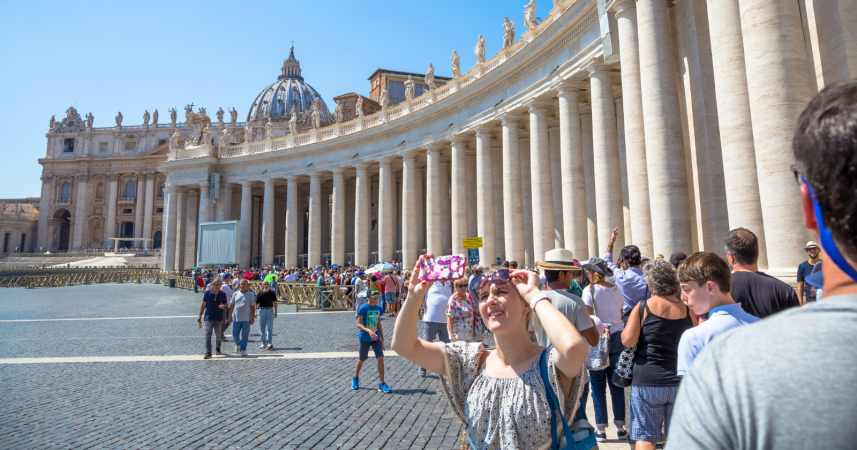
Sometimes the search for hidden beauty says less about the world’s secrets—and more about our own longing to feel like explorers again.
Every travel blog loves to throw around the phrase “hidden gem.”
But let’s be honest: once a place earns that label, it’s usually not so hidden anymore.
I’ve fallen for it too—lured in by glossy photos and promises of “authentic, untouched” escapes. Only to show up and find selfie sticks, long lines, and overpriced coffee shops that cater more to tourists than locals.
The truth is, some of these so-called gems are still beautiful, but they’ve been discovered by the masses. And if you’re expecting solitude, you might be setting yourself up for disappointment.
Let’s walk through eight places that get marketed as secret escapes but are now tourist magnets—and talk about how to experience them without losing your mind.
1. Santorini, Greece
Have you seen the iconic photos of whitewashed houses with blue domes against the Aegean Sea? Santorini is undeniably stunning. But you and about two million other people thought so too last year.
Cruise ships unload thousands of passengers daily in peak season. Streets in Oia can feel like Disneyland—shoulder-to-shoulder, everyone trying to capture the same sunset shot. The irony is that the more people crowd the cliffs to watch the sun dip, the less magical it actually feels.
I once met a couple who thought they’d find peace by staying in a “less touristy” village nearby. By noon, their village streets were packed too.
Here’s a quick mindset shift: don’t go to Santorini expecting hidden serenity. Go for the culture, the food, and the once-in-a-lifetime views. If you want peace, get up before sunrise. That’s when the island actually feels like the paradise it’s marketed to be.
2. Bali, Indonesia
Bali is often described as a spiritual oasis. Yoga retreats, rice terraces, lush jungles—it sounds like paradise.
And parts of it still are. But try walking through Ubud’s Monkey Forest on a summer afternoon and you’ll realize you’re one of thousands swarming the same paths. The monkeys, once cheeky and wild, now behave like seasoned performers trained by decades of tourists offering bananas.
As sociologist Edward Bruner once noted, “Tourism often destroys what it seeks.” Bali’s charm is still there, but much of it has shifted to Instagram-driven hotspots.
What’s interesting here from a psychological perspective is the concept of expectation vs. reality. We expect Bali to feel like Eat, Pray, Love—serene, introspective, spiritual. But when the reality is chaotic traffic and packed beaches, the letdown feels even sharper.
The fix? Go off-season, or head to neighboring islands like Lombok. Bali will always be enchanting, but it’s not the untouched haven many expect.
3. Cinque Terre, Italy
This stretch of colorful seaside villages looks like a dream. For years, it was touted as an “undiscovered Italian coastal treasure.”
Except it’s not undiscovered anymore. Cruise passengers, train day-trippers, and backpackers all flood the narrow streets. Restaurants have lines out the door, and hiking trails between villages now require reservations.
A friend once told me she expected sleepy fishing towns but instead found herself elbowing through crowds just to order gelato.
The hard truth is that Cinque Terre has been a victim of its own beauty. The more people post those iconic cliffside photos, the more others want the same shot. It’s a cycle of desire, validation, and disappointment.
That doesn’t mean you shouldn’t go—it means you should manage your expectations. Maybe skip peak months (July and August) and go in spring or fall. Or spend a night or two instead of trying to rush through all five towns in a day.
4. Machu Picchu, Peru
Machu Picchu is often called mystical, spiritual, even life-changing. And yes, standing among those ancient ruins is awe-inspiring.
But the journey there is far from hidden. Tickets sell out months in advance. Daily visitor numbers are capped, but the site still feels packed with guided tour groups waving flags.
The train to Aguas Calientes? Crowded. The bus up to the entrance? Crowded. Even the sunrise view has become a photo competition.
If you want more solitude, experts suggest hiking alternative trails like Choquequirao. But here’s the kicker: fewer people doesn’t automatically mean a better experience. Sometimes it’s about your mindset—deciding to see the crowds as fellow travelers rather than obstacles.
It’s a lesson in perspective: you can either resent the masses or remind yourself that wonder is still possible, even when shared.
5. Dubrovnik, Croatia
Fans of Game of Thrones helped transform Dubrovnik from a charming walled city into a tourism hotbed.
Walking the city walls can feel magical, but it can also feel like navigating rush hour traffic on foot. Souvenir shops now dominate the Old Town, and cafes are geared more toward tourists than locals.
When I visited, I tried to grab a coffee in what I thought was a tucked-away square. Within minutes, four large tour groups passed by, each led by guides shouting into headsets.
What struck me was how quickly commercialization erodes authenticity. Once a place becomes a “must-see,” it often reshapes itself around outsiders’ expectations. The original culture gets packaged, polished, and sold back.
The trick in Dubrovnik is to wander outside the walls. The side streets and neighborhoods still hold pieces of the city’s real identity, far from the crowds snapping Game of Thrones selfies.
6. Reykjavik and the Golden Circle, Iceland
Iceland was once marketed as the land of fire and ice where few dared to travel. Now it’s one of the trendiest destinations on the planet.
The Golden Circle route—home to geysers, waterfalls, and volcanic landscapes—is supposed to feel wild and untamed. Instead, you’ll often find parking lots full of buses and photo ops that feel staged.
A travel writer I admire, Pico Iyer, once said: “Tourists don’t know where they’ve been, travelers don’t know where they’re going.” It’s a reminder that if you stick to the obvious routes, you’ll experience what every tourist before you has.
That’s not to say you shouldn’t see the Golden Circle. But maybe balance it with lesser-visited areas. Drive a bit further, explore Iceland’s East Fjords, or simply stay longer than a two-day layover. The magic isn’t gone—it’s just hidden under layers of expectation.
7. Phuket, Thailand
Thailand’s islands still get described as tropical paradises, but some—like Phuket—are anything but hidden.
The beaches are packed with sun loungers, parasailing operators, and vendors selling everything from coconuts to counterfeit sunglasses. Patong Beach, in particular, is better known for nightlife and crowds than tranquility.
I met a solo traveler who told me she expected postcard-perfect beaches but ended up feeling like she was at a carnival. The experience wasn’t bad—it just wasn’t what she signed up for.
That’s the theme across all these spots: not bad, just misrepresented.
Phuket still has beauty, but it takes effort to find. The northern beaches are quieter, and smaller islands nearby offer the peace many expect. But calling Phuket itself a “hidden gem”? That’s stretching the truth.
8. Tulum, Mexico
Tulum was once a backpacker’s secret. Now it’s a full-on brand.
Boutique hotels, luxury resorts, and influencer photo shoots dominate the beaches. Prices for food and lodging rival New York City in some areas.
Locals have even voiced frustration, saying the influx of tourists has priced them out and strained resources. I once read a local guide’s comment that summed it up perfectly: “Tulum used to feel like Mexico. Now it feels like Instagram.”
Here’s what I noticed when I visited: almost everyone had their phone out, curating moments instead of actually being in them. It made me wonder—how much of the magic we’re chasing is just a filtered version of someone else’s experience?
Final thoughts
I’m not saying these places aren’t worth seeing. They’re beautiful for a reason. But the idea that they’re “hidden gems” is misleading.
So what’s the takeaway? Manage expectations. Don’t expect to find yourself alone in Santorini at sunset or meditating in Bali without a dozen tourists beside you. If you go, embrace the energy of the crowd—or carve out early mornings and off-season trips for a more authentic experience.
And if you truly crave hidden gems? Skip the glossy travel blogs and start by asking locals where they go when they want peace and quiet.
Because the real secret isn’t finding the next undiscovered destination. It’s learning how to create moments of discovery, no matter how many tourists are around.