That sinking feeling when your favorite band goes mainstream is exactly what's happening to Europe's hidden gems, except the damage is permanent.
I watched it happen to Giethoorn in the Netherlands. One minute it was this sleepy canal village my Dutch friend took me to in 2015, where we rented a whisper boat and floated past thatched-roof farmhouses without seeing another soul.
Five years later? The same friend sends me Instagram videos of tourist traffic jams on those same canals, selfie sticks everywhere, locals looking defeated.
You know that sinking feeling when your favorite band goes mainstream? That's what's happening to Europe's hidden gems, except instead of hearing them on Top 40 radio, you're watching them die by a thousand Instagram posts.
1) Hallstatt, Austria
Picture this: a village of 800 people getting one million visitors a year. That's Hallstatt now, and the math alone should make you wince.
This Alpine village used to be Austria's best-kept secret. Salt miners lived here for 4,000 years without much fuss. Then someone posted that one photo – you know the one, with the church spire reflecting in the lake – and suddenly everyone and their yoga instructor needed that exact shot for their grid.
The locals have started closing their curtains permanently. Tour buses dump thousands of day-trippers who spend maybe ten euros on a coffee before leaving. China even built a full-scale replica of the entire town, which honestly might be less crowded than the original at this point.
What gets me is that people aren't even experiencing Hallstatt anymore. They're just collecting it, like a Pokemon card. Stand at the famous viewpoint any morning and you'll see hundreds of people taking the identical photo, then immediately checking how it looks on their phone instead of actually looking at the actual view right in front of them.
2) Santorini, Greece
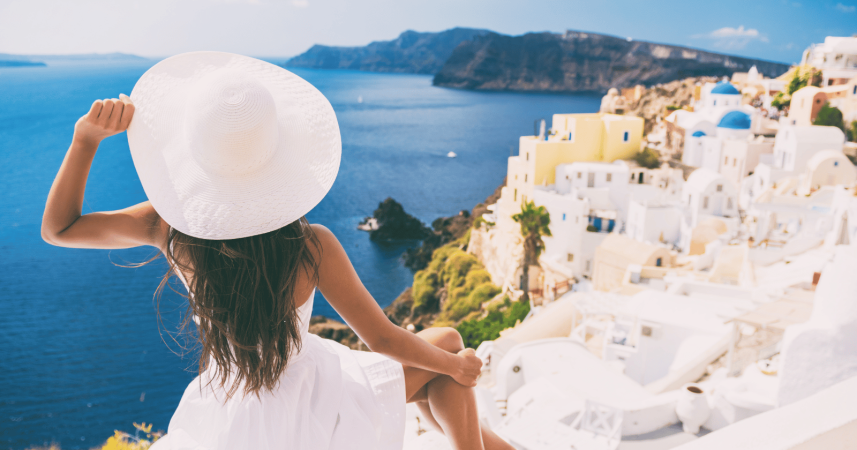
Remember when Santorini was about watching sunsets with a glass of Assyrtiko and maybe five other people? Now it's about fighting 10,000 cruise ship passengers for that blue-dome church shot in Oia.
The island gets 2 million tourists annually. The permanent population? 15,000. Every summer, water shortages hit because the infrastructure was built for a fraction of these visitors. Donkeys collapse from exhaustion carrying Instagram models up the steps. The famous sunset spot in Oia becomes so packed that people literally shove each other for photo opportunities.
I've mentioned this before but real travel isn't about replicating someone else's photo. Yet that's all Santorini has become – a backdrop for people who fly 10 hours to take a photo they've already seen a thousand times.
The worst part? The locals can't afford to live there anymore. Traditional cave houses that families owned for generations now rent for 500 euros a night on Airbnb. The young people who grew up there work in tourism all summer, then leave because they can't afford winter rent.
3) The Faroe Islands
The Faroe Islands had this perfect thing going. More sheep than people, dramatic cliffs, puffins, and locals who'd invite you in for coffee just because you looked lost. Then tourism grew 80% in five years, and everything shifted.
They actually had to close popular sites for maintenance because the land couldn't handle the foot traffic. Mykines island, with its 14 residents, now gets hundreds of daily visitors in summer. The puffin colonies are stressed. The sheep – the literal symbol of the islands – get chased by drone photographers trying to get that "epic shot."
The government started implementing tourist fees and closing certain areas, but here's the thing: once a place becomes an Instagram destination, can you ever really put that genie back in the bottle?
What kills me about the Faroes is that their whole appeal was the remoteness, the untouched quality. That's exactly what the crowds are destroying, but they keep coming anyway, chasing something that no longer exists.
4) Cinque Terre, Italy
Five fishing villages connected by hiking trails along the Italian Riviera. Sounds perfect, right? It was, until 2.5 million people decided to visit annually.
The trails between villages now require reservations and fees because they were literally eroding from overuse. During summer, the train stations look like Tokyo at rush hour. The Via dell'Amore, the easiest and most romantic path, has been closed for years due to landslides made worse by erosion from millions of footsteps.
You want to know how bad it's gotten? Residents of Monterosso al Mare proposed building a barrier to physically separate tourists from locals. Think about that. Italian villagers, famously welcoming people, wanting a wall between them and visitors.
The colored houses that everyone photographs? Many are now vacation rentals. The fishing boats pulled up on the beach? Props for photos, not working vessels. The "authentic" pesto you're eating? Probably made in a factory in Genoa because local production can't meet demand.
5) Bruges, Belgium
"It's like a fairytale," they say about Bruges. Sure, if your fairytale includes 8 million annual visitors cramming into a medieval city center built for horse carts.
The city implemented a cruise ship tax because day-trippers were overwhelming everything while contributing almost nothing to the local economy. They actually started marketing Ghent instead, trying to redirect the crowds. That's how desperate it's gotten – officially telling people to go somewhere else.
Walking through Bruges on a summer afternoon feels like being in a theme park. The same waffle shops, the same chocolate stores, the same boat tours playing the same recorded commentary in sixteen languages. The actual Flemish culture? Good luck finding it between the thousand identical lace shops selling made-in-China doilies.
6) Dubrovnik, Croatia
Game of Thrones broke Dubrovnik. There, I said it.
Before HBO showed up, this walled city was Croatia's jewel, busy but manageable. After becoming King's Landing? Eight thousand cruise passengers pour in daily during peak season. The old town, which housed 5,000 people in 1991, now has fewer than 1,000 residents.
UNESCO threatened to put Dubrovnik on its "in danger" list because of overtourism. The city had to install cameras to monitor crowd flow and limit cruise ships. They're literally treating human traffic like a natural disaster that needs emergency management.
Walking the walls used to be meditative. Now it's shuffling in a single-file line behind someone FaceTiming the entire experience to someone back home. The limestone streets, polished smooth by centuries of footsteps, are now actually cracking from the volume of traffic.
7) Reykjavik and the Blue Lagoon, Iceland
Iceland's tourism grew 400% between 2010 and 2018. Read that again. 400%.
The Blue Lagoon went from a weird local spot where people soaked in runoff from a geothermal plant to a luxury spa charging 100 euros entry. It's so crowded now they built a second lagoon. They're literally creating duplicate attractions because the originals can't handle demand.
Reykjavik feels like it's 50% Airbnb rentals now. The puffin shops outnumber actual puffins. Every restaurant serves "traditional" lamb soup that costs 30 euros a bowl. The northern lights tours run so many buses that they create traffic jams on rural roads at midnight.
But here's what really gets me about Iceland: people go there for the nature, then spend their entire trip in a convoy of tourist buses hitting the exact same stops as everyone else. The Diamond Beach, where icebergs wash ashore? Photographers literally queue up to shoot the same piece of ice.
The real tragedy
Want to know the saddest part of all this? These places were special precisely because they weren't trying to be. Hallstatt wasn't posing for photos. Santorini wasn't curating itself for social media. The Faroe Islands weren't worried about being "Instagrammable."
They were just being themselves, and that authenticity is exactly what made them worth visiting.
Now they're stuck in this impossible loop: they need tourism money to survive, but tourism is killing what made them special. They're becoming caricatures of themselves, theme park versions optimized for 30-second video clips and Valencia-filtered photos.
I'm not saying don't travel. But maybe ask yourself why you're going somewhere. Is it because you genuinely want to experience a place? Or is it because you saw it on someone's feed and want your own version of that photo?
Because here's the truth: the moment everyone discovers a "hidden gem," it's not hidden anymore. And once enough people show up trying to capture the magic, the magic tends to leave.
The best places in Europe right now? The ones you haven't heard of. The ones without hashtags. The ones where locals still outnumber tourists and where you might eat dinner without anyone photographing their food.
They're out there. But the second I tell you where they are, well... you see the problem.