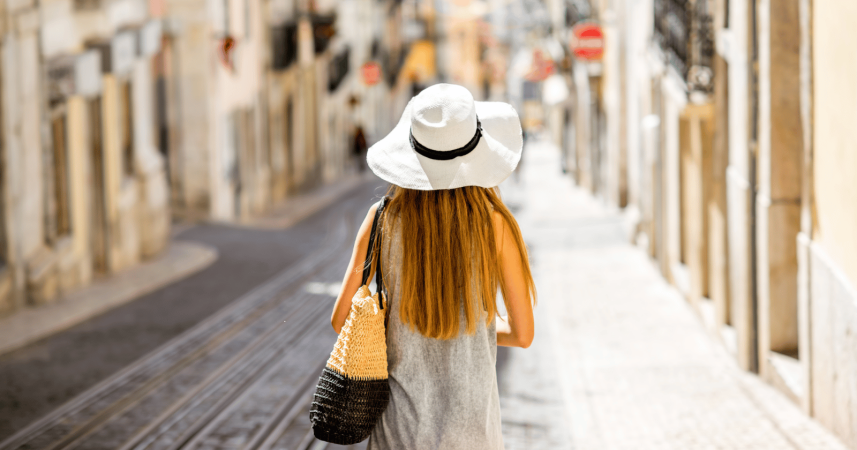
Americans arrive with visions of cobblestone romance while locals are protesting the crowds clogging their morning commute.
I spent three days in Venice last summer.
Day one was magical. Day two, I started noticing the crowds. By day three, I was squeezing through shoulder-to-shoulder tourists, paying fifteen euros for a mediocre sandwich, and seriously questioning my life choices.
Here's the thing about European travel that nobody tells you before you book that flight: Americans and Europeans have wildly different opinions about which cities are worth your time. We arrive with visions of cobblestone romance and café culture, while locals roll their eyes at yet another wave of tourists clogging up their commute.
I've spent enough time bouncing between European cities to recognize the pattern. Some places we think are fancy are basically outdoor malls with prettier architecture.
Let me save you some disappointment.
1) Venice looks better on Instagram
Venice is drowning in its own popularity, and I don't just mean the rising sea levels.
The city gets so packed with tourists year-round that it often feels more like an amusement park than an actual place where people live. Gondola rides cost over a hundred bucks for what amounts to a fifteen-minute float through murky water. Most restaurants near tourist areas serve mediocre food at triple the reasonable price.
The residents are so fed up with mass tourism that they've been protesting for years. When the people who actually live there are begging you to stay away, maybe listen.
I'm not saying skip it entirely, but consider splitting your Italian coastal time between Venice and somewhere like Trieste. You'll get canals, history, and incredible seafood without feeling like you're elbowing through a theme park.
2) Paris doesn't always live up to the hype
Every coffee shop conversation about Europe starts the same way: "Oh, you have to go to Paris!"
Do you, though?
While the Eiffel Tower and Louvre are genuinely stunning, many travelers report that the city doesn't always match those romanticized expectations. Hotels cost a fortune. A simple coffee near tourist spots can run you eight euros. The lines at major attractions stretch for blocks, turning what should be a magical museum experience into an exhausting waiting game.
I've been to Paris twice, and both times I enjoyed it more when I stopped trying to hit all the famous spots and just wandered through random neighborhoods. The Marais is gorgeous. The smaller museums are incredible. But the pressure to experience "Paris" as sold in every movie and travel magazine? That's the tourist trap, not the city itself.
Lyon gives you better food, fewer crowds, and actual French people who seem happy to see tourists.
3) Amsterdam has lost its charm to party tourism
Amsterdam used to be known for its art, architecture, and progressive culture.
Now it's mostly known for bachelor parties and people trying to take selfies on bikes in the Red Light District.
The main canals and major tourist areas are often impossible to navigate without constantly bumping into crowds. Hotel and Airbnb prices rank among the highest in Europe. The cultural heart of the city gets drowned out by party-centric tourism that has locals genuinely frustrated.
I've mentioned this before, but my partner and I visited during tulip season thinking we'd get the picturesque Dutch experience. Instead, we spent most of our time dodging drunk groups of twenty-somethings and trying to find restaurants that weren't overpriced tourist traps.
Head to Haarlem instead. It's twenty minutes away by train, has equally beautiful canals, way better prices, and you can actually hear yourself think.
4) Dubrovnik became a victim of Game of Thrones
Nothing ruins a city faster than becoming a TV filming location.
Game of Thrones transformed Dubrovnik into a massive tourist trap, pushing out much of the local culture. Prices have skyrocketed, making it one of Europe's most expensive spots. When cruise ships dock, the walled Old Town becomes genuinely unbearable.
The city's historical beauty is still there, buried somewhere under the crowds of people trying to recreate their favorite King's Landing scenes. But you're paying premium prices for a theme park experience at this point.
Kotor in Montenegro offers similar medieval charm, stunning bay views, and mountain hikes without the inflated prices or cruise ship chaos. Plus, you'll actually get to talk to locals who haven't been priced out of their own city.
5) Barcelona's La Rambla is pickpocket central
Barcelona itself is fantastic. I love the city, genuinely.
La Rambla, though? That's where tourists go to get their phones stolen while overpaying for paella.
The busy street is jammed with tourists and petty thieves who specifically target visitors. It's beautiful, sure, but locals do their absolute best to avoid the area. The restaurants are overpriced. The crowds are suffocating. And you're basically walking around with a target on your back.
During my last trip to Barcelona, I watched three different attempted pickpocket situations unfold in the span of an hour. The alleyways that branch off La Rambla are gorgeous and way more interesting than the main drag anyway.
Skip the famous walkway and head to the Gothic Quarter instead. Same city, completely different experience.
6) Mykonos is for influencers, not actual relaxation
Want to pay twenty-five euros for a cocktail while surrounded by people trying to get the perfect beach photo for their feed?
Mykonos is your place.
Known primarily as a party island, it's often chaotic and far from the relaxing Greek getaway most people imagine. Basic accommodations get marked up to ridiculous prices. The entire island feels designed for Instagram rather than actual human enjoyment.
Greek islands are incredible. I've had some of my favorite travel experiences island-hopping through the Cyclades. But Mykonos specifically has become so commercialized that it's lost whatever authentic charm it might have once had.
Naxos or Paros give you the same beautiful beaches, traditional Greek culture, and way better food at a fraction of the price. You'll actually feel like you're in Greece instead of at an outdoor nightclub with an ocean view.
7) Brussels disappoints more than it delights
Belgium has incredible cities worth visiting.
Brussels usually isn't one of them.
Beyond the beautiful Grand Place, there are only a handful of museums and the Manneken Pis statue, which is also totally overrated. Compared to Ghent or Bruges, Brussels feels expensive without justification. Most tourists visit, see the main square, feel underwhelmed, and leave wondering what they missed.
I spent two days in Brussels trying to figure out what the fuss was about. The beer was good. The Grand Place really is stunning. But beyond that? Nothing grabbed me the way other Belgian cities did.
Ghent gives you medieval architecture, better food, friendlier vibes, and actual Belgian culture that hasn't been completely overtaken by EU bureaucrats and confused tourists.
Conclusion
Look, I'm not trying to ruin anyone's European vacation dreams.
These cities became famous for legitimate reasons. Venice really is beautiful. Paris has incredible museums. Barcelona's architecture is stunning. But somewhere along the way, popularity turned them into something different than what most travelers expect.
The gap between American expectations and European reality gets wider every year. We see the glossy photos and romantic movies, while Europeans see the overcrowding, inflated prices, and loss of local character.
Your time and money are limited. Why spend them fighting through crowds and paying tourist prices when incredible alternatives exist twenty minutes away?
Europe has forty-four countries and thousands of cities. The famous ones aren't going anywhere. But the hidden gems might not stay hidden forever.
If You Were a Healing Herb, Which Would You Be?
Each herb holds a unique kind of magic — soothing, awakening, grounding, or clarifying.
This 9-question quiz reveals the healing plant that mirrors your energy right now and what it says about your natural rhythm.
✨ Instant results. Deeply insightful.