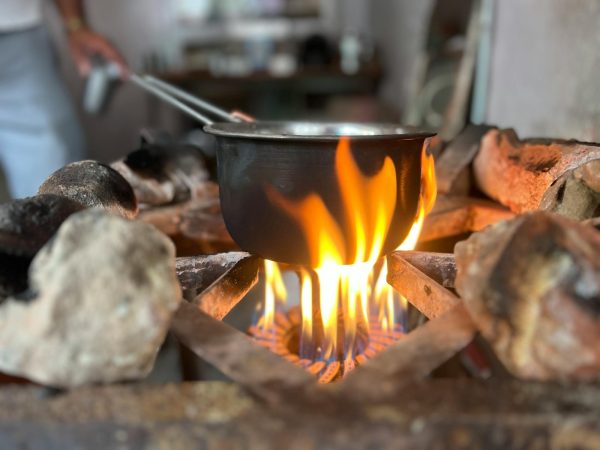
Iran's closure of the Strait of Hormuz has triggered a cooking gas crisis across India and beyond, sending LPG prices up 600% and forcing millions to revert to burning wood and coal — with cascading effects on food access, nutrition, and health.
The war between the United States and Iran, fought thousands of miles from India's borders, is dismantling something far more fundamental than oil futures: the ability of millions of people to cook a meal. As Grist reports, the conflict has sent LPG prices surging across the country, forced restaurants to close, and pushed lower-income families back toward burning wood and coal. India is one of the world's largest importers of LPG, with a significant portion of its supply dependent on imports that flow through the Middle East — and the disruption is now reshaping what millions eat, how they prepare food, and whether they eat at all.
This crisis reveals a structural vulnerability that policymakers and food advocates have largely ignored: the world's food systems don't just depend on harvests, supply chains, and markets — they depend on cooking fuel. Over 2 billion people across Asia and Africa rely on LPG to transform raw ingredients into edible meals. When that fuel supply is controlled by a single volatile corridor, a regional war becomes a global food security event. The conventional framing of Middle East conflicts centers on oil markets and geopolitics, but the more immediate human toll is playing out in kitchens, where the inability to cook is functionally indistinguishable from the inability to eat.
The scale of disruption is staggering. LPG cylinders that normally cost families a modest amount and last roughly a month have been selling at dramatically inflated prices on the black market. Restaurants across India have been forced to close, while those still operating have stripped gas-intensive dishes from their menus. Hospital kitchens, school cafeterias, and street food vendors are all reporting shortfalls. University students have seen dining options cut back, with some colleges allowing students to cook in dorm common areas.
For those who can afford the upfront cost, electric induction stoves have been flying off shelves. But that option requires reliable electricity, which millions of rural households lack. Economists note that rural communities face the harshest reality, with limited alternatives to LPG for cooking.
The health consequences of reverting to wood and coal are severe. Indoor air pollution from burning solid fuels puts families at heightened risk of heart disease and respiratory illness, with women and children bearing the greatest burden. Experts suggest that families are also likely shifting toward faster-cooking, less nutritious foods or skipping meals entirely.
The crisis extends far beyond India. Grist reports that Thailand, Sri Lanka, Pakistan, the Philippines, and Indonesia could face similar shortages. African nations including Senegal, Zimbabwe, and Malawi are especially vulnerable. Agricultural and development economists warn that prolonged disruptions could exacerbate food accessibility crises across multiple African nations. Global food commodity prices have been rising, driven in part by energy inflation from regional conflicts.
The households most affected by this crisis aren't choosing between plant-based and animal-based diets. They're choosing between eating cooked food and not eating at all. That reality demands a concrete policy response: governments in import-dependent nations need to build strategic LPG reserves, the way oil-producing nations stockpile crude. International development agencies should fast-track investment in decentralized electric cooking infrastructure — solar-powered induction systems that don't depend on a single geopolitical corridor. And food security frameworks, from the UN's Food and Agriculture Organization down to national nutrition programs, need to formally classify cooking fuel access as a food security metric, not an energy issue siloed from hunger. Until the fuel that makes cooking possible is treated as foundational to the food system, every supply shock from every distant war will land, with devastating predictability, on the plates of the world's poorest families.