Every traveler learns the hard way that not all “must-see” spots are worth the hype. These seven tourist traps still lure first-timers in but seasoned travelers know the hidden gems nearby that are far more authentic, beautiful, and worth your time.
Travel has never been easier. Cheap flights, endless guides, and Instagram reels make it seem like the world is only a few clicks away.
But here’s the thing: the easiest-to-find places are also the most overdone.
If you’ve ever stood shoulder to shoulder with a hundred strangers, trying to snap the same photo you’ve already seen online, you know exactly what I’m talking about.
That’s the essence of a tourist trap—it looks enticing at first glance, but when you’re actually there, it feels more like a crowded amusement park than an authentic experience.
So let’s talk about seven of the biggest tourist traps that still catch first-timers—and where I’d actually go instead.
1) Times Square in New York City
Times Square is one of those places that looks magical in the movies.
Neon lights, big screens, that electric New York energy. The reality? It’s a chaotic mess of slow walkers, chain restaurants, and overpriced souvenir shops.
You’ll spend more time dodging people in Elmo costumes trying to charge you for a photo than actually enjoying yourself.
Where to go instead? Head downtown to the West Village or SoHo.
These neighborhoods give you a taste of real New York—tree-lined streets, independent shops, local cafes, and just enough buzz without the sensory overload.
If you’re craving lights and action, Broadway shows are just a short walk away, and they’ll give you a far richer slice of the city.
2) The Mona Lisa at the Louvre
Here’s a fun experiment: ask anyone who’s been to the Louvre what they remember most about the Mona Lisa. Odds are, it’s not the painting—it’s the crowd.
Dozens of people crammed into a room, all with their phones raised above their heads, jostling for a blurry shot of a portrait that’s surprisingly small in person.
Instead of elbowing your way through the mob, wander to the lesser-known wings of the museum. The Louvre is massive—so big that even Parisians haven’t seen it all.
Some of my favorite hours in Paris were spent admiring sculptures in near-empty galleries while the crowds clogged up in front of Da Vinci.
Or better yet, skip the Louvre entirely and check out the Musée de l’Orangerie, home to Monet’s Water Lilies, which surround you in a way no Instagram filter can replicate.
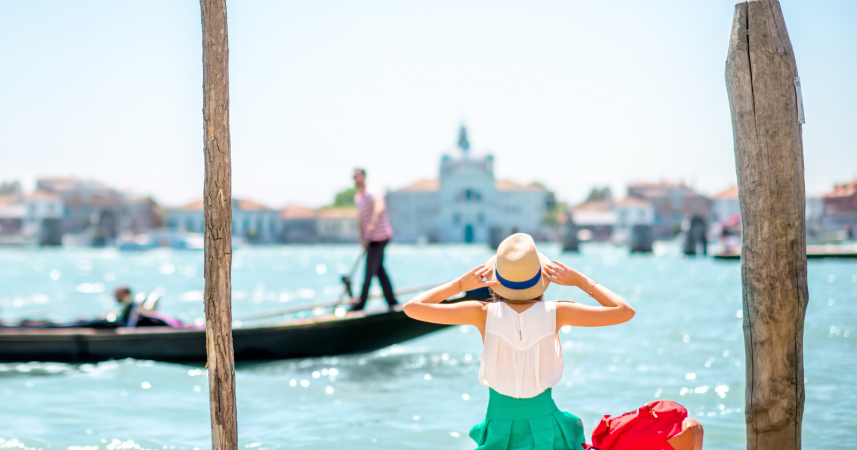
3) Riding a gondola in Venice
I get the appeal. A striped-shirt gondolier steering you through dreamy canals while you hum along to “O Sole Mio.” The problem?
That ride will set you back around 80 to 100 euros for half an hour, and it’s often spent bumping into other gondolas full of equally awkward tourists. The romance factor drops fast when you’re part of a gondola traffic jam.
Instead, take a vaporetto—the public water bus. It costs a fraction of the price, and cruising along the Grand Canal this way gives you the same view of Venice’s historic palazzos.
Or, if you’re set on a more intimate vibe, wander to the quieter canals in Cannaregio or Dorsoduro. That’s where you’ll find Venetians actually living their lives, sipping spritzes at small bars along the water.
4) Eating at chain restaurants near major landmarks
This one’s almost universal. Walk within three blocks of any famous monument—Eiffel Tower, Colosseum, Big Ben—and you’ll find an entire economy of overpriced, low-quality food.
Tourists end up paying double for reheated pasta or limp pizza just because it’s convenient.
I learned this lesson the hard way in Rome. I sat down at a café near Piazza Navona, ordered a quick cappuccino, and got charged almost three times the normal price just for sitting outside. Never again.
Here’s the move: walk ten minutes in literally any direction. That small buffer takes you away from the tourist traps and drops you into local territory.
In Paris, I had one of the best croissants of my life in a bakery tucked on a side street nowhere near the Eiffel Tower.
In Madrid, stepping off the beaten path led me to tapas bars where locals actually eat. Food tastes better when it comes with authenticity—and a normal bill.
5) The Changing of the Guard at Buckingham Palace
This ceremony gets hyped as a “must-see” in London. And yes, the uniforms are iconic, and the pageantry has its charm.
But here’s the reality: you’ll stand in a huge crowd, craning your neck for a glimpse of soldiers marching while the actual experience lasts only a few minutes. It’s more about saying “I saw it” than actually enjoying it.
Instead, go to St. James’s Park right next door. It’s one of the loveliest parks in London, filled with swans, squirrels, and views of the palace without the shoulder-to-shoulder crowd.
Or if you want a true royal fix, Windsor Castle is a short train ride away and gives you a much deeper look into British history without the crush of tourists.
6) The Hollywood Walk of Fame
If you’ve ever imagined glamorous Hollywood, this is probably what came to mind: stars on the sidewalk, famous theaters, the heartbeat of cinema.
The truth? The Walk of Fame is long, grimy, and filled with aggressive costumed characters hustling tourists for tips. The area around Hollywood Boulevard is also notoriously sketchy, especially after dark.
For a better experience, drive up into Griffith Park and hike to the Griffith Observatory. From there, you’ll not only see the iconic Hollywood sign but also sweeping views of Los Angeles that remind you why the city became such a symbol of possibility.
If movies are your thing, studio tours like Warner Bros. give you an authentic look at sets, props, and behind-the-scenes magic—without the grime.
7) Buying souvenirs at airport gift shops
And finally, the last trap: buying your “authentic” souvenirs at the airport. You know the ones—tiny Eiffel Towers, mass-produced magnets, generic chocolates with a picture of the city skyline.
Not only are they overpriced, but they’re also meaningless.
Instead, look for something local and unique during your trip. I like to bring back small things I’ll actually use: spices from a market in Istanbul, a hand-painted ceramic dish from Lisbon, or locally roasted coffee from Colombia.
These items carry memories with them, and every time you cook or sip your morning brew, you’re transported back to the place. That’s worth more than any duty-free trinket.
The bottom line
Travel should feel expansive, not exhausting. Tourist traps shrink the world down to a cliché, while authentic experiences expand it again.
They remind us why we fell in love with travel in the first place: not to collect checkmarks or blurry photos, but to taste, feel, and live in the moment.
The trick is to stay curious. Wander one street further than the guidebook says. Ask locals where they eat, shop, or spend a lazy Sunday. Trade the polished spectacle for something real, even if it feels a little uncertain at first.
That’s where the best memories are made.
If You Were a Healing Herb, Which Would You Be?
Each herb holds a unique kind of magic — soothing, awakening, grounding, or clarifying.
This 9-question quiz reveals the healing plant that mirrors your energy right now and what it says about your natural rhythm.
✨ Instant results. Deeply insightful.