Travel doesn’t reward the bravest or the most tech-savvy as it rewards the most prepared and the most present.
Travel is supposed to feel expansive, not exhausting. Yet so many trips get hijacked by friction—heavy bags, confusing apps, long lines, and small decisions that pile up into big stress.
I’ve spent years in hospitality and on the road, and I’ve learned that a great journey is a lot like a great dinner service: Prep well, pace yourself, and keep the focus on what actually brings joy.
If you’re a Boomer (or just want a calmer, smarter trip), these are the seven moves that consistently keep things easy:
1) Pack light with a two-list system
My favorite stress-buster starts before you leave home.
I use a simple two-list system: A “Musts” list and a “Maybes” list.
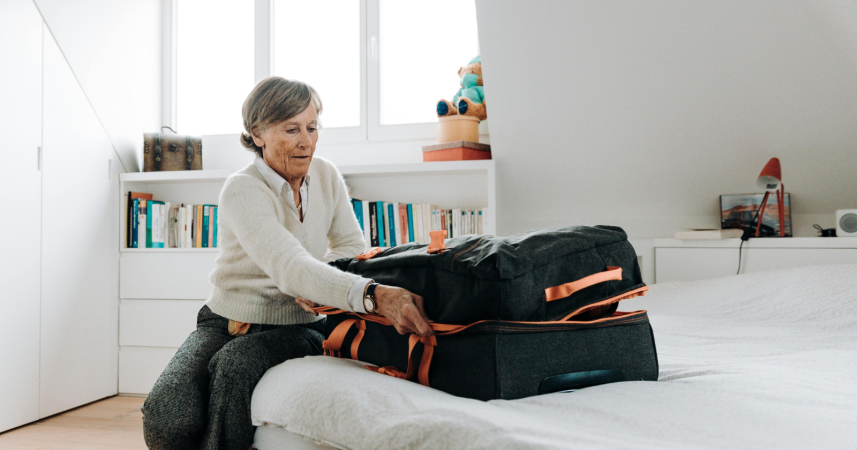
“Musts” are non-negotiables—passport, meds, glasses, chargers, two pairs of comfortable shoes, a weatherproof layer, and three outfits that mix and match.
“Maybes” are the temptations—extra jacket, third pair of pants, the “just in case” gadgets. I pack all the Musts first, then allow myself one or two items from the Maybes and call it done.
Packing cubes make this even simpler: One cube for tops, one for bottoms, one for sleepwear and gym gear, and a tiny cube for socks/underwear.
Toiletries go in a quart-size bag with mini versions of what I actually use, not “what I might use if I suddenly become a different person.”
Choose fabrics that dry quickly and stretch (merino, performance blends, linen), and leave room in your bag on purpose.
You’ll pick up small treasures—spices from a market, a tea you fell in love with—and you won’t be wrestling your zipper like it’s arm day at the gym.
Checklists aren’t sexy, but they work.
2) Choose location over luxury
I used to book “the nicest” hotel and then lose an hour each day commuting to the places I actually wanted to see (and eat).
Now, I book by location first and amenities second.
If you can stay within a 10–15 minute walk of a great café, a park, a market, and at least one museum or main sight, your days get easier.
Every step you don’t take in transit becomes energy you can spend at a long lunch or a sunset stroll.
When I help older friends plan trips, I also consider “micro-commutes.”
Are there hills from the hotel to dinner?
Is the nearest train station elevator working (you can often check this on city transport sites)?
Are there benches along the way?
Inside the hotel, request a room near the elevator, a walk-in shower, and brighter bulbs or a portable night light for evening.
If sleep is sacred for you, ask for a quiet room not facing the street or bar.
Small comforts compound into big energy.
3) Use tech that makes life easier
I grew up with tech, but the best tools are the ones you don’t notice because they just work.
Here’s my short list:
• eSIM or local SIM: Land, scan a QR code, and your phone works.
• Offline maps: Download the city area to your phone before you go.
• Screenshots folder: Screenshot boarding passes, hotel confirmations, rail tickets, and put them in a single album.
• Large text: Bump your phone’s text size one notch for less squinting, faster reading.
• One messaging app (not five): I default to WhatsApp for calls and texts on Wi-Fi.
• Live location sharing: Share your location with a trusted person while you’re out, then turn it off at day’s end.
• AirTags or similar: One in your suitcase, one in your day bag.
• Translate app offline packs: Download the language and point your camera at a menu and read.
And yes—paper still wins sometimes.
I keep a slim printed copy of my itinerary and key addresses (in local language) in my passport wallet.
If my phone dies or a driver doesn’t speak English, I can point to the page and we’re off.
4) Eat for energy, not anxiety
As someone who spent years in luxury F&B, I care about food deeply but I’ve learned that the best travel meals aren’t just delicious—they help you feel good the next day.
My rule of thumb is “eat the rainbow by noon.”
I hit a market in the morning and buy fruit, nuts, and something green.
That way, dinner can be adventurous without my body feeling like it’s surviving a festival.
Start meals with produce or broth; a salad, a plate of grilled vegetables, or a simple soup takes the edge off hunger and steadies energy.
Moreover, mind the salt and late-night feasts. If a big dinner is part of the fun, drink water with electrolytes and take a short walk afterward—your sleep will thank you.
Don't forget to know your non-negotiables; if you avoid certain ingredients, learn the local words and screenshot them.
Most kitchens can accommodate clear, kind requests.
Curiosity still wins for me as I’ll try the street stall with a line and the cozy spot a grandmother runs down a side street.
However, I balance it with days where lunch is simple and plant-forward so dinner can be a showstopper.
5) Glide through airports and stations
A smooth departure sets the tone for the whole trip.
Pre-trip, I do three things: enroll in a trusted traveler program if I can, check my airline’s accessibility options, and download the airport map.
Many airports offer complimentary wheelchair or meet-and-assist services you can request in advance—even if you just want help navigating a long terminal.
Use them because you earned the right to make travel easier.
At the airport, I wear slip-on shoes, compression socks, and layers so security becomes a non-event.
I keep meds and a spare set of basics in my under-seat bag, not the overhead, in case bins get full or I gate-check.
Seats matter more than we admit. If mobility is a concern, snag an aisle near the front for a steadier exit.
On trains, book seats near luggage racks you can see from your seat; on ferries, ask staff where the quiet corners are—they know.
Hydrate earlier than you think and limit alcohol in the air. It’s not about being a buzzkill; it’s about landing with energy instead of brain fog.
A gentle stretch after boarding (ankle circles, shoulder rolls) can make a surprising difference by the time you step off.
6) Build a personal comfort kit
Think of this as your travel-friendly mise en place—the little setup that makes the whole experience smoother.
Mine lives in a small pouch and usually includes:
• Earplugs and an eye mask (blackout curtains for your face);
• A light scarf that works as a pillow cover or warmth layer;
• Electrolyte packets for long days and hot climates;
• A tennis ball or mini massage ball for quick relief against a wall;
• A few adhesive heat patches for tight backs or necks;
• A travel-size hand cream and lip balm (dry cabins are sneaky);
• Reading glasses with a hard case;
• A tiny night light or motion sensor light for hotel bathrooms;
• A pill organizer with AM/PM labels and a simple medication list inside, and;
• Chargers in a single zip bag plus a small power strip, because outlets are always behind a couch.
This isn’t a “just in case apocalypse” bag, rather it's your “I know what makes me feel human” kit.
When you can sleep well, soothe minor aches, and find what you need without rummaging, travel stops feeling like a challenge and starts feeling like a treat.
7) Print a one-page plan for peace of mind
Finally, the simplest habit I share with Boomer friends is my one-page plan.
It’s not a manifesto—just a single sheet that answers, “If my phone dies, what do I do next?”
Here’s what goes on it:
• Flight/train numbers, departure times, and the address of your first stay;
• Hotel/host phone and email, plus check-in instructions;
• Two “Plan B” options (a backup hotel and a backup route from the airport);
• Reservation numbers for tours or restaurants that are hard to move;
• Emergency contacts and local emergency numbers, and;
• Copies of passport and travel insurance confirmation
This page lives in my passport wallet and a photo of it lives in my spouse’s phone.
Most days, I never look at it but knowing it’s there keeps my shoulders down and my curiosity up.
What I hope you take away
Travel doesn’t reward the bravest or the most tech-savvy as it rewards the most prepared and the most present.
If you try even two of these hacks on your next trip, I suspect you’ll feel the shift.
Instead of managing problems, you’ll be savoring moments—like the first sip of coffee in a quiet square, or the market vendor who insists you taste a slice of the ripest melon you’ve ever had.
That’s what exploring the world should feel like.
Stress-free? Not every second but simple, intentional, and full of the good stuff.
What’s Your Plant-Powered Archetype?
Ever wonder what your everyday habits say about your deeper purpose—and how they ripple out to impact the planet?
This 90-second quiz reveals the plant-powered role you’re here to play, and the tiny shift that makes it even more powerful.
12 fun questions. Instant results. Surprisingly accurate.