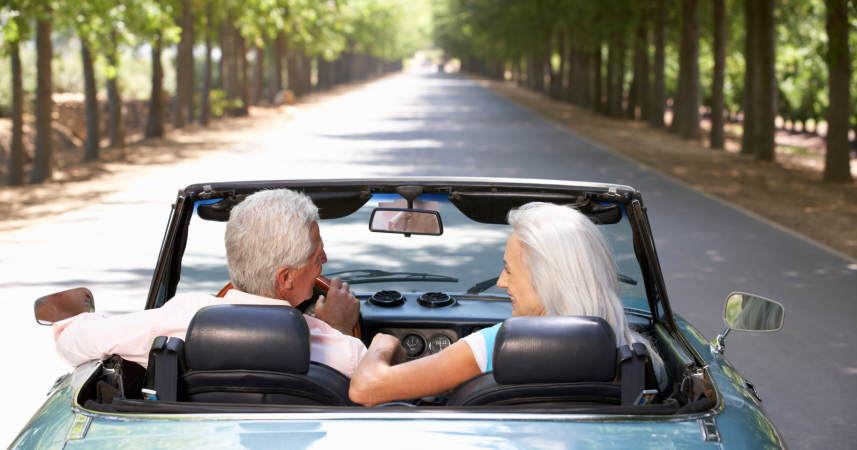
Maximum beauty, minimum hassle—the boomer travel philosophy.

Add VegOut to your Google News feed. 
Boomers understand something about road trips that younger generations might have missed: the best routes aren't always the fastest. They learned to travel when gas was cheap, motels were everywhere, and the journey mattered as much as the destination. They know which roads deliver maximum beauty with minimum white-knuckling.
These aren't extreme adventures requiring 4WD or wilderness permits. They're routes perfected by millions of travelers who value comfort, reliable cell service, and towns with actual restaurants. Call it practical wanderlust—the sweet spot where accessibility meets awe.
1. Blue Ridge Parkway, Virginia to North Carolina
Four hundred sixty-nine miles of mountain views without a single traffic light. The speed limit never exceeds 45 mph, which younger drivers find maddening and boomers find meditative. October brings legendary foliage displays that make New England jealous.
The genius is in what's missing: no commercial trucks, no billboards, no rush. Pullouts appear every few miles for photos or picnics. Towns like Asheville and Roanoke bookend the route with real hotels and restaurants. It's America's favorite slow road for good reason—it forces you to actually see what you're driving through.
2. Pacific Coast Highway, Big Sur stretch
Specifically the 90 miles between Carmel and San Simeon, where the continent meets the ocean dramatically. This isn't the entire PCH marathon—it's the highlight reel. Boomers know to avoid summer weekends when it's clogged with rental convertibles.
Spring brings wildflowers and whale migrations. The Bixby Bridge delivers that postcard moment everyone wants. Hearst Castle offers a perfect halfway stop for those who plan ahead. Gas up in Carmel—stations are sparse and expensive along the route. This stretch proves you don't need to drive all of Highway 1 to get the best of it.
3. Route 66, Arizona section
Forget driving all 2,400 miles. The Arizona portion from Flagstaff to Kingman gives you peak Route 66 nostalgia without the decay. This 160-mile stretch includes the longest remaining uninterrupted piece of the original highway.
Small towns like Williams and Seligman kept their vintage signs and motor courts alive. The detour to Grand Canyon South Rim adds just an hour. October through April means perfect weather and fewer crowds. It's Americana concentrate—all the mythology without the marathon.
4. Going-to-the-Sun Road, Montana
Fifty miles through Glacier National Park that feels like driving through a nature documentary. Open only from late June through September, weather permitting. The road peaks at Logan Pass, where mountain goats have right of way.
Boomers book lodges inside the park a year ahead, knowing that staying in Kalispell means missing sunrise on the mountains. The key is going after Labor Day—fewer families, elk bugling, larch trees turning gold. Park shuttles handle the driving if heights make you nervous. This is what national parks were invented for.
5. Natchez Trace Parkway, Tennessee to Mississippi
Four hundred forty-four miles of Southern history without interstate monotony. No commercial traffic, no billboards, speed limit locked at 50. The route follows ancient Native American paths, then colonial post roads, now perfect pavement.
Spring means dogwoods and redbuds blooming. Fall brings spectacular hardwood colors without New England prices. Tupelo offers Elvis birthplace pilgrimage opportunities. The parkway bridges are engineering poetry. It's the South's most civilized drive—history lesson included, traffic stress excluded.
6. Utah State Route 12
One hundred twenty-four miles from Capitol Reef to Bryce Canyon through America's most underrated scenery. Red rocks, slot canyons, alpine forests—it's Utah's greatest hits album. Less crowded than Zion, more varied than Arches.
The town of Boulder (population 200) sits between two sections of stunning slickrock. Escalante offers the last services for miles. Spring and fall dodge both summer heat and winter snow. Boomers love this route because it delivers Southwest drama without requiring hiking boots. Every pullout frames another impossible view.
7. Skyline Drive, Virginia
Just 105 miles through Shenandoah National Park, perfect for a long weekend. Seventy-five overlooks mean you're never more than a mile from a vista. The 35 mph speed limit feels right when you're climbing through clouds.
Front Royal to Waynesboro takes three hours if you never stop, all day if you stop everywhere. October weekends are madness; weekdays are magic. The park's lodges book early but deliver old-school national park experiences. It's the East Coast's most accessible mountain escape—close to cities, far from city thinking.
8. San Juan Skyway, Colorado
Two hundred thirty-six miles of mountain magnificence without needing oxygen tanks. The loop connects Durango, Telluride, Ouray, and Silverton—Old West towns that traded mining for tourism gracefully.
September aspens turn entire mountainsides gold. The Million Dollar Highway section tests nerves but rewards courage. Hot springs in Ouray soothe driving tension. Boomers know to book rooms in Durango, using it as base camp rather than moving nightly. This is Colorado's best road trip that doesn't require acclimatization training.
9. Oregon Coast Highway 101
All 363 miles of Oregon's coast, from Astoria's Victorian charm to Brookings' wild beaches. Every beach is public by law. State parks appear every few miles. Seafood shacks sell catch from that morning.
Cannon Beach delivers Haystack Rock at sunset. Sea Lion Caves near Florence assault your senses—unmissable anyway. September brings stable weather and smaller crowds. Towns like Bandon and Yachats offer real lodging and restaurants. The whole route takes two days minimum, better with three.
Final thoughts
These routes work because boomers have spent decades perfecting the formula: natural beauty plus actual infrastructure. They want stunning views and clean restrooms, adventure and accessibility, solitude and cell service. They're not trying to prove anything—they're trying to enjoy something.
The common thread isn't just ease or affordability—it's intelligence. These routes maximize experience while minimizing hassle. They're scenic without being scary, remote without being risky. They understand that the best road trip isn't about conquering distance or difficulty. It's about finding the speed that lets you actually see things.
Younger travelers might mock the predictability, the comfort-seeking, the early dinner stops. But there's wisdom in knowing exactly what you want from a road trip and exactly where to find it. These routes deliver what they promise: beauty you can access, adventures you can afford, memories you don't need to suffer for. Sometimes the well-worn path is worn for excellent reasons.