Think you blend in abroad? Think again. These 8 habits give you away as a tourist before you even unfold the map.
It’s easy to think you blend in when you travel.
You’ve got the sneakers, the backpack, the camera bag slung across your shoulder, and a smile that says, “I belong here.”
But locals usually know better.
After years of traveling and sometimes pretending not to be a tourist, I’ve realized that it’s not the camera or even the accent that gives us away.
It’s how we move, talk, and interact with our surroundings.
Here are eight things travelers do that instantly tip off locals that they’re not from around here.
Let’s dive in.
1) You walk like you’re sightseeing, not living
Have you ever noticed how locals walk with purpose? There’s a rhythm to it. A kind of urban choreography that says, “I’ve got somewhere to be.”
Tourists, on the other hand, walk with curiosity.
We slow down at every colorful storefront, pull out our phones, point at things, and stop mid-sidewalk to admire architecture or Google “best coffee near me.”
I’ve done this myself. In Lisbon, I once blocked an entire street corner trying to capture the perfect shot of a tram while locals swerved around me like water around a rock.
It’s not that curiosity is bad. It’s what makes travel so rewarding. But if your goal is to blend in, watch how people move.
Notice their pace, the way they navigate crowds, even how they hold their phones. Mimic that energy.
It’s less about hiding your identity and more about respecting the rhythm of the place you’re in.
2) You treat every meal like an event
I get it. Food is one of the best parts of travel.
But you can usually tell who the tourists are by how ceremonious they make eating out.
They’re the ones photographing every plate, talking loudly about how “authentic” the food tastes, or asking the waiter for menu substitutions.
Locals just eat.
In Thailand, I learned this the hard way. I once spent ten minutes trying to order tofu at a street cart where tofu wasn’t on the menu.
The woman smiled politely but I could tell I’d broken the unspoken rule: you adapt to the place, not the other way around.
If you really want to experience a destination’s culture, don’t perform the meal.
Live it. Eat where the locals eat. Try what’s served. Enjoy it quietly, without needing to make it a spectacle.
And yes, you can still take a photo. Just maybe not ten.
3) You wear “travel clothes”
There’s nothing wrong with comfort. But there’s a difference between dressing for comfort and dressing like you’re perpetually on a plane.
Tourists tend to wear the same telltale uniform: cargo shorts, quick-dry shirts, hiking sandals, crossbody bags, and wide-brimmed hats that scream “safari.”
Locals, even in hot climates, usually manage to look effortlessly put together. Simple jeans, sneakers, maybe a loose linen shirt.
When I was in Paris, I thought my black sneakers would help me blend in.
They did until I paired them with a bright blue waterproof jacket and a daypack the size of a toddler.
If you’re traveling to blend in, pay attention to what locals wear. You don’t need to overhaul your wardrobe, just tone down the “function over form” look.
Sometimes, less practical actually means more invisible.
4) You talk too loudly
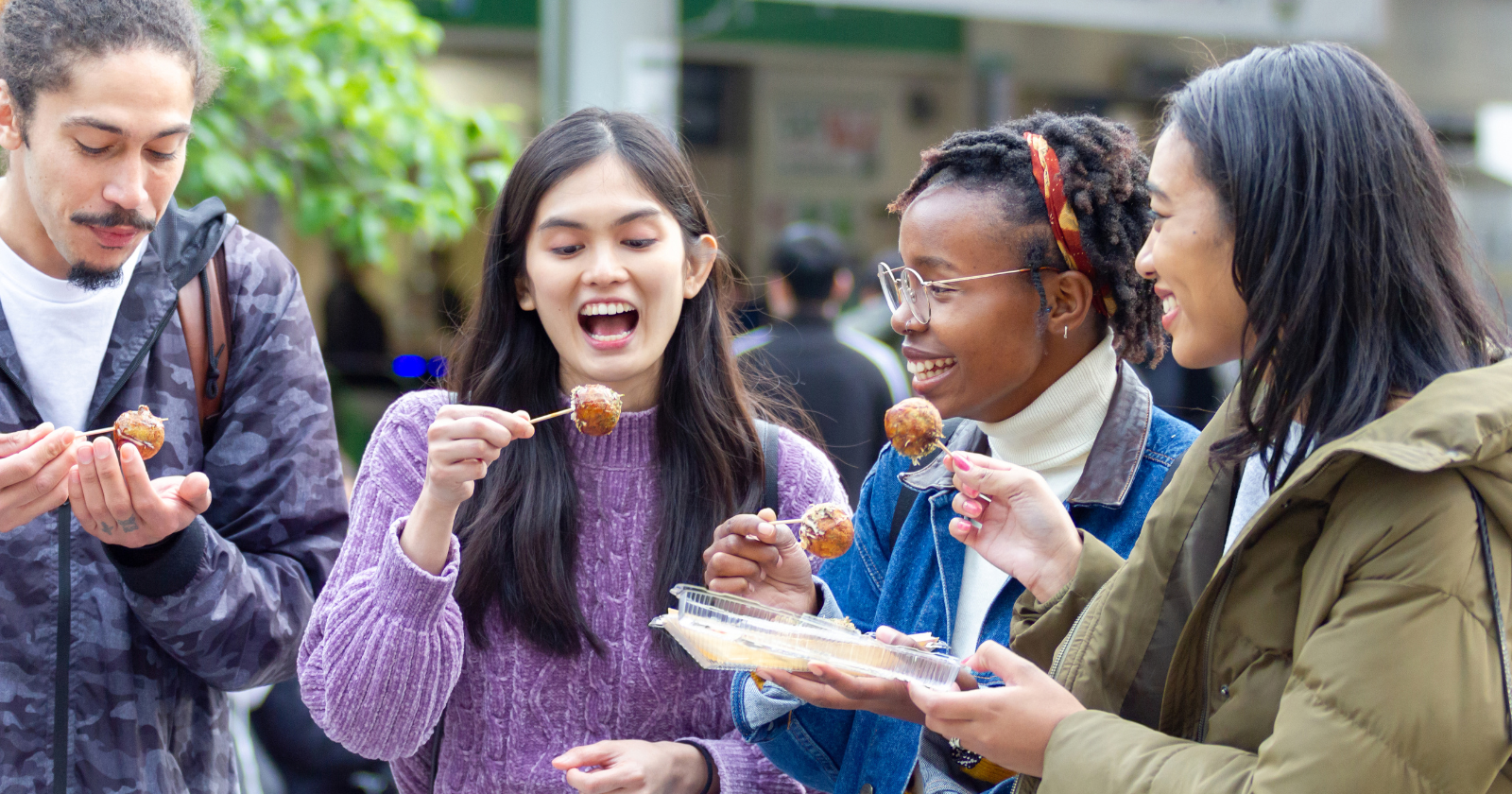
It’s funny how you don’t notice your own volume until you’re surrounded by people who speak softly.
Americans, myself included, tend to project. It’s not arrogance. It’s cultural.
We’re used to filling the air with sound and making our conversations known. But in many parts of the world, loudness reads as intrusion.
In Japan, I remember being on a nearly silent train, whispering to a friend about a music festival. Even our whisper turned heads. It was humbling.
Blending in often starts with listening.
Watch how people interact in cafes, on buses, in markets. Notice the tone, the pauses, the gestures.
Then match it. You’ll find that quieter travel not only makes you less noticeable, it helps you tune in to the subtleties of the place you’re visiting.
5) You overplan every moment
Here’s a paradox: the more rigid your itinerary, the more you stand out.
Locals don’t run on strict schedules unless they’re working. They wander. They linger. They stop for coffee just because.
But tourists? We’re often on a mission to see everything. We rush from landmark to landmark, eyes glued to maps and apps, checking off experiences like they’re items on a to-do list.
I used to be that traveler. In Rome, I once missed an incredible street performance because I was too focused on getting to my next stop “on time.”
The irony is that spontaneity, those unplanned moments, are what make a place come alive.
If you’re clutching your itinerary like a lifeline, loosen your grip. Let the day surprise you.
Locals notice people who look lost in their own schedules. Try getting lost in the city instead.
6) You rely on English
I’ve mentioned this before, but one of the fastest ways to show respect in another country is to try, even clumsily, to speak the language.
Yet so many travelers default to English, assuming everyone should understand.
I’ve done this too. Once, in Madrid, I asked for directions in English and the shopkeeper answered me in Spanish. We both smiled awkwardly, then resorted to gestures and laughter.
The exchange was short but memorable, and it taught me that effort matters more than perfection.
Learn a few words: hello, please, thank you, sorry. Use them.
Locals instantly recognize when someone’s trying, and they usually appreciate it. Even if your accent’s terrible.
Speaking a few words in someone else’s language isn’t just polite. It’s a bridge.
7) You treat locals like props, not people
This one might sting a bit.
It’s easy to slip into “observer mode” when you travel, to see everything and everyone as part of the scenery.
We snap photos of street vendors, children playing, or old men playing cards without asking.
We stare at people’s clothes or habits like we’re watching a movie.
But locals can feel that gaze.
When I was in Morocco, I caught myself raising my camera toward a woman carrying water jugs. She looked at me, not angrily, just with quiet dignity, and I lowered my camera.
It reminded me that travel isn’t a performance. People aren’t extras in your vacation story.
Instead of photographing someone, try talking to them. Ask about their day, their work, their favorite local dish.
Even a small exchange humanizes the experience, and suddenly you’re no longer a tourist snapping moments but a guest sharing one.
8) You compare everything to home
“This coffee’s good, but not as good as back in LA.”
We’ve all said something like that while traveling. It’s instinct. Our brains are wired to compare new experiences to familiar ones.
But constant comparison keeps you in your own world, and locals can sense it.
The moment you start measuring everything against your home country, you create distance.
Instead, practice curiosity over judgment.
When I was in Vietnam, I initially found the local coffee too sweet.
But once I stopped thinking “too sweet compared to home” and started wondering why it was made that way, I discovered a history of condensed milk and wartime scarcity behind that flavor.
The more you compare, the less you understand. The more you observe, the more you connect.
Try this: instead of asking, “How does this stack up to home?” ask, “What does this tell me about here?”
The bottom line
Blending in isn’t about pretending to be someone else. It’s about showing up with awareness.
Travel isn’t just a way to see the world. It’s a mirror reflecting how you move through it.
Next time you’re abroad, notice how you walk, speak, eat, and connect. Notice when you’re in tourist mode versus when you’re in human mode.
The world doesn’t expect you to be a local. But it does appreciate when you try to meet it halfway.
And maybe that’s where the real travel magic happens.
If You Were a Healing Herb, Which Would You Be?
Each herb holds a unique kind of magic — soothing, awakening, grounding, or clarifying.
This 9-question quiz reveals the healing plant that mirrors your energy right now and what it says about your natural rhythm.
✨ Instant results. Deeply insightful.