Most tourists see Thailand's surface, but understanding these cultural codes transforms strangers into friends who genuinely want to help you.

Add VegOut to your Google News feed. 
I spent three weeks in Thailand a few years back, and within the first two days, I realized something important: the guidebooks tell you what to see, but they rarely tell you how to actually connect with people.
There's this moment I remember vividly. I was at a small street food stall in Chiang Mai, attempting to order pad thai with my terrible Thai pronunciation. The vendor smiled, corrected me gently, and then spent the next ten minutes teaching me how to say it properly.
By the end of the week, she was saving me the best spot at her cart and throwing in extra spring rolls.That wasn't luck. That was the result of understanding something deeper than tourist etiquette.
Thailand has these unspoken rules that, when you follow them, completely transform your experience. Locals don't just tolerate you as another tourist passing through. They genuinely go out of their way to help you, invite you into their world, and treat you like someone worth knowing.
Here's what I learned.
1) Respect the monarchy without question
This isn't a suggestion. This is the foundation of everything else.
In Thailand, the monarchy is sacred. Not "important" or "respected" in the way we might think of political figures back home. Sacred. The kind of reverence that runs so deep, it's woven into the fabric of daily life.
Before every movie in Thai cinemas, the royal anthem plays and everyone stands. When the King's image appears on TV, people pause what they're doing. And lèse-majesté laws mean that even perceived criticism of the royal family can land you in serious legal trouble.
I learned this rule before I even arrived, but I saw it reinforced constantly. Don't joke about the monarchy. Don't question it. Don't even discuss it unless a local brings it up, and even then, tread carefully.
You might not agree with the system or understand the politics. Even so, your role as a visitor is to respect what matters deeply to the people whose country you're in.
The flip side is, when locals see you treating the monarchy with the same reverence they do, standing during the anthem, handling currency carefully because the King's image is on it, they notice. And they appreciate it more than you'd think.
2) Master the wai and know when to use it
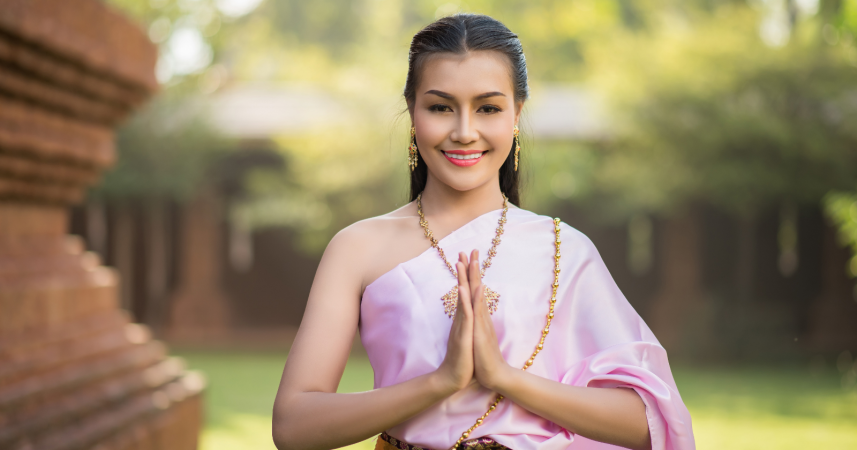
The wai is that prayer-like gesture you've probably seen: hands pressed together, slight bow, fingers at different heights depending on who you're greeting.
But here's what the guidebooks don't tell you: it's not just a hello. It's a entire communication system.
The height of your hands, the depth of your bow, whether you wai first or wait for the other person, all of this communicates respect, social hierarchy, and your understanding of Thai culture.
Monks get the highest wai. Elders get a respectful wai. Peers get a casual one. Service workers and children? You don't wai them, they wai you.
I messed this up constantly at first. I was wai-ing everyone like an overenthusiastic puppet. The street food vendor. The hotel cleaning staff. A kid who handed me a menu.
A Thai friend finally pulled me aside and explained: wai-ing service workers actually makes them uncomfortable because it disrupts the social order they understand. Return their wai if they initiate, sure, but don't lead with it.
Once I got this right, something shifted. People relaxed around me. They could tell I was trying to understand their culture, not just perform a gesture I'd seen in a movie.
3) Never touch anyone's head or point your feet at people
The head is the highest point of the body, spiritually speaking. The feet are the lowest. In Thailand, this isn't metaphorical. It's literal.
So, don't touch anyone's head, even in a friendly, affectionate way. Don't ruffle a kid's hair. Don't pat someone on the head as a joke.
Even if you're towering over someone and it feels natural to rest your hand on their head, don't do it.
And as for your feet, keep them firmly on the ground and pointed away from people.
Don't prop your feet up on a chair across from someone at a restaurant. Don't stretch your legs out with your feet pointing toward someone's direction. Don't step over someone sitting on the ground. Walk around them.
I watched a Western tourist at a temple accidentally nudge a Buddha statue with his foot while trying to get a photo angle. The atmosphere in that room changed instantly. The monks didn't say anything, but the other visitors, the Thai families, everyone went quiet. He had no idea what he'd done wrong.
These rules feel arbitrary until you realize they're not really about feet and heads. They're about mindfulness. About being aware of your body in space and how it affects others.
When you get this right, people notice that too. They see someone who's paying attention, who cares enough to learn.
4) Keep your cool no matter what happens
There's this concept in Thailand called "jai yen," which literally means "cool heart." It's about staying calm, not raising your voice, not showing frustration or anger, even when things go wrong.
And things will go wrong. You'll get lost. Your hotel will mess up your reservation. The bus will be three hours late. The food you ordered won't be what you expected.
How you react to these moments determines everything.
I saw this play out at a guesthouse in Bangkok. A European couple's room wasn't ready, even though they'd booked it weeks in advance. The guy started yelling at the receptionist, red-faced, demanding compensation and threatening bad reviews.
The receptionist just smiled politely and stopped trying to help. She became a wall of pleasant non-responsiveness.
Compare that to another guest in the same situation who just smiled, said "mai pen rai" (no worries), and asked if there was anywhere nearby they could grab coffee while they waited. The receptionist immediately offered them a free upgrade, called a cafe down the street to reserve them a table, and personally walked them there.
Same problem, right? But completely different outcomes.
Losing your cool in Thailand makes you look bad, but more than that, it actively closes doors. People will disengage, help will evaporate, and you'll be marked as someone not worth the effort.
Stay calm, smile through the chaos, and watch how much further that gets you.
5) Dress modestly, especially at temples
This one seems obvious, but you'd be surprised how many people get it wrong.
Shoulders covered. Knees covered. No see-through clothing. No offensive slogans on your shirts. And absolutely no beachwear in temples or religious sites.
I've seen tourists turned away from the Grand Palace in Bangkok because they showed up in tank tops and shorts. Some temples now keep a rack of scarves and long pants that you can borrow if you're not dressed appropriately, but that's not the point.
The point is showing that you understand you're entering a sacred space and that your comfort or fashion choices take a back seat to respect.
This extends beyond temples, though. In more conservative parts of Thailand, especially in smaller towns and rural areas, dressing modestly just makes life easier. You get fewer stares, fewer uncomfortable interactions, and more genuine connections.
I started keeping a lightweight long-sleeve shirt in my bag specifically for temple visits. That small effort paid off in countless ways. Monks would actually engage with me, other visitors would smile and nod approvingly, and I never had to deal with the awkwardness of being underdressed.
It's such a simple thing, but it communicates volumes about whether you see Thailand as a backdrop for your vacation photos or as a place with its own values that deserve respect.
6) Learn basic Thai phrases beyond "hello" and "thank you"
Most tourists learn "sawasdee" (hello) and "khob khun" (thank you) and call it a day.
But here's what I discovered: learning just a few more phrases, even if you butcher the pronunciation, changes everything.
"Aroy" (delicious). "Mai pet" (not spicy, which I used constantly). "Tao rai" (how much). "Kor tot" (excuse me). And my favorite, "mai pen rai" (no worries), which might be the most useful phrase in the Thai language.
When I started using these, even badly, people lit up. They'd laugh at my pronunciation, correct me, and then actually start trying to communicate with me instead of just defaulting to English or giving up.
There was this woman who ran a tiny restaurant near my guesthouse in Chiang Mai. She spoke almost no English, and I spoke terrible Thai. But I kept trying, using my handful of phrases, pointing at things, making hand gestures.
By the end of my stay, she was teaching me new words, bringing me dishes she thought I'd like, and introducing me to her regular customers.
The effort you put into learning someone's language, even just the basics, signals respect in a way that nothing else does. It says "your culture matters enough to me that I'm willing to look foolish trying to speak your language."
And in Thailand, where so much of the culture is about politeness, respect, and social harmony, that effort goes incredibly far.
You don't need to be fluent. You just need to try.
The difference respect makes
Thailand is a country of warm people. But accessing that warmth requires understanding the cultural framework that shapes how Thais interact with the world.
These six rules aren't about restricting your behavior or making you walk on eggshells. They're about recognizing that genuine connection happens when you meet people on their terms, not yours.
The tourists who complain about Thailand being too touristy or superficial are usually the ones who never bothered to learn these unspoken rules. They see the surface and assume that's all there is.
But when you show respect through your actions, when you demonstrate that you care enough to understand the culture you're visiting, everything changes. Doors open. Conversations deepen. People go out of their way to help you.
It's that simple, and that profound.
What’s Your Plant-Powered Archetype?
Ever wonder what your everyday habits say about your deeper purpose—and how they ripple out to impact the planet?
This 90-second quiz reveals the plant-powered role you’re here to play, and the tiny shift that makes it even more powerful.
12 fun questions. Instant results. Surprisingly accurate.