Sometimes the items you pack reveal more about your comfort zones and control habits than you’d like to admit.
I’ve always admired people who can toss a backpack over their shoulder, slip in a toothbrush and a spare T-shirt, and call it a weekend.
Meanwhile, I once packed three different moisturizers for a two-night trip.
It’s funny how the things we choose to pack—our must-haves, just-in-cases, and can’t-live-withouts—say a lot about how we move through life.
Sometimes those habits whisper something we don’t quite admit to ourselves: we might be a little more high-maintenance than we think.
Packing choices are a mirror. They reveal our comfort zones, our anxieties, and the stories we tell ourselves about what we need to feel okay. And while there’s nothing wrong with caring about comfort, awareness of these patterns can tell us something deeper about how we handle uncertainty, flexibility, and control.
So let’s take a look at eight things people often pack that might signal hidden high-maintenance tendencies.
1. A full set of toiletries (plus backups)
Packing a travel-sized shampoo and toothpaste makes sense. But when your bag starts to look like a mini-pharmacy, complete with backup deodorant and two brands of conditioner, it can reveal a need for absolute control over your routine.
Some people even bring multiple skincare steps they swear they can’t skip.
I still remember one weekend getaway when I brought so many little bottles of serums, creams, and cleansers that my toiletry bag barely zipped shut. My friends teased me that I had basically brought a whole bathroom in miniature form.
At the time, I brushed it off, but looking back, I realize it was more than just wanting to stay fresh—it was about holding onto a sense of control in an unfamiliar setting.
Overstuffing your toiletries bag suggests that self-care rituals aren’t negotiable, even for a short weekend away. It points to a desire to replicate the exact comfort of home wherever you go.
For many, it’s not just about staying clean—it’s about clinging to routines that feel like anchors. That reliance on precise rituals shows how tightly identity can get tied to physical routines.
2. Multiple outfit changes for each day
One outfit per day is standard. Two or three “just in case” outfits every day? That’s a signal.
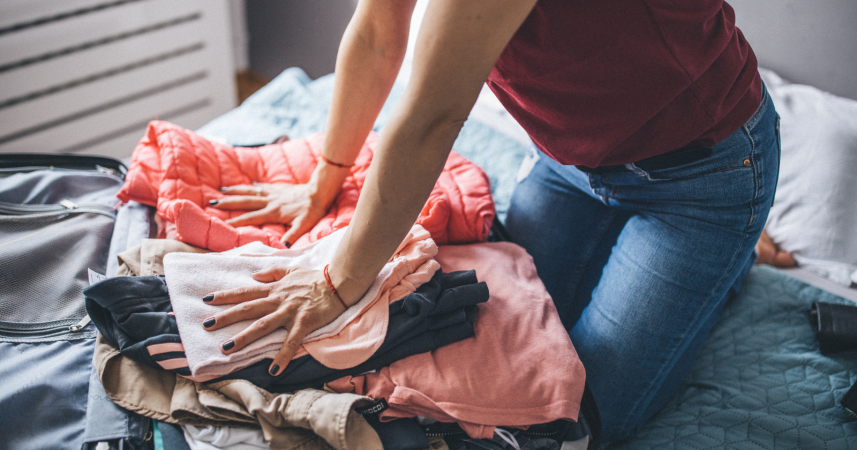
Overpacking clothes often comes from wanting to be ready for every possible scenario—rain, dinner, an impromptu photoshoot. The suitcase becomes a hedge against uncertainty.
As someone who loves fashion and dressing up, I completely understand this urge. There’s something exciting about having options and feeling like you can match your mood or the occasion perfectly.
But when you’re traveling, packing half your closet isn’t always practical. And yet, many of us still do it, because being prepared feels safer than risking the wrong outfit.
Carrying a mini-wardrobe speaks to more than practicality—it reflects a deeper concern with appearances and preparedness. Instead of trusting that one versatile outfit will do, you feel the urge to cover every angle.
It’s like rehearsing for a play, with backup costumes for every potential scene. The mindset is less about ease and more about control, showing up in how carefully you curate how others see you.
3. Your own pillow or bedding
Bringing your own pillow can make sense for back issues or allergies. But if you can’t sleep unless you have your exact pillow, sheets, or blanket, the signal is stronger. You’re trying to transport home with you.
This reliance on familiar bedding suggests more than a love for comfort—it reveals a craving for predictability.
For some, it’s the only way to relax in a new space. It shows how deeply tied your sense of safety is to external conditions, and how difficult adaptation can feel when surroundings shift.
4. An entire shoe collection
Shoes take up the most space in a suitcase, yet some people can’t resist packing five or six pairs for a short trip.
Sneakers, heels, flats, sandals—every possibility accounted for. It’s a practical nightmare, but it signals something bigger.
Stuffing your bag with half your closet says you struggle to compromise. Instead of trusting one or two versatile pairs, the urge is to bring the “perfect” fit for every moment.
It’s less about utility and more about precision—about making sure you always present yourself exactly the way you want. In life, this tendency reflects perfectionism and a fear of being caught unprepared.
5. Full-sized appliances
Yes, people really do this. Hair dryers, curling irons, straighteners—sometimes all three—get packed into luggage, even when hotels usually provide them. The bulk alone tells a story.
A friend of mine once joined me on a short beach trip and lugged along not just her curling wand, but also her blow dryer and a diffuser attachment. Her suitcase was practically half appliances.
She laughed it off as “non-negotiables,” but by the second day, she admitted it was exhausting trying to maintain the same look she wore at home.
Watching her taught me how much energy we can waste trying to control every detail instead of letting a trip just be a trip.
Carrying along big appliances points to a refusal to adapt to what’s available. Even when alternatives exist, they feel “wrong.”
That insistence on using your own setup reveals how much control matters, even at the cost of convenience. It’s a mindset that often spills into daily life: needing things done a certain way, and struggling when they aren’t.
6. Specialty snacks or drinks
Tossing a snack bar into your bag is just common sense, especially if you know you’ll be hungry on the road.
But when your luggage looks more like a pantry—granola, protein powders, favorite teas, sparkling water—you’ve crossed into something more revealing.
Filling a bag with your personal stash isn’t only about convenience; it reflects the need to curate your surroundings down to every bite and sip.
There’s an underlying belief that your comfort depends on having everything exactly the way you want it, no matter where you go. It can also signal a lack of trust that local options will measure up.
This tendency often shows up in daily life, too. It’s the same impulse that makes you stick rigidly to your routines or hesitate to try something outside your norm.
The snacks may be harmless, but the mindset is about control—an unwillingness to loosen the grip and let circumstance surprise you.
7. Excess tech gear
On one trip, I remember unpacking and realizing I’d brought two chargers, wireless earbuds, a camera, a power bank, and even a backup cord for a device I didn’t end up using.
My friends laughed and asked if I was setting up an office instead of going on vacation. Looking at my stash all laid out on the hotel bed, I had to admit I’d packed more technology than I actually needed.
When your bag is crammed with gadgets—chargers, headphones, cameras, tripods, backup batteries—it speaks to more than practicality. It’s about wanting constant access to connection, entertainment, or productivity, no matter the setting.
Essentially, this overpacking signals a dependence on stimulation and control.
The real challenge here is learning to be comfortable with silence, downtime, and letting the trip unfold without needing every gadget on hand.
8. A “just in case” medicine cabinet
Plenty of travelers throw a couple of essentials into their bag—pain relievers, allergy pills, maybe a few band-aids. That’s practical.
But some people go far beyond that, packing supplements, cough drops, cold medicine, motion sickness tablets, and even remedies for conditions they rarely experience.
The result is a pouch that looks more like a miniature pharmacy than a travel kit.
Carrying such an extensive stash reveals a discomfort with uncertainty and a strong desire to cover every imaginable scenario.
For the person who packs this way, the sight of that bulging medicine bag is less about likelihood and more about reassurance—a way to convince themselves they’ll be safe no matter what.
The same tendency often shows up in other areas of life: rehearsing conversations, making backup plans for backups, or avoiding spontaneity altogether.
While preparation can be wise, it’s worth asking whether the weight of all that “just in case” planning is actually heavier than the problems it’s meant to solve.
Final words
Suitcases don’t just carry clothes and toiletries—they carry little clues about how we move through life. If your bag is overflowing with backups, comforts, and “just in cases,” it’s not only about what you need for a trip.
It’s a reflection of how much control you crave, how comfortable you are with uncertainty, and how willing you are to bend when circumstances shift.
Noticing these patterns isn’t about judging yourself—it’s about awareness. If you catch yourself hauling half your bedroom just to get away for the weekend, it might be worth asking where else in your life you’re overpacking, holding on too tightly, or spending energy to avoid discomfort.
The real freedom often comes from realizing you can carry less and still be okay. In travel and in life, lightening the load can make the journey not only easier, but a whole lot more enjoyable.
If You Were a Healing Herb, Which Would You Be?
Each herb holds a unique kind of magic — soothing, awakening, grounding, or clarifying.
This 9-question quiz reveals the healing plant that mirrors your energy right now and what it says about your natural rhythm.
✨ Instant results. Deeply insightful.