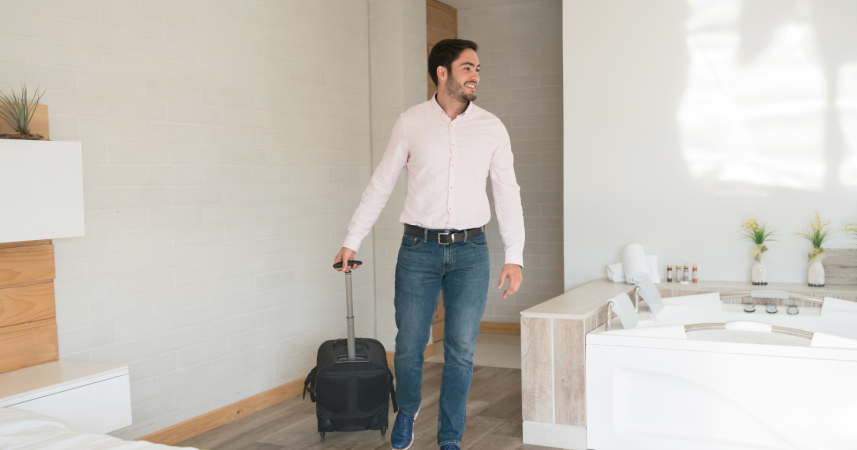
Most people dump their bags and relax, but veterans are running through a mental checklist first.
I've stayed in enough hotel rooms over the years to know that the first five minutes after you walk through that door can make or break your entire stay.
Whether it was crashing in questionable motels during my music blogging days or checking into nicer places for work trips, I've learned that experienced travelers have a routine.
It's not about being paranoid or obsessive. It's about taking a few simple steps that ensure comfort, safety, and peace of mind for the rest of your stay.
Today, I want to share seven things seasoned travelers do the moment they arrive in a hotel room. These aren't complicated rituals, just smart habits that separate the veterans from the rookies.
1) Check the locks and security features
The first thing I do when I enter any hotel room is check that the door locks properly. I test the deadbolt, make sure the chain or security latch works, and verify that the door closes fully on its own.
This isn't paranoia. It's basic safety. A door that doesn't latch properly or a broken deadbolt is a legitimate security issue that needs to be addressed immediately, not discovered at midnight when you're trying to sleep.
Experienced travelers also check for secondary entrances. If there's a connecting door to another room, they make sure it's locked from both sides. Balcony doors get the same treatment.
These checks take maybe sixty seconds total, but they're sixty seconds well spent. You're establishing your temporary home, and like any home, you want to know it's secure.
2) Adjust the thermostat immediately
Hotel rooms are notorious for being either arctic or tropical, with seemingly no middle ground. Seasoned travelers don't wait to see how the temperature feels. They adjust the thermostat the moment they walk in.
Here's why this matters: HVAC systems take time to actually change the room temperature. If you wait until you're uncomfortable to adjust it, you're looking at another 20-30 minutes of discomfort while the system catches up.
I learned this the hard way during a summer trip to Arizona. I walked into a room that felt fine, unpacked everything, and then realized within an hour that I was slowly being cooked alive. By the time the AC kicked in properly, I'd already lost an hour of comfort.
Smart travelers also figure out how the system works. Some hotels have those programmable thermostats that randomly reset themselves. Others have master controls that override your settings during certain hours. Knowing what you're dealing with upfront saves frustration later.
3) Do a quick bed bug inspection
This one makes some people uncomfortable, but it's non-negotiable for experienced travelers. Before your luggage touches anything, do a quick check for signs of bed bugs.
Pull back the sheets and examine the mattress seams, particularly near the headboard. Look for small dark spots, which could be bed bug droppings, or the bugs themselves. Check behind the headboard if you can move it slightly.
I know it sounds extreme, but bed bugs are democratic. They show up in five-star hotels just as easily as budget motels. They hitchhike on luggage, and once you bring them home, you're looking at a nightmare scenario of exterminators and threw-away belongings.
The inspection takes two minutes. The potential problem it prevents could save you thousands of dollars and months of stress. Seasoned travelers know this math works in their favor.
4) Locate emergency exits and safety features
How many times have you actually read that emergency exit diagram on the back of your hotel room door? Experienced travelers read it every single time, and they physically walk to the nearest exit to confirm the route.
In an actual emergency, especially fire or smoke, visibility drops to near zero. You need to know the path by feel and memory, not by sight. Counting doors between your room and the exit stairwell could literally save your life.
This habit comes from a mindset shift. When you travel frequently, you start thinking about hotels the way flight attendants think about planes. You notice where the exits are, you have a mental plan, and you don't assume everything will be fine just because it usually is.
I also make a point to locate the fire extinguisher and note whether there's a fire alarm pull station nearby. These aren't things you want to be searching for when seconds count.
5) Wipe down high-touch surfaces
Even before the pandemic made us all hyper-aware of germs, seasoned travelers were wiping down remote controls, light switches, door handles, and phone receivers. These surfaces get touched by hundreds of hands but rarely get thoroughly cleaned.
I keep antibacterial wipes in my travel bag specifically for this purpose. The entire process takes maybe three minutes, and it drastically reduces the chances of picking up whatever the previous guest left behind.
Think about it. Housekeeping has maybe 20-30 minutes to flip a room between guests. They're changing sheets, cleaning bathrooms, vacuuming. The TV remote isn't getting the same attention as the toilet, but your hands are all over it.
This isn't about being germophobic. It's about understanding that hotels are shared spaces with rapid turnover, and a little preventive action goes a long way toward staying healthy while traveling.
6) Set up a personal organization system
The difference between living out of a suitcase like a chaos agent and actually being comfortable in a hotel room comes down to those first few minutes of organization. Experienced travelers immediately establish zones for their belongings.
Bathroom counter becomes the toiletries station. Dresser or desk gets electronics and chargers. Closet or luggage rack holds clothing that needs to stay wrinkle-free. Dirty clothes go in a designated bag or area, never mixed with clean clothes.
I learned this habit from watching my partner, who's much better at traveling than I am. The first time I saw them methodically set up a hotel room, creating little stations for everything, I realized why I always felt so disorganized when I traveled.
The key is doing it immediately. If you wait until later, you never do it. Then you're digging through your suitcase every morning, your phone charger mysteriously disappears, and you can't remember which pile has clean socks.
Five minutes of setup saves hours of frustration over the course of your stay.
7) Test the shower before you need it
Nothing is worse than stepping into a shower at 6 AM, already running late, and discovering the water pressure is terrible, the temperature fluctuates wildly, or the drain doesn't work properly. Seasoned travelers test the shower within minutes of arriving.
Turn it on, let it run for 30 seconds, and see what you're working with. Check the water pressure, see how quickly it heats up, and make sure the drain actually drains. If there's a problem, you want to know now when you can call the front desk and potentially switch rooms.
I once checked into a hotel room in Portland and discovered the shower had essentially no hot water. Because I tested it immediately, I was able to switch rooms before I'd unpacked everything or settled in. If I'd discovered it the next morning mid-shower, I would have been stuck.
This also gives you a chance to figure out the shower controls before you're actually in there, wet and confused. Some hotels have incredibly unintuitive systems that require an engineering degree to operate. Better to decode them with your clothes on.
Conclusion
These seven habits might seem like overkill if you're not a frequent traveler, but they become second nature once you understand their value. From the very start, it's important to take control of your temporary space and set yourself up for a comfortable, safe stay.
The beauty of these routines is that they're quick. All seven tasks combined take maybe five to ten minutes, and they address the most common issues that can derail a hotel stay. Once they're done, you can actually relax and enjoy your trip instead of dealing with preventable problems.
Next time you check into a hotel, try implementing a few of these habits. You might be surprised how much better your stay feels when you take those first few minutes to get it right.
If You Were a Healing Herb, Which Would You Be?
Each herb holds a unique kind of magic — soothing, awakening, grounding, or clarifying.
This 9-question quiz reveals the healing plant that mirrors your energy right now and what it says about your natural rhythm.
✨ Instant results. Deeply insightful.

Jordan Cooper
Jordan Cooper is a pop-culture writer and vegan-snack reviewer with roots in music blogging. Known for approachable, insightful prose, Jordan connects modern trends—from K-pop choreography to kombucha fermentation—with thoughtful food commentary. In his downtime, he enjoys photography, experimenting with fermentation recipes, and discovering new indie music playlists.
More Articles by Jordan