Your packing list reveals which era shaped your relationship with risk, reliability, and being far from home.

Add VegOut to your Google News feed. 
Travel light, they say. Pack smart. Bring only what you need.
But what you "need" depends entirely on which generation you ask.
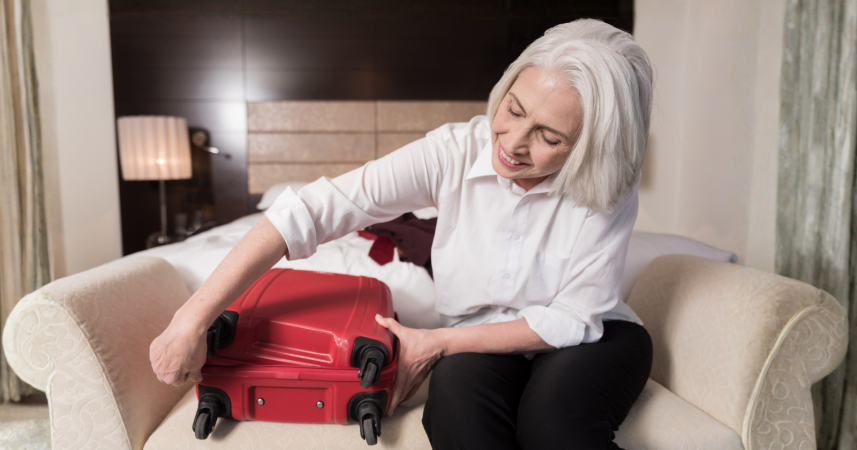
Ever peek into a Boomer's suitcase before a trip? It's like looking into a time capsule. Meanwhile, most of us under 50 can fit everything we need in a small backpack.
The gap isn't just about stuff. It's about fundamentally different assumptions about how the world works when you're away from home.
1) Physical maps and atlases
Remember those giant folded maps that never folded back the same way? Boomers still pack them.
When I started my photography walks around Venice Beach, I relied entirely on Google Maps. The idea of carrying a paper map felt as outdated as carrying a rotary phone. But here's what's interesting: I've gotten completely lost twice when my phone died or lost signal in remote hiking spots.
My dad still keeps a Thomas Guide in his car. He grew up navigating Los Angeles with it, and he swears by the reliability of something that doesn't need batteries or cell service. There's actually something to that argument, even if I'm too stubborn to admit it most of the time.
The younger generation's assumption is simple: the internet is everywhere, and if it's not, we'll figure it out. Boomers remember when figuring it out meant being genuinely stuck, so they pack backup plans.
2) Travel alarm clocks
Who needs a dedicated alarm clock when your phone does everything?
That's exactly what I thought until I spent three years reviewing vegan products and traveling to different cities for food festivals. Hotel alarm clocks are wildly unreliable, and phone alarms have failed me exactly twice. Both times I nearly missed important meetings.
Boomers pack travel alarm clocks because they came of age when missing a wake-up call meant missing your flight, with no easy way to rebook on your phone. The stakes felt higher. Or maybe they just were higher.
But there's something else at play here too. A dedicated alarm clock means you're not sleeping next to your phone. You're not scrolling Instagram at 2am or checking work emails before your eyes are fully open. Maybe Boomers are onto something about boundaries we've completely abandoned.
3) Address books and written contact information
This one seemed the most absurd to me until my phone got stolen in San Francisco two years ago.
Suddenly, I couldn't call anyone. I couldn't remember a single phone number except my parents' landline from childhood. I had no way to contact my partner, my friends, or my editor. Everything was locked in a device that was now in someone else's hands.
My grandmother keeps a small address book in her purse at all times. It has phone numbers, addresses, and even some email addresses written in her neat handwriting. When I teased her about it once, she just smiled and said, "What happens when you lose your phone?"
She was absolutely right.
Younger generations have outsourced our entire social network to the cloud. It's convenient until it isn't. Boomers remember when your brain or a piece of paper were the only backup systems available.
4) Checks and traveler's checks
I haven't written a check in probably five years. The idea of packing traveler's checks for a trip feels like something out of a history book.
But Boomers grew up in a world where credit cards weren't universally accepted and ATMs weren't on every corner. Traveler's checks were the safest way to carry money abroad. They could be replaced if stolen, and they worked everywhere.
Now we have Venmo, Apple Pay, and dozens of other ways to move money instantly. My partner still carries cash as backup, which I used to think was excessive until we hit a farmers market where half the vendors were cash-only.
The pattern here is clear: Boomers pack for worst-case scenarios because they've lived through more of them. We assume technology will always work because, for most of our lives, it has.
5) Guidebooks and travel magazines
When I transitioned from music blogging to food writing about eight years ago, I started traveling more to explore vegan food scenes in different cities.
My research process was simple: Google, Instagram hashtags, and maybe Reddit threads. Everything I needed was online and constantly updated.
Meanwhile, my parents still buy Lonely Planet guidebooks before trips. Actual physical books with information that's sometimes months or years out of date. They highlight sections, fold page corners, and make notes in the margins.
There's something almost quaint about it, but also something we've lost. A guidebook requires you to plan, to think ahead, to commit to certain experiences before you're standing on the street trying to decide where to eat. It's intentional in a way that "let's see what's nearby" never quite is.
The spontaneity we prize might actually be decision fatigue in disguise.
6) Multiple cameras and film
As someone who spends way too much time honing my photography skills around Los Angeles, this one hits different.
I know Boomers who still pack dedicated cameras, sometimes multiple cameras, for trips. Meanwhile, my entire photography setup for casual travel is my iPhone. It shoots 4K video, has multiple lenses, and the photos upload automatically to the cloud.
But here's what I've noticed: when I bring my actual camera, I take better photos. Not because the camera is better (though it is), but because I'm more intentional. I slow down. I think about composition and light instead of just pointing and clicking.
Boomers learned photography when every shot cost money and you couldn't see the result until the film was developed. That created a different relationship with image-making. We've gained convenience and lost something harder to name.
7) Physical books and magazines
Here's something I notice every time I'm on a plane: Boomers with actual books. Heavy hardcovers, magazines, sometimes multiple books for a weekend trip.
Meanwhile, I've got my phone with thousands of books available instantly. My Kindle could hold an entire library. Why would anyone pack something that weighs two pounds and only contains one story?
Turns out, there's some wisdom to that. When my phone died on a six-hour flight to New York last year, I ended up having no book, no movies, no music. Just me and the seat-back pocket with a safety card and an in-flight magazine from three months ago.
Six hours of that is a special kind of torture.
There's something about physical books that creates a different kind of focus too. When I'm reading on my phone, I'm one notification away from falling down a rabbit hole. A book is just a book. No distractions, no temptations, just the story in front of you.
If you've got the space for it, maybe that's not such a bad thing to pack after all.
The bottom line
The gap between what Boomers pack and what younger generations bring isn't just about stuff. It's about fundamentally different relationships with technology, risk, and preparedness.
Boomers pack for worst-case scenarios because they've lived through them. We assume connectivity and convenience because we've rarely been without them.
Maybe the smart move is somewhere in the middle. Keep the phone charger but also write down a few important numbers. Trust Google Maps but maybe know how to read a paper map. Embrace your e-reader but don't mock the person who brings a paperback.
Because here's the thing: someday we'll be the older generation packing things that seem absurd to whoever comes next. And they'll write articles about us, wondering why we brought battery packs and charging cables when everything is solar-powered or whatever.
If You Were a Healing Herb, Which Would You Be?
Each herb holds a unique kind of magic — soothing, awakening, grounding, or clarifying.
This 9-question quiz reveals the healing plant that mirrors your energy right now and what it says about your natural rhythm.
✨ Instant results. Deeply insightful.

Jordan Cooper
Jordan Cooper is a pop-culture writer and vegan-snack reviewer with roots in music blogging. Known for approachable, insightful prose, Jordan connects modern trends—from K-pop choreography to kombucha fermentation—with thoughtful food commentary. In his downtime, he enjoys photography, experimenting with fermentation recipes, and discovering new indie music playlists.
More Articles by Jordan