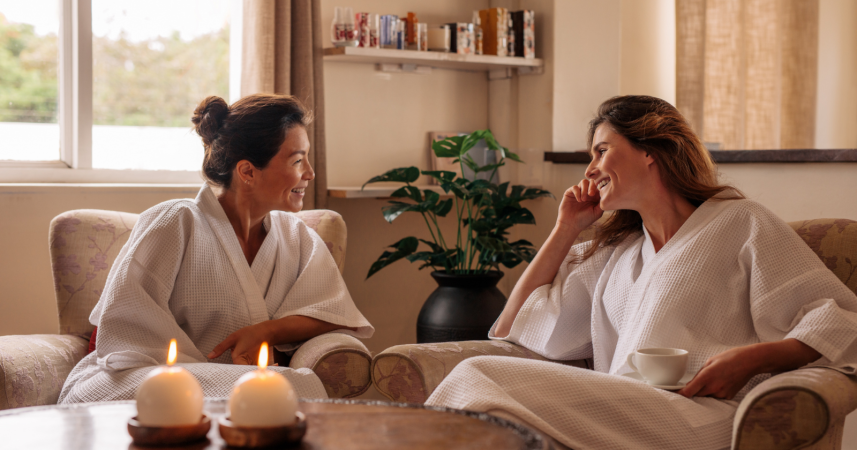
Separate sleep, shared days: two doors buy ease, protect pace, and send friendships home stronger.
Travel doesn’t ruin friendships; proximity does. The fastest way to turn “we vibe” into “we survived” is to share a single door and call it bonding.
I learned the opposite.
Whenever I travel with friends, we split accommodations—two doors, two sleep caves, one shared hang zone—and our friendships come home stronger.
It's not extravagance — it’s design.
Space is how you protect pace, mood, and the little habits you didn’t realize were loud: 6 a.m. workouts, midnight FaceTimes, shower symphonies, “I need 20 minutes of pure silence.”
Two doors saved our friendship because they made the trip feel like a choice we kept making, not a compromise we were trapped in.
Why two doors changes everything
A trip is just your daily routines wearing different clothes. If one of you is an early runner and the other runs on late dinners, a single room turns basic biology into friction.
Two real bedrooms—hotel rooms side‑by‑side, a two‑bedroom apartment, or a suite with a door that closes—puts a thin layer of dignity between rhythms. It’s not that you won’t share time — you’ll share better time. You’ll still trade outfits and chargers and stories, but no one is negotiating the air‑conditioning at 3 a.m.
Nobody’s whispering on a work call from the bathroom. You each get to reset alone, which is what makes it easy to be together the next hour.
The money math that makes it doable
People hear “two rooms” and see a budget exploding. The real equation is total trip value, not nightly sticker shock.
We buy margin with tradeoffs: stay a few blocks off the hot street; pick shoulder season dates; fly midweek, not Friday night; book fewer nights and live better inside them.
Two mid‑range rooms often cost less than one “Instagram villa” with one good bedroom and three apologies. If you’re using points, split your stack: one friend books night one and two, another books three and four. When someone wants a nicer room (bathtub, balcony, blackout blinds), let them upgrade themselves and settle the difference—friendship preserved, math clean.
Splitting isn’t about 50/50 at all costs — it’s about clarity that keeps dinner vibes intact.
How to book for sanity (and sleep)
Not all “two bedrooms” are equal. Lofts lie; open mezzanines are code for “no privacy.” You want doors that close, windows that darken, and mattresses that aren’t auditions for a chiropractor.
In hotels, “adjoining” means next door; “connecting” means there’s a door between rooms—use the right word when you request. Call or message the property after you book; ask for “connecting rooms, same bed type” or a “two‑bedroom suite with two baths if available.”
In apartments, read floor plans and reviews for noise, showers with actual pressure, and bed sizes that aren’t creative writing.
If a listing says “sleeps 6,” count real beds, not sofa promises. On long trips, add laundry to your filter — fresh clothes are cheaper than overpacking and calmer than sink roulette.
House rules that keep the group elastic
Travel compatibility isn’t about identical preferences — it’s about predictable ones.
Before you lock the plan, do a 10‑minute “house rules” chat: wake windows, night‑owl limits, thermostat red lines, shared costs, and what “alone time” looks like so no one reads a walk as a mood. Decide the breakfast policy—together, apart, or fend‑for‑yourself with a shared grocery list.
Rotate the dinner picker. Give the kitchen a closing time so someone’s midnight pasta doesn’t steam the other person’s sleep.
Talk about volume: headphones for videos, speaker only if everyone’s in. And set a “no debate” card—each person gets one plan veto per trip with no cross‑examination. Two doors make this easy because the fallback is always kind: “I’m tapping out. See you at 10.”
Scripts that save feelings (and receipts)
If the group chat is allergic to money talk, steal these lines:
- “I travel better with my own room—happy to be neighbors. I’ll cover the price difference.”
- “Let’s do two rooms and a shared coffee spot; I’d rather save on location than sleep.”
- “I have early calls; I’ll take a separate room so I’m not the villain.”
- “I snore. Separate rooms are my friendship insurance.”
None of that is code for “I don’t like you.” It’s code for “I want to like you after day three.”
For shared expenses, make the structure boring: one person pays for lodging, the other covers dinners until even; or use Splitwise and settle every other night so resentment never earns interest.
Two‑door itineraries feel different
You notice it at 7 a.m. when one of you comes back from a walk with coffees and the other actually looks happy to see you. You notice it at 10 p.m. when the night owl has somewhere to drift after “one more drink” and the early bird has somewhere to drift after “one more page.”
You notice it on day four when nobody’s policing bathroom time, and the person with introvert wiring doesn’t need to fake pep because their meter got a recharge.
The group moves in a looser, kinder way—separate starts, planned overlap, clean exits.
“Two doors” isn’t a rule — it’s a rhythm.
Meet at a café. Split for museums vs. markets. Rejoin for a late lunch. Decide dinner at 5, not 8, so reservations aren’t a crisis. The day stays social without becoming codependent.
When one door is fine (and when it isn’t)
There are trips where a single door works: one night near the airport, a festival where you’ll live outside, a cabin with bunk vibes where the point is chaos. But the moment the itinerary involves sleep needs, work calls, or different social gears, two doors are cheap insurance.
If budgets are brutal, do a hybrid: two rooms for the city nights, a shared house on the coast where the living room is the hangout and the bedrooms are Switzerland. Or book a suite with a real bedroom and an actual closing door—flip a coin for who gets it, trade each night, and write the rule on day one so “fair” doesn’t become a moving target.
The quiet psychology behind all of this
Friends are not roommates. You can adore someone’s company and hate their toothbrush rhythm. You can share values and not sleep the same way. Two doors acknowledge that intimacy has gears. They let you choose when to be together and when to retreat without turning either choice into an announcement.
That doesn’t kill spontaneity — it protects it.
The last‑minute gelato, the extra hour at the bar, the unplanned detour into a bookstore—you say yes more when you know you can say no later.
Space makes generosity easier. Privacy turns patience back on. The trip stops being a test and starts being a story.
Two doors saved our friendship because they gave everyone what money is supposed to buy but rarely does on group trips: ease.
Not fancy, not fussy—just room for a real night’s sleep, a real morning’s routine, and the version of each other we actually like. Do it once and you’ll wonder why you ever tried to cram four personalities through one lock.
If You Were a Healing Herb, Which Would You Be?
Each herb holds a unique kind of magic — soothing, awakening, grounding, or clarifying.
This 9-question quiz reveals the healing plant that mirrors your energy right now and what it says about your natural rhythm.
✨ Instant results. Deeply insightful.

Jordan Cooper
Jordan Cooper is a pop-culture writer and vegan-snack reviewer with roots in music blogging. Known for approachable, insightful prose, Jordan connects modern trends—from K-pop choreography to kombucha fermentation—with thoughtful food commentary. In his downtime, he enjoys photography, experimenting with fermentation recipes, and discovering new indie music playlists.
More Articles by Jordan