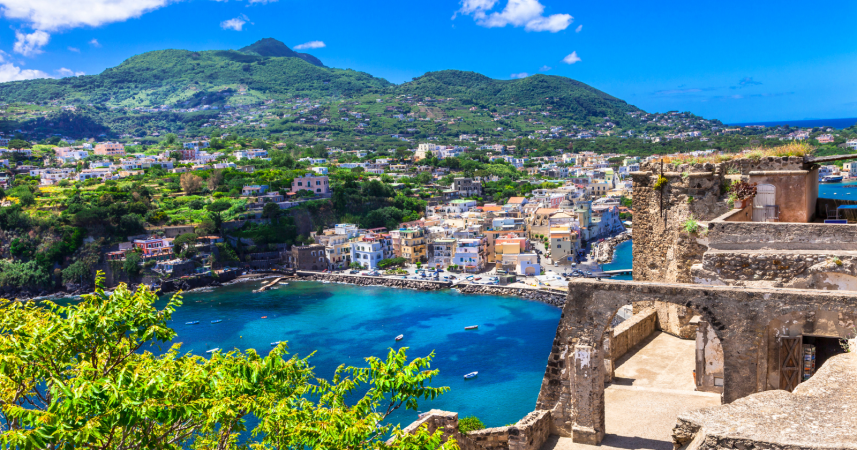
Shoulder-season spa bliss at ~20°C and half the price? Skip Capri and soak on Ischia—thermal parks, free hot springs, and October sunshine.
When Simon Calder says “shoulder season is where the value hides,” I pay attention.
His advice sent me looking for places that still sit at about 20°C in late October, have a proper spa pedigree, and don’t charge Amalfi prices for the privilege.
The standout?
Ischia—Naples’ volcanic neighbor with hot springs, spa parks, and hotels that undercut Capri by a mile. Average October days float in the 15–22°C range, warm enough for café terraces and sea-view hikes, with bath-warm springs on standby when the breeze picks up.
Why Ischia is the smarter “spa town” swap
Capri has the mythology. Ischia has the minerals.
Thermal water has been the island’s calling card since the Greeks — today it’s woven into daily life—hotel pools run on geothermal heat, and day-pass “thermal parks” string together pools from cool to hot with saunas, steam grottos, and loungers under pine trees.
It’s not a one-and-done soak; it’s a ritual you slide into between lunch and aperitivo. Parks like Negombo and Poseidon are destinations themselves, while free seaside hot spots like Sorgeto are the casual, bring-a-towel version.
The 20°C-in-late-October sweet spot
Here’s the weather brief I wanted before I booked: October on Ischia typically rides 15–22°C, with sea temps around the low 20s and a mix of sunny and occasional rainy days.
For a spa-centric trip, that’s perfect. You’re strolling in a light sweater at dusk, then sinking into 36–38°C pools after dinner while the palms shift in the evening breeze.
In other words: not “beach blowout,” but ideal for slow, affordable wellness.
Half the price (and you feel it)
Put bluntly, your money stretches further here. Average stays on Ischia come in dramatically cheaper than Capri across categories, with plenty of well-run 3–4 star hotels under the price of a basic Capri room.
It’s the same Tyrrhenian glow, the same lemon trees—and way fewer zeros on the room bill. Even the marquee spa parks post transparent day-pass pricing instead of “if you have to ask…” energy.
How I’d do a 3-day soak
Day one – ease in. Check into a spa-forward hotel (many pipe thermal water straight into their pools), grab a late lunch in Forio—grilled veggies, a bowl of rabbit ragu if you eat meat, island white by the glass—then spend the afternoon at Giardini Poseidon: hot-cold circuits, a nap, sunset from the upper pools.
Day two – thermal park + free springs. Start at Negombo for a lush, garden-like circuit, then hop to Sorgeto for the free, sea-level springs where hot vents mix with seawater. Bring water shoes and time your dip for golden hour.
Day three – town + culture + a lighter soak. Wander Lacco Ameno’s curve of shore, poke into a pasticceria, climb the causeway to Castello Aragonese for views, then finish with a short session at your hotel spa. Keep dinner simple: grilled fish, salad, potatoes, lemon.
Where Ischia beats the glam crowd
-
Thermal variety. You’re not hunting for one fancy hammam; you’re choosing between entire spa ecosystems.
-
Price-to-pleasure ratio. A long wellness day for the cost of a Capri cocktail round.
-
Breathing room. Six towns, beaches, gardens, hikes—more space than Capri’s cliff drama (which I love) but with fewer elbows.
What to pack for spa season
Go light: quick-dry swimsuit (caps required at many pools), packable robe, flip-flops/water shoes, a small dry bag, and a compact rain layer for surprise showers.
If you’ll sample Sorgeto or any rocky cove springs, add reef-safe sunscreen and a microfiber towel. Most parks rent robes and towels if you want to keep luggage lean.
Getting there without drama
Trains into Naples, ferry to Ischia in about 1–2 hours depending on route; services run year-round with a denser timetable in season. Once on island, buses do the loop cheaply, but taxis and little e-buggies make short hops painless.
Pro tip: base in Forio or Lacco Ameno for easy park access.
What to eat between soaks
Keep it Mediterranean simple: a plate of insalata di mare, a cone of fried anchovies, a bowl of pasta con le vongole, then a citrusy sorbet.
Ischia’s wines are underrated—ask for a local Biancolella by the glass.
Lunch on-property at a thermal park is absolutely fine (and easy), but some of my favorite bites were low-key: bakery schiacciata, sun-warm tomatoes, and a wedge of provola on a bench between pools.
If you’re comparing to other spa towns
Montecatini Terme in Tuscany has the belle-époque vibe, but late October hovers around the high teens and you don’t get the island microclimate (or seaside springs).
Hévíz in Hungary is a classic thermal lake, but it’s cooler and lacks the salt-air factor that makes shoulder season on Ischia feel like you’ve cheated the calendar.
Bottom line
If you want a late-October European spa break around the 20°C mark and roughly half the cost of the usual suspects, follow the spirit of Simon Calder’s shoulder-season playbook and pick Ischia.
It’s warm enough to linger outside, cool enough to crave a thermal soak, and priced to make “one more day” an easy yes.
That’s what value looks like when wellness is the point.