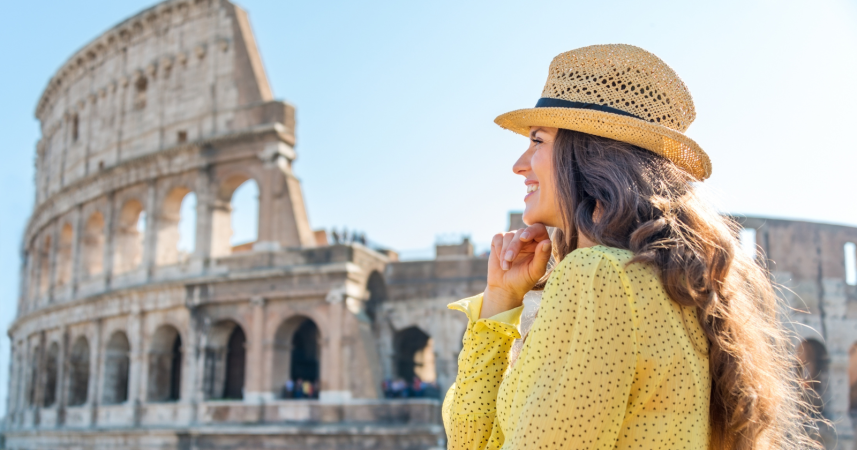
My first 36 hours in Rome were a masterclass in what not to do.
Rome didn’t roll out a red carpet — it rolled out a cobblestone runway with a crosswind.
I gave myself thirty-six hours to fall in love and did the thing I tell other people not to do: I tried to win Rome on speed.
The city is generous if you match its rhythm. I didn’t.
I made 8 avoidable mistakes in a day and a half — and still had a great time — because Rome forgives almost everything if you slow down, eat correctly, and choose fewer, better moments.
Here’s what I bungled, how it felt in real time, and the easy course corrections I’d make so the same thirty-six hours feel like a romance instead of an obstacle course.
1. I tried to outwalk jet lag in the July heat
My flight landed just after noon, which is the worst hour to be heroic. I dropped my bag near Trevi, told myself sunshine would fix a red-eye, and launched straight into a four-hour march.
Rome replied with a damp oven, a thirst that erased common sense, and the kind of crowd choreography that turns “stroll” into “clench.”
I burned an afternoon shade-hopping and overpaying for bottled water because I forgot the city’s fountains exist.
The humane version is boring and perfect: train or fixed-fare taxi into town, shower, a liter of water, a tight neighborhood lap, an early trattoria dinner you sit down for, and bed.
The city at 8 a.m. the next day is a gift: cool stone, soft light, streets owned by bakers and dog walkers.
That’s where love lives.
2. I treated the Colosseum and the Vatican like drop-ins
I arrived with the optimism of a walk-up and paid with hours.
The Colosseum/Forum/Palatine combo and the Vatican Museums are no longer “let’s see how we feel” items; they’re appointments.
I lined up with a thousand other hopefuls, watched the clock chew daylight, and speed-read beauty when I finally got in.
Pick one headliner per day, buy the timed-entry, and give it the morning or the night.
A twilight Colosseum feels like trespassing in the best way; St. Peter’s at dawn is quiet enough to hear your footsteps. If you only have thirty-six hours, choose either ancient Rome or the Vatican.
Try to do both and your memories blur into ceilings and crowds instead of awe.
3. I slept beside a landmark and paid for it in noise and food
In a panic to be “central,” I booked a room steps from Trevi.
Romantic window, tactical mistake.
Central Rome around the biggest sights is a play you watch, not a place you rest. The soundtrack is rolling suitcases at 2 a.m., a guitar you didn’t order, and a breakfast selection designed for turnover, not joy.
Sleep one neighborhood away and walk in. Monti buys you character and calm.
Trastevere buys you laundry lines, cobbles, and trattorie friendly to humans. Testaccio buys you markets and artichokes cooked by someone’s nonna who has never heard of your feed.
“Ten minutes from everything” reads well on a booking site; “fifteen minutes from sanity” reads well in your body.
4. I let the view choose my lunch
I sat with a postcard and got a postcard meal. The carbonara tasted like a committee, the bread like a meeting invite.
Restaurants clinging to the biggest sights are logistics companies attached to kitchens: they have to serve waves, not you.
Walk two or three blocks down a quieter street, look for a short chalkboard menu, mixed tables, and a server who has opinions. Order seasonal basics and the house wine.
Ask for acqua naturale or frizzante and refill your bottle at a nasone afterward instead of paying tourist prices for plastic.
The best plate I had was in a room with no view at all: fried artichokes with a crisp that tasted like a lifetime of practice.
You can keep the fountain. I want the pan that remembers a thousand meals.
5. I fought Rome’s nap and lost
I scheduled like New York with better ruins and then discovered Rome still respects the pause.
Churches close midday.
Some shop shutters come down between lunch and late afternoon.
Dinner starts late.
Coffee has choreography: espresso is a stand-up act at the bar; cappuccino after breakfast marks you as visiting — but pleasure is not illegal.
The afternoon isn’t dead — it’s telling you to rest. The night gives those hours back with interest: piazzas switch on, façades glow, and conversation runs later and kinder.
The day I surrendered to a nap and a slow reset, the city opened like a book — aperitivo, golden alleys, a plate of amatriciana that rewired my brain chemistry.
6. I made “authenticity” a transit policy
I convinced myself walking everywhere was nobler. Rome convinced me it’s also huge. I tried to chain the Appian Way, the Ghetto, Trastevere, and the Aventine into one continuous performance and ended up bribing myself forward with gelato.
Buses, trams, and the Metro are not disqualifying — they’re how many Romans live.
A 48-hour pass is cheap. Trams make you feel local fast.
Even at the airport, practicality beats myth: the Leonardo Express gets you to Termini cleanly; regional trains to Trastevere or Ostiense land you closer to the lives most visitors actually lead. Inside the city, cluster your day—ancient Rome in the morning, a bus to Testaccio for lunch, a wander across the river at dusk.
“Authentic” means using the system and arriving with your personality intact.
7. I wore a backpack like a billboard
Termini, peak-hour Metro, the crush around Trevi—these are not the places to learn about zippers.
I kept my passport in a backpack I couldn’t see and moved through the city like a tutorial.
Rome isn’t uniquely dangerous — it’s just very practiced. I got lucky with a bump-and-smile ballet that left me with everything, and I changed my approach anyway.
Crossbody bag in front, zipper closed. Passport in the hotel safe with a photo saved securely to my phone. Small cash, one tap-to-pay card, daily receipts out of sight.
If you want to feel like a wizard, carry a tiny tote for market runs and water refills — the nasoni pour cold kindness into your day and your budget.
Bottled water is for the dehydrated and new.
8. I tipped like home and misread the bill
I tipped American because the meal was great and because I forgot how service is priced here.
Many places include servizio, most add a coperto.
Neither is a scam.
Tipping is appreciated but not compulsory, and certainly not twenty percent by default. I also sat for espresso and discovered why it cost triple—the seat comes with rent.
Read the menu, accept the culture, and put your thank-yous in words as much as in euros.
If you want the local price, join the bar, knock back your shot of life, and enjoy the economy of a ninety-second ritual that has survived emperors and influencers intact.
Final thoughts
My mistakes didn’t ruin Rome. They taught me the city’s posture.
Rome isn’t asking you to conquer it — it’s inviting you to show up on time for the moments it’s good at: early light on travertine, late light on faces, the pause between a waiter’s smile and your first forkful of something simple that has been perfected longer than your country has been a country.
If you repeat my errors, you’ll still get fed, still see wonder, still take photos that make your friends jealous. But if you dodge even half of them, the volume turns up where it should and the noise turns down where it doesn’t.
If I had those thirty-six hours again, I’d sleep outside the postcard, book one headliner, pick two neighborhoods, and let the rest be walking between them with gelato and no plan beyond “follow the street that smells like dinner.”
That’s the version where Rome stops being an assignment and starts being a place.