If you value peace, learn our names, our food, our pain. Then speak. Respect is the language that keeps the table calm.

Add VegOut to your Google News feed. 
Some things are better left unsaid, especially in a country where memory tastes like wine and history still feels present.
In Georgia, we talk with our hands and argue like we’re building a house out of fire. We like guests, long meals, and honest talk. Still, a few subjects can turn a calm evening into a fight.
This isn’t about that Soviet censorship anymore — it’s about respect. About knowing where the collective trauma sits and not pressing it just to see a reaction.
As a Georgian who studies emotion, I’ve learned how fast identity flares when we feel unseen.
So, if you want peace at the table, choose your words with care. The list below names the topics that most often cause trouble, and why. It is a small map to help you keep the room steady.
1. Joking that Georgia is “basically Russia anyway”
You might mean the Soviet past, or you might be making an offhand geographical slip.
Either way, it lands like a slap.
For many Georgians, territorial memory sits in the nervous system — the words Russia and Georgia don’t just signal nations, they signal lived fear.
To conflate us is to erase a boundary that was fought for, mourned over, and rehearsed in family stories for decades. It’s also to ignore a language with a different alphabet, a polyphonic music tradition, and a religion that shaped our sense of home.
If you’ve ever felt your name mispronounced again and again, you know the ache.
Identity wants accuracy, not applause. Our sense of reality depends upon the stories we can tell about ourselves—misnaming a people is a way of confiscating those stories, however casually. And casual erasures are still erasures.
2. Calling Stalin “your guy” or joking about him as a Georgian mascot
Yes, Stalin was born in Gori (my hometown, by the way). No, he is not our national personality, nor our cherished export.
To tether modern Georgians to Stalin is like fastening a ghost to the living and then critiquing the pair for how they walk.
Trauma has a strange metabolism — people cope through gallows humor, denial, and selective remembrance. But outsiders treating Stalin as a Georgian mascot weaponizes that humor. It refuses complexity.
The truth is that many Georgian families harbor quiet stories of loss and fear from that era. Bringing him up like a party trick is to drag a coffin into the room and expect applause for your historical knowledge.
There’s also an implicit shaming—“look what came from your soil”—that ignores the political, economic, and psychological machinery that produces tyrants.
History is not the same as heritage.
3. Dismissing the supra (feast) and toasts as kitsch or patriarchal theater
From the outside, the supra can look like a ceremony for ceremony’s sake: ornate toasts, speeches that meander, a tamada (toastmaster) who holds the flow like a conductor.
But the supra is the architecture of belonging that kept communities together under siege—literal and emotional.
When you belittle it, you’re stripping a culture of one of its most practiced forms of emotion regulation. The rules around silence, speech, toasting the dead, blessing the living—these are not empty gestures. They metabolize grief, respect, and love in ritual.
As a modern psychoanalyst, Julia Kristeva suggested, language itself is a kind of fragile architecture we build against chaos. A toast is language crystallized into a shared anchor.
When guests mock the supra, they’re not just teasing tradition — they’re knocking stones out of a bridge that people still walk across to meet each other.
4. Comparing khinkali and khachapuri to “just dumplings” or “just cheese bread”
Food is memory’s warmest furniture.
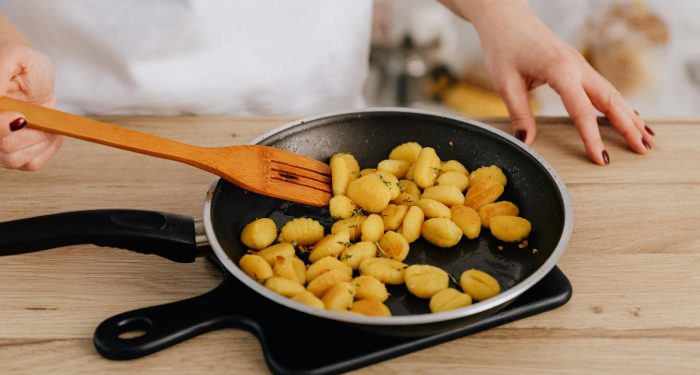
When you reduce khinkali to “dumplings” and khachapuri to “cheese bread,” you’re not wrong in ingredient terms — but you’re emotionally tone-deaf. These meals carried families through winters, gathered friends after funerals, nourished students on empty budgets, and sparked a diaspora’s flavor of homesickness.
There’s also etiquette baked in — how you bite a khinkali to sip the broth, how you don’t slice it with a knife like you’re unpacking a parcel.
To dismiss or mishandle it tells a Georgian you’re declining a language we offered you.
Food isn’t hospitality’s prop — it’s our mother tongue.
Want to keep peace? Eat like you’re being taught a song.
Curiosity softens every table. And when you can, ask for regional variations—the Adjara boat, the Imereti circle. Every shape is a map, and maps deserve more than a shrug.
5. Treating the Church as a monolith—or as superstition to be outgrown
Faith in Georgia is complicated. If you ridicule Orthodoxy as medieval or assume everyone is devout in one color, you’ll likely bruise someone’s sense of family and history.
Churches here aren’t just belief centers. They’re repositories of survival — sanctuaries during wars, keepers of language, guardians of music.
Even for those who are ambivalent or secular, the bells ring inside them. When outsiders flatten faith, they perform a kind of psychological foreclosure: no space for ambivalence, no space for critique from within.
In clinical work, I see how people need permission to be both/and—devoted and questioning, ritualistic and modern.
Respect that space. Peace doesn’t mean endorsing everything; it means recognizing that the sacred often holds grief that hasn’t found other homes.
Dismissing the sacred dismisses the grief it shelters.
6. Debating borders like a chess problem over coffee
If you float opinions about Abkhazia or South Ossetia as if you’re doing geography Sudoku—“Well, objectively, don’t you think…?”—don’t expect calm.
For many Georgians, these aren’t abstract regions; they’re grandparents’ houses, unvisited graves, summers that never returned. Territorial integrity is not a classroom exercise; it’s body memory.
When you posture neutrality, it can feel like you’re neutral about our losses. And when you claim expertise from a few articles, it sounds like you’re standing in the doorway of someone’s burned home, explaining fire.
As attachment researcher Amir Levine notes, safety shapes how we love. And nations, too, love differently when safety is perforated.
If you value peace, adopt humility. Ask questions. Let people tell their versions. Borders are made of laws, yes, but also of the stories we tell ourselves to fall asleep.
7. Insisting on Russian as the default language, especially with young Georgians
Many Georgians speak Russian; many don’t wish to. When you assume Russian is the neutral bridge, you erase both Georgian and the political feelings braided into language.
Language choice is not purely pragmatic—it’s a declaration of who you are willing to meet.
Younger generations, especially, might answer in English or Georgian as a boundary against a past that feels like pressure.
Pushing Russian can be experienced as a micro-aggression: a tiny shove back into a room we’ve been trying to repaint. One of the most human needs is to feel self-authored.
That includes the alphabet our mouths choose to use. If you’re multilingual, offer English with warmth.
If you’re learning Georgian, even a few words are a love letter. Identity relaxes when it is seen without being requisitioned.
8. Confusing the country with the U.S. state—and doubling down with a smirk
It happens. You say “Georgia” and you picture peaches and Atlanta. We get it.
The internet has been making the same joke since the Stone Age of memes. The peaceable choice is to laugh with us, correct yourself, and move on. The unpeaceable choice is to turn it into a bit: “Well you should rename yourselves!”
Names are the first houses we live in. Mocking them is vandalism disguised as banter.
Georgians will often meet you where you are — Tbilisi, not Tiflis; Sakartvelo if you want the native word. But if you make the mistake and then refuse the repair, you’re essentially saying accuracy is beneath you. And nothing sours a room faster than the sense that someone thinks they’re too clever to care.
9. Reducing hospitality to performance—or calling it “too much”
Hospitality is not our costume — it’s our nervous system. The abundance, the insistence you eat more, the late-night insistence you stay—this has roots in scarcity, siege, and a theology of welcome.
To say “it’s performative” misses the psychological truth: sometimes performance keeps love alive long enough for it to become real.
For instance, in therapy, rituals create scaffolding for feelings that would otherwise collapse under their own weight. The Supra’s excess is an insurance policy against loneliness; the guest is the proof that our door still opens, that history hasn’t sealed us shut.
You don’t need to match the energy. You only need not to belittle it.
As Kristeva suggested about the foreigner—so m etimes it’s we who are foreign to ourselves. Hospitality helps us recognize ourselves in a kinder mirror.
10. Treating our modernity as a surprise
When visitors marvel, “Wow, Tbilisi has amazing cafes” or “You have great tech startups,” the compliment often curdles.
Surprise implies a baseline expectation of lack.
Georgians are used to being cast as picturesque—mountains, wine, folk dance—and then punished for existing in the twenty-first century with ambition and mess. The cognitive dissonance can be wearying.
Admiration without condescension is possible: wonder at the food scene, the architecture, the art, the grit, without acting like you’ve discovered civilization under a rock.
The psyche hears tone before it decodes words.
Surprise arrives with a tone that infantilizes, even when you mean well.
Try curiosity instead of astonishment. Ask about the projects people care about. Let modernity be ordinary. It’s more peaceful when you don’t congratulate us for having Wi-Fi.
Final thoughts
Peace isn’t silence — it’s an atmosphere where nuance can breathe.
If you want calm with Georgians, offer the kind of attention you’d give a beloved poem: read the line twice, feel for the unsaid, pronounce the name with care.
Identity is the bridge between self and other, and it holds best when both sides carry a little weight. You don’t need to memorize all our histories or love every ritual; you only need to treat them as real.
Real things require tenderness.
So, when in doubt, ask more than you argue, toast more than you tease, and learn a few words in the language that holds our memories together. That’s how peace becomes more than the absence of conflict—it becomes the presence of respect, which is to say, love with good boundaries.