Airports bring out the best and worst in us, and these seven habits are tiny tells that add up fast.
Airports are pressure cookers for habits.
Everything is timed and everyone’s a little tired.
There’s something about that mix—tight schedules, lines, public space—that reveals who’s learned the rhythm and who hasn’t.
I’ve spent a lot of time in airports, mostly because travel feeds my curiosity (and my appetite).
The patterns are obvious once you know what to notice.
A few small behaviors signal whether you’re easy to share the sky with—or the person everyone silently hopes isn’t in their boarding group.
Here are seven airport habits that make seasoned travelers size you up in seconds, plus what I do instead so I can get from espresso to airplane without being “that” person.
1) Treating security like a surprise
You’ve known about security since you booked the ticket.
Still, every line has someone who acts like the bins, belts, and laptops are plot twists.
They wait until the last second to dig out liquids, they leave metal on, and they argue with the agent about the rules printed on signs the size of billboards.
The line slows, shoulders rise, and the vibe turns sour.
When I worked in luxury F&B, the best services ran on mise en place—everything in its place before the first guest walked in.
The airport version is simple: Before I even join the queue, I empty my pockets, laptop and liquids are already on top in my backpack, belt off if it’s metal, and watch in the bag.
I’m basically a human fast pass!
2) Crowding the gate like it’s a concert
You know the scene: The agent hasn’t called any zones, but there’s a scrum in front of the podium like a member of BTS just took the mic.
If you’re in Group 7, standing three inches from the scanner won’t shift the laws of physics.
It will, however, block people whose group actually is boarding and make the whole flow feel hostile.
I used to rationalize this with “I’m just being ready,” but in practice it reads as anxious, entitled, or both.
The gate is shared space—when you clog it, you force everyone else to bob and weave around you like you’re a badly placed suitcase.
3) Turning the moving walkway into a couch
Standing two across on a moving walkway is the airport version of parking a golf cart sideways on the fairway.
It’s a small decision with big ripple effects.
People miss connections because someone decided to have a reunion right at the “walk” lane.
There’s an easy rule: Stand right, walk left—that’s it.
If you’ve got a roller bag and a latte, stand right and enjoy the ride; if you’re late for your connection, left is your runway.
The social contract is two lanes, not one lounge.
I learned this lesson in kitchens where every inch is a highway; step in the pass at the wrong angle and you jam the whole service.
Airports are the same choreography at a different speed.
4) Treating overhead bins like personal storage units
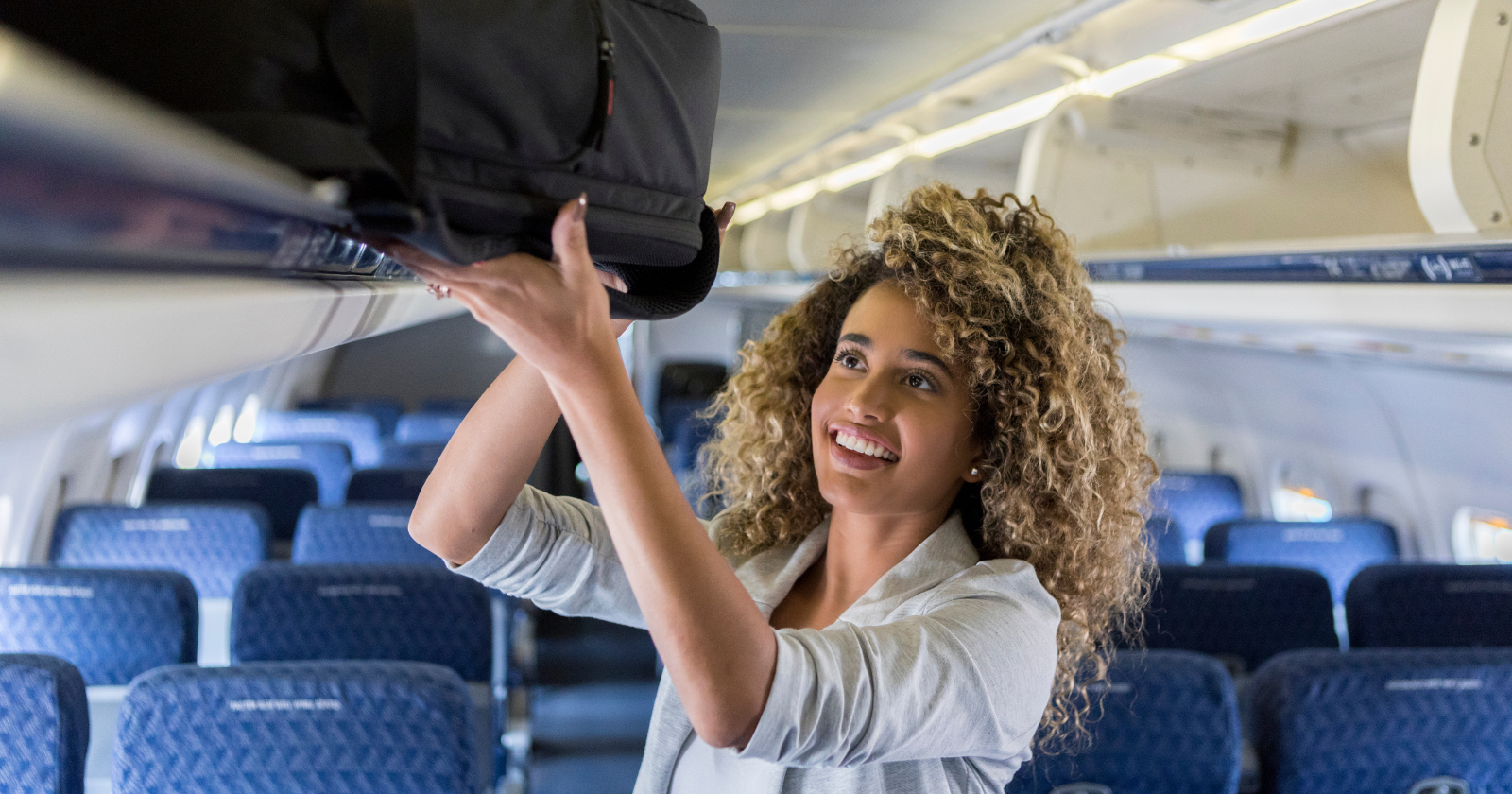
Two backpacks, a weekender, and a shopping bag from duty free do not equal one carry-on—I say that with love.
I’ve made that math error in my past life as a serial overpacker but, once you’ve watched a gate agent Tetris the same four giant bags into a 737 bin while twenty people wait behind you, you stop pretending the rules are negotiable.
The seasoned move is simple: One roller or duffel overhead, one personal item under the seat.
If your bag is obviously oversize, don’t wedge it sideways like it’s a custom fit.
Gate check it with a smile and you’ll feel lighter (and so will the aisle).
There’s also a micro-etiquette here that veteran travelers clock instantly; if your seat is in row 24, don’t fill the row 8 bins on your way back because they’re convenient.
That pushes chaos down the plane.
I keep my bag above or behind my row.
If the bin is stuffed, I ask a flight attendant where they want it.
It’s a small courtesy that reads as competence.
5) Going full speakerphone in shared spaces
Airports are loud, but that doesn’t mean you should become part of the soundtrack.
Taking calls on speakerphone or watching videos without headphones is social pollution.
It’s also a fast way to broadcast things you didn’t mean to (“Wait, what did the doctor say?” is not a sentence for Gate 32).
I think about it like seasoning: In the kitchen, too much salt masks the dish and too much noise masks everyone else’s experience.
When I need to call, I step away from the gate or use earbuds and keep it tight.
I save the TikTok marathon for the plane with headphones on.
There’s a humility to shared spaces; it says, “My convenience isn’t more important than your peace.”
6) Being rude to staff because something went wrong
Flights get delayed, systems glitch, weather reroutes everything, and the one lever you always control is how you treat the humans trying to help.
Yelling at a gate agent because a thunderstorm exists is ugly and counterproductive.
These folks are the ones who can rebook you, protect your connection, or quietly upgrade your seat when a solution appears.
In hospitality, I watched how kindness under pressure changed outcomes.
The table that stayed gracious when the kitchen got slammed didn’t just get dessert comped; they got the best the team could offer.
It’s not manipulation—it’s relational intelligence.
I’ve had agents go the extra mile because I approached like a collaborator, not a combatant.
“Hey, I know this is a mess for everyone. What options do we have?” goes further than “This is unacceptable.”
If you can drop a sincere thank-you, even better.
Manners are a force multiplier and frequent flyers clock who gets that.
7) Bringing smelly food on board
Finally, we have the food thing.
As someone who writes about eating and has logged plenty of layovers chasing great bites, I get the temptation to grab whatever looks promising.
However, there’s a difference between a tidy sandwich and a saucy noodle bowl that turns 14C into a full-contact sport.
Strong smells, messy textures, or crumb bombs? People will judge.
I learned this the hard way after boarding with a gorgeous, garlic-heavy shawarma in Athens.
Delicious, yet also instantly controversial at 30,000 feet.
The guy next to me wasn’t mad exactly, but he kept shifting like my dinner was a character flaw.
He wasn’t entirely wrong—a cabin is a sealed tube and your choices travel.
My personal rule now is “neat, neutral, and napkin-friendly.”
Think wraps, grain bowls with lids, simple salads (go easy on onions), or pastries that don’t flake like a snow globe.
Hydrate and keep caffeine reasonable so you’re not a yo-yo of energy and bathroom breaks.
If I want a big, aromatic meal, I do it in the terminal and brush my teeth after.
I still explore local flavors—just thoughtfully.
Keep in mind that you should always respect the noses and knees around you!
The bottom line
Airports bring out the best and worst in us, and the seven habits above are tiny tells that add up fast.
Break them and you create friction for everyone.
Fix them and you travel lighter, calmer, and with better stories—and maybe better snacks.
The win isn’t just avoiding side-eye from the frequent-flyer crowd.
It’s building a way of moving through busy spaces that works anywhere: in a kitchen, in a business, and definitely between Gate A2 and your next great meal.
What’s Your Plant-Powered Archetype?
Ever wonder what your everyday habits say about your deeper purpose—and how they ripple out to impact the planet?
This 90-second quiz reveals the plant-powered role you’re here to play, and the tiny shift that makes it even more powerful.
12 fun questions. Instant results. Surprisingly accurate.