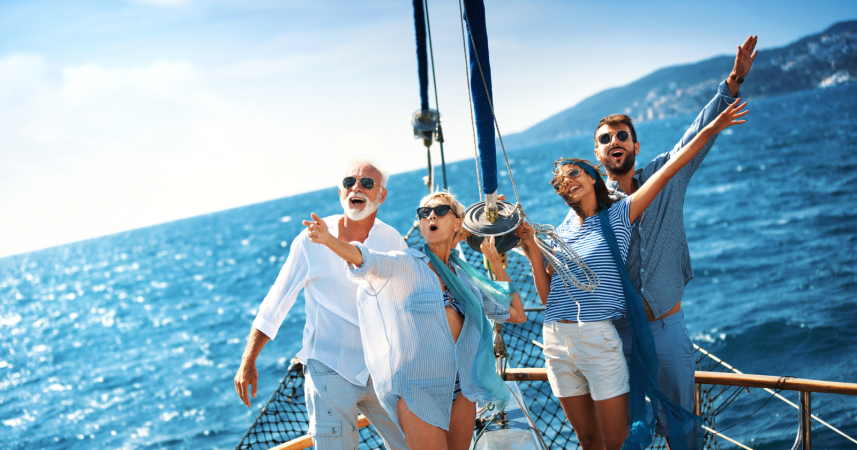
Travel preferences reveal more about who we are than which passport stamps we collect.
I've planned itineraries for ultra-wealthy families at high-end resorts, and I've backpacked through Southeast Asia on a shoestring budget. I've coordinated multi-course tasting menus for hundreds of guests, and I've eaten street food from carts where nobody spoke English.
What I've learned is this. How you choose to travel says less about your budget and more about your personality.
Some people hear "cruise" and immediately think floating retirement home. Others hear the same word and see efficiency, convenience, and the perfect vacation. Neither group is wrong. They're just wired differently.
During my hospitality years, I served countless guests who'd arrived by cruise ship. They'd disembark for a day, explore whatever we'd arranged for them, then return to their floating hotel. Independent travelers, meanwhile, would show up with backpacks, no reservations, and a vague plan to figure it out as they went.
Both types enjoyed themselves. But they were fundamentally different people with different needs, different comfort zones, and different ideas about what makes a trip successful.
Here are seven personality traits that typically show up in people who prefer cruises over independent travel.
1) They value predictability over spontaneity
Cruise travelers know exactly what they're getting. The itinerary is set. Meals are included. Entertainment is scheduled. There are no surprises, and that's the entire point.
Independent travelers thrive on the opposite. They want to wake up and decide where to go based on how they feel. Change plans on a whim. Discover things that weren't on any list.
This isn't about one approach being better. It's about personality. Some people find freedom in flexibility. Others find it in knowing exactly what to expect.
When I lived in Bangkok for three years, my days had no schedule. I'd wake up, hit the coffee cart near Chatuchak Market, and see where the day took me. That felt liberating to me. To someone who prefers cruises, it would probably feel stressful.
The cruise passenger doesn't want to research train schedules or figure out which neighborhood to stay in. They want someone else to handle those details so they can focus on enjoying themselves.
2) They prioritize efficiency and convenience
Time is the calculation here.
Cruise passengers can visit five countries in a week without packing and unpacking five times. They don't waste half a day traveling between destinations because they're literally sleeping while the ship moves.
Independent travelers accept that inefficiency as part of the experience. The train ride is part of the adventure. Getting lost looking for your Airbnb becomes a story you tell later.
But cruise passengers see that differently. They have limited vacation time and they want to maximize it. Why spend hours figuring out transportation when you could spend those hours actually seeing things?
From a hospitality perspective, I get this completely. When you're coordinating high-profile dinners and charity galas, efficiency matters. You don't have time to improvise. The same mindset applies to how some people vacation.
Cruises eliminate decision fatigue. You're not constantly choosing where to eat, how to get somewhere, or what to do next. Those decisions are made for you, which frees up mental energy to just experience things.
3) They're more comfortable with group settings
Cruises are inherently social. You're sharing a ship with thousands of people. Dining often involves sitting with strangers. Activities are group-oriented.
Some personalities thrive in that environment. They enjoy meeting new people, joining organized activities, making friends over dinner. The social aspect enhances the experience.
Independent travelers tend to be more self-contained. They don't need or want constant social interaction. They're fine eating alone. They prefer exploring at their own pace without having to coordinate with others.
This isn't about introversion versus extroversion, though there's overlap. It's about whether you find energy in group settings or whether they drain you.
Cruise lines have caught onto this. Data shows that 28% of recent cruise passengers traveled with three to five generations of family, highlighting the appeal of cruises for multi-generational group experiences.
4) They prefer guided experiences over self-directed exploration
Shore excursions on cruises are structured. A guide tells you what you're looking at, provides historical context, ensures you see the highlights, then gets you back to the ship on time.
Independent travelers would rather figure it out themselves. They want to stumble onto things organically, make their own discoveries, spend as much or as little time as they want somewhere.
Again, neither is wrong. But they appeal to different personalities.
People who prefer guided experiences often want to learn efficiently. They trust that a professional guide knows more than they do and can provide insights they'd miss on their own. They appreciate the educational component.
Independent travelers see guides as limiting. They'd rather do their own research, or not research at all, and just experience a place without someone else's interpretation filtering it.
During my hospitality career, I organized countless tours and experiences. Some guests loved having every detail planned. Others would ask for suggestions then completely ignore them and do their own thing. Both groups tipped well, but they wanted fundamentally different experiences.
5) They're less interested in cultural immersion
This one might sound harsh, but it's true.
Cruise passengers spend a few hours in port, see the main attractions, maybe buy some souvenirs, then return to what is essentially a floating American resort. They're sampling destinations, not immersing in them.
Independent travelers prioritize deeper engagement. They stay in local neighborhoods, eat where locals eat, learn basic phrases in the local language, try to understand the culture from the inside.
The cruise passenger isn't trying to live like a local. They want to see famous sights, get the Instagram photo, check the box, move on. That's not superficial, it's just a different goal.
6) They see value in all-inclusive simplicity
Money psychology plays into this.
Cruise passengers like knowing most costs upfront. One price covers accommodation, meals, entertainment, transportation between destinations. There are fewer surprise expenses.
Independent travelers accept more financial uncertainty. They might find a cheaper hotel or restaurant, or they might end up spending more than expected. The variability is part of the trade-off for flexibility.
People who value financial predictability often prefer cruises. They've budgeted for the trip and don't want to worry about overspending or tracking every expense.
My parents were teachers who valued education over material wealth. Growing up, we didn't take expensive vacations. When we did travel, every dollar was accounted for. I can see how cruises would appeal to that mindset, even though that's not how I travel now.
The all-inclusive model removes stress. You're not constantly converting currency, comparing prices, or making financial decisions. You've already paid, so you can relax.
7) They prioritize relaxation over adventure
The fundamental difference might be this. Cruise passengers want to return from vacation rested. Independent travelers want to return from vacation changed.
Cruises are designed for relaxation. Pool decks, spa services, comfortable beds, minimal stress. You can be as active or passive as you want, but the default setting is ease.
Independent travel is inherently more challenging. You're navigating unfamiliar places, dealing with language barriers, solving problems as they arise. It's stimulating but exhausting.
Neither approach is superior. They serve different needs.
After working 60-hour weeks managing kitchen teams and coordinating wine programs, I get why someone would want a vacation that requires zero effort. You've been making decisions all year. A cruise lets you turn that off.
But some personalities find relaxation boring. They want their vacation to push them, teach them something, force them out of their comfort zone. They're energized by challenge.
Final thoughts
I've experienced both approaches, though I lean heavily toward independent travel. When I returned to the US from Thailand, I had to readjust to American pace and expectations. That transition was harder than leaving in the first place.
But I have friends who cruise regularly and love it. They're not wrong. They just have different personalities and different priorities.
The best travelers understand this. They choose the style that matches who they are, not what they think they should want. And they don't judge people who make different choices.
Whether you're booking a cruise or planning a solo backpacking trip, the question isn't which is better. It's which is better for you.
If You Were a Healing Herb, Which Would You Be?
Each herb holds a unique kind of magic — soothing, awakening, grounding, or clarifying.
This 9-question quiz reveals the healing plant that mirrors your energy right now and what it says about your natural rhythm.
✨ Instant results. Deeply insightful.