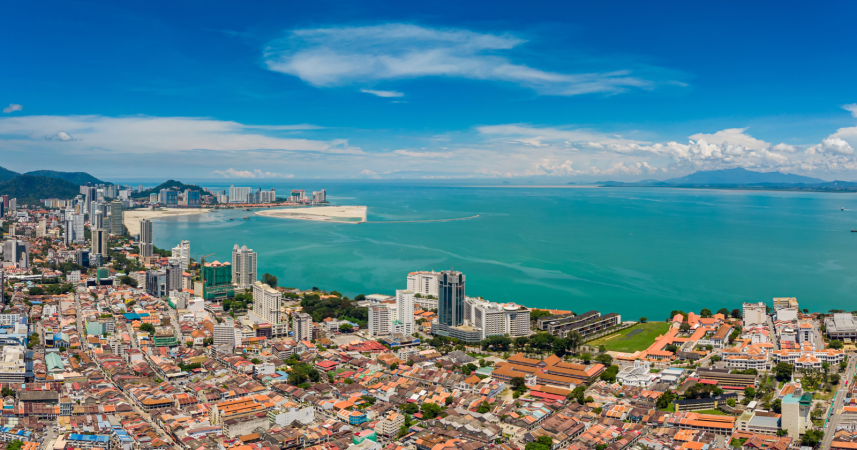
After extensive travel through Southeast Asia's most popular destinations, Penang, Malaysia stands out as the perfect blend of incredible food, walkable culture, and authentic local life without the tourist overwhelm.

Add VegOut to your Google News feed. 
After three months backpacking through Southeast Asia with nothing but a beat-up Lonely Planet guide and questionable hostel Wi-Fi, people always ask me the same thing: where should I go?
Thailand? Obviously incredible. Vietnam? Life-changing. Bali? Still worth it despite the crowds. But there's one place that changed how I think about travel entirely, a destination I've returned to twice and recommend to literally everyone who asks.
Penang, Malaysia.
I know what you're thinking. Malaysia doesn't get the same hype as Thailand or Indonesia. It's the place people pass through on their way somewhere else, spending maybe a day in Kuala Lumpur before catching a flight to more "exciting" destinations. I did the same thing on my first trip through the region.
But Penang is different. George Town specifically. This UNESCO-listed city on an island off Malaysia's west coast somehow manages to be everything you want Southeast Asia to be, without any of the tourist exhaustion that comes with more popular destinations.
The food alone justifies the plane ticket
Let me start with what matters most. The food scene in Penang is absolutely unmatched. Not just in Southeast Asia, but anywhere. I've eaten my way through night markets in Bangkok, street stalls in Hanoi, and warungs in Bali, and nothing compares to what you'll find in George Town.
The city sits at this incredible cultural intersection where Chinese, Indian, and Malay cuisines collided centuries ago and created something entirely unique. Walk into any hawker center and you're choosing between char kway teow, assam laksa, nasi kandar, and roti canai, all cooked by people who've been perfecting their one dish for decades.
I spent an entire week eating at Kimberley Street Food Night Market. Every single night. The duck kway chap there haunts my dreams. And here's the thing, a full meal with drinks costs maybe six dollars. Some places have Michelin stars now and you're still paying less than what a burrito costs back home.
The variety is what gets you. One meal you're eating koay teow soup at a Chinese kopitiam, the next you're trying banana leaf curry at a Tamil restaurant, and then you're having cendol for dessert because the heat is brutal and you need something cold and sweet. Each meal feels like a small revelation.
It's walkable in a way most Asian cities aren't
Southeast Asian cities can be overwhelming. The traffic, the pollution, the sheer chaos of trying to cross a street without getting flattened by a motorbike. George Town has all that energy but at a human scale.
You can actually walk here. The entire UNESCO heritage zone fits into maybe a two-mile radius. I'd wake up in my guesthouse, walk to a kopitiam for breakfast, wander through clan houses and temples, stop for lunch at a hawker stall, explore street art murals, and make it back for a nap before dinner without once feeling like I needed a Grab.
The architecture tells the story as you walk. British colonial buildings next to Chinese shophouses next to Indian spice shops next to Malay mosques. Everything coexists. There's this texture to the streets that makes getting lost feel productive rather than frustrating.
And it's genuinely safe. I'd walk alone at midnight grabbing late-night char kway teow and never once felt sketched out. That's rare for a city with this much personality.
The expat and digital nomad scene is real but not obnoxious
Some places get ruined when too many foreigners move there. You know the type, expensive coffee shops on every corner, prices inflating, locals getting pushed out. Penang has managed to avoid that somehow.
There's definitely an expat community. I met digital nomads at coffee shops, retirees who'd moved from Australia or the UK, and fellow travelers who'd extended their two-day stopover into a two-month stay. But it never feels like the city belongs to them. It still operates primarily for locals, in local languages, at local prices.
That balance is surprisingly hard to find. Bangkok tilts too touristy. Ubud feels like it's been entirely reengineered for Instagram. Penang just exists as itself, and foreigners get to participate without dominating.
The Wi-Fi is solid, there are coworking spaces if you need them, and the cost of living is low enough that you can actually save money while experiencing an incredible quality of life. I met people paying $400 a month for decent apartments within walking distance of everything.
You're close to nature without sacrificing city life
One of the things that surprised me most was how easy it is to escape the city when you need to. Penang National Park sits on the northern tip of the island, maybe 30 minutes from George Town. You can hike through jungle to secluded beaches where you're likely the only person there.
I took a day trip to the Penang Hill funicular railway and spent the afternoon wandering trails above the city, looking down at the Straits of Malacca while monkeys watched me suspiciously from the trees. The air was cooler, the views were incredible, and by evening I was back in the city eating at a hawker stall like nothing happened.
The island also has the Tropical Spice Garden, butterfly farms, temples tucked into hillsides, and beaches on the northern coast that see almost no tourists. It's this rare combination where you get urban energy and natural escape without committing to one or the other.
The cultural depth is something you feel rather than read about
I've been to plenty of places where the "culture" feels curated for tourists. You visit a temple, take your photos, buy your souvenirs, and move on. Penang isn't like that.
The temples here are active worship spaces. I'd walk past Kuan Yin Teng temple and see people burning incense, making offerings, genuinely praying. Same with the mosques, the churches, the clan houses. Everything is used, not preserved.
The street art that Penang is now famous for started as a local art project, not a tourism gimmick. Ernest Zacharevic's murals are still worth finding, but what I loved more were the random pieces tucked into alleyways that no guidebook mentions. You stumble onto them, take your photo if you want, and keep walking.
Little India feels like actual India compressed into a few blocks. Same with Chinatown. These aren't theme park versions, they're living neighborhoods where people shop and eat and conduct business. As a visitor, you're observing something real rather than consuming something packaged.
It doesn't demand anything from you
What I appreciate most about Penang is how low-pressure it feels. There's no FOMO-inducing bucket list of must-see attractions. No aggressive touts trying to sell you tours. No sense that you're missing out if you spend an afternoon doing absolutely nothing.
You can have as much or as little structure as you want. Some days I planned everything around meal times, hitting specific hawker stalls I'd researched. Other days I just wandered with no destination, following interesting smells or colorful shopfronts.
The city rewards both approaches. It's dense enough that you'll always stumble onto something interesting, but relaxed enough that you never feel rushed. That's increasingly rare in popular travel destinations where the tourism machinery pressures you to constantly be doing something worth posting about.
Why it works when other places don't
I think the reason Penang resonates with so many people is that it delivers what you actually want from Southeast Asian travel without the baggage that usually comes with it. You get incredible food, fascinating culture, friendly locals, easy logistics, and affordable prices, all while avoiding the overwhelming tourist infrastructure of places like Bangkok or Bali.
It's not undiscovered. Plenty of people visit Penang. But it hasn't crossed that threshold where tourism fundamentally changes what it is. It's still primarily a Malaysian city that happens to welcome visitors, not a tourist destination that happens to have some Malaysians living there.
The vibe is genuinely relaxed. No one is hustling you, no one is judging how you spend your time, and the pace of life encourages you to slow down rather than check boxes. After months of intense travel through more famous destinations, Penang felt like exhaling.
Final thoughts
I'm not saying Penang should replace Thailand or Vietnam or Indonesia on your itinerary. Those places are incredible for their own reasons. But if you're looking for somewhere that captures the best parts of Southeast Asian travel without the exhaustion, Penang delivers in ways that surprised me every single day.
The fact that it's still somewhat under the radar just makes it better. You're not competing for space, you're not paying inflated prices, and you're not surrounded by people having the exact same experience you are.
So when people ask me where they should go in Southeast Asia, I tell them Penang. Not because it's exotic or Instagram-worthy or bucket-list famous. Because it's the place where I finally understood what people mean when they say somewhere "just feels right."
Book a few days. You'll probably stay longer.
If You Were a Healing Herb, Which Would You Be?
Each herb holds a unique kind of magic — soothing, awakening, grounding, or clarifying.
This 9-question quiz reveals the healing plant that mirrors your energy right now and what it says about your natural rhythm.
✨ Instant results. Deeply insightful.

Jordan Cooper
Jordan Cooper is a pop-culture writer and vegan-snack reviewer with roots in music blogging. Known for approachable, insightful prose, Jordan connects modern trends—from K-pop choreography to kombucha fermentation—with thoughtful food commentary. In his downtime, he enjoys photography, experimenting with fermentation recipes, and discovering new indie music playlists.
More Articles by Jordan