Travel doesn’t just show us new places; it shows us our defaults. Korea didn’t make me “anti-American.” It made me more awake
We think we know our own country best—until we live somewhere else long enough to see it with fresh eyes.
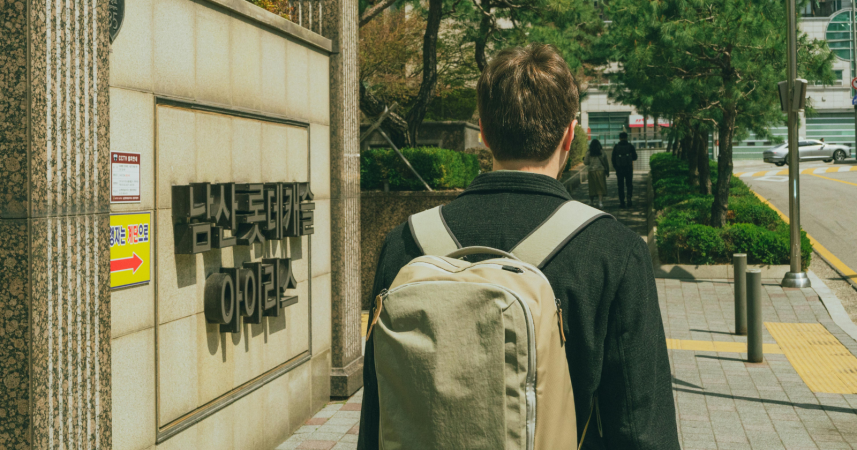
I spent years in Korea for work and curiosity, and it rewired my sense of “normal.”
Here are the twelve things I realized many Americans (myself included) tend to take for granted—little defaults you don’t notice until a different system pokes them.
1) Personal space
In the U.S., we’re used to a generous bubble—wide aisles, big tables, roomy seats.
In Seoul, rush hour shrinks that bubble fast. Trains are packed, elevators fill, sidewalks flow like rivers. People make it work with quiet courtesy—no huffing, no elbow wars, just small adjustments.
What I took for granted back home was the luxury of space.
We treat it like air: always there, always ours.
Living with less of it made me a calmer human. I stopped guarding my bubble and started reading the room—shoulders angled, backpack off in crowds, voice lowered on calls. It’s amazing how much connection shows up when you take up just a little less room.
2) Big kitchens (and big ovens)
If you’ve ever lived in a typical Korean apartment, you know the kitchen Tetris. Compact fridge. Two burners. Tiny oven—or none at all. Counter space the size of a cutting board.
Americans grow up assuming a full-size oven, a cavernous fridge, and cabinets galore. We complain about storage before we’ve even filled what we have.
Korea taught me to plan like a chef on the line: mise en place, tiny batches, smart containers, and fewer gadgets. Funny twist? When I came back, my cooking got better. Constraints sharpen technique—and intentional kitchens feel more expensive even when they’re simple.
3) The clothes dryer
Confession: I didn’t fully appreciate how wildly convenient a tumble dryer is until I hung laundry on a rack for months. Dryers exist in Korea, but a lot of people line-dry to save space, money, and fabrics.
Drying racks force rhythm. You do smaller loads, you schedule around humidity, and you plan what you actually wear.
Back in the States, I stopped treating my dryer like a 24/7 crutch. Delicates get air-dried; jeans get fewer spins. My closet is calmer because I’m not washing mountains of “just in case” clothes.
4) Trash “disappearing” like magic
In most American cities, you throw everything in a bin and it vanishes once a week. We take that frictionlessness for granted.
Korea’s system is serious. You buy city-approved bags, you separate food waste, recyclables, and general trash, and you learn the pick-up schedule like a train timetable. At first it was annoying. Then it clicked: the system makes you aware of your footprint.
I started meal planning tighter, decanting condiments into smaller jars, and buying fewer “pretty but pointless” packages. By the time I returned home, our household trash was half of what it used to be—without any spreadsheets or martyrdom.
5) English everywhere
Americans travel assuming English signage, English menus, and English customer service. In Korea, especially away from tourist hubs, that’s not always the case (and why should it be?).
The result? I learned to read hangul basics, kept a notes file of key phrases, and got very good at pointing politely.
What I took for granted wasn’t language; it was the ease of moving through the world without effort. That small shift—choosing effort—made me more patient back home. Now, when I see someone struggling with English in the U.S., I remember what it feels like to be the confused one and slow down.
6) Endless customization at restaurants
Americans love requests: sauce on the side, substitute the side, no onions, extra this, add that. In many Korean restaurants, the dish is the dish. The cook’s intention comes first. You eat what’s served, how it’s meant to be experienced.
As someone who worked in luxury F&B, I felt both sides. In Korea I relearned something I tell new cooks: respect the recipe before you reinvent it. Ordering without “fixing” everything made meals more mindful. When I came back, I didn’t abandon preferences, but I stopped making menus a negotiation. It’s faster, more gracious, and—shock—usually tastier.
7) Big portions and bottomless refills
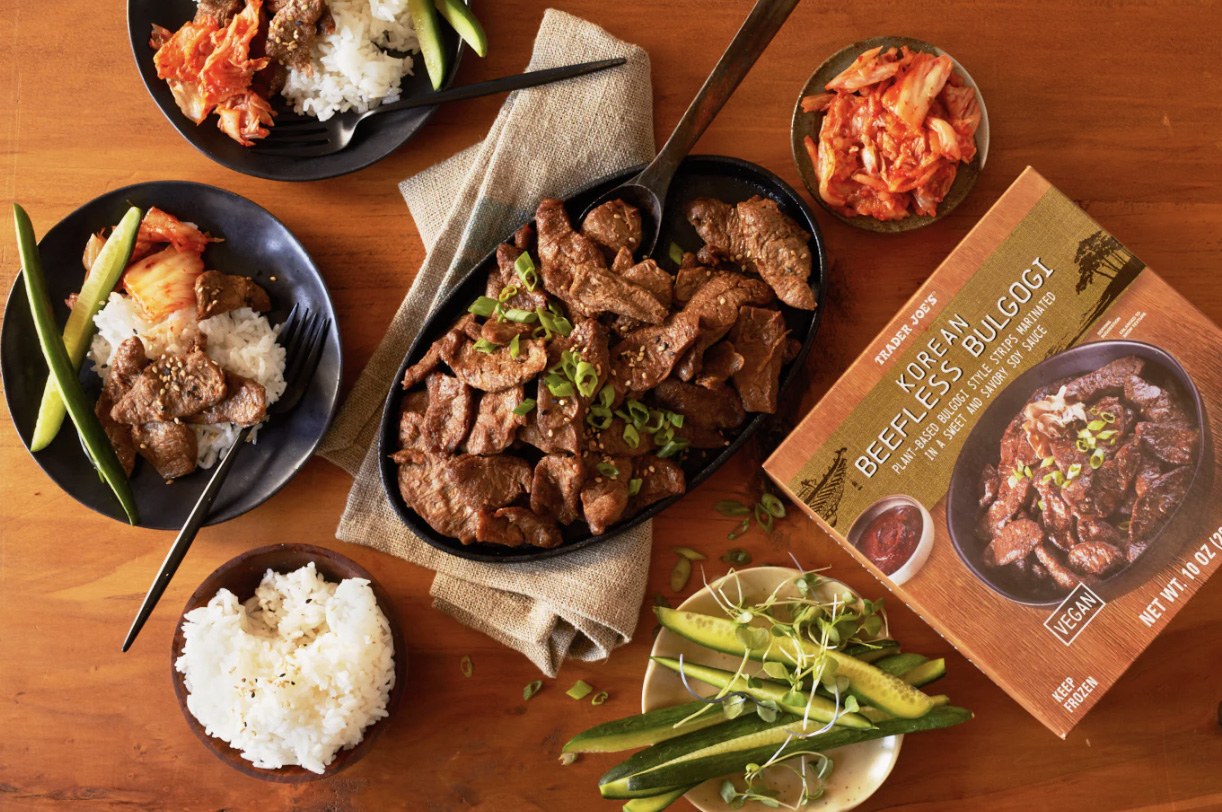
Courtesy of Trader Joe's
We treat refills like a birthright. Supersize everything. Bring boxes home.
Korea flipped that. Portions are often right-sized, shared, and balanced by banchan (side dishes) that keep the table social without overwhelming your plate.
I realized I took abundance for granted—and confused it with value. Smaller portions slowed me down. I tasted more, wasted less, and left feeling good instead of foggy. Now I order intentionally: half portions, one drink, taste everything, finish nothing out of obligation.
8) Tipping as a default
In the U.S., tipping is expected for everything from coffee to curbside pickup. We’ve normalized the “add 20%?” moment on the tablet. In Korea, tipping isn’t standard; wages and service charges are structured differently.
Did I enjoy the relative clarity of paying exactly what the menu said? Yes.
Did it make me rethink the American habit of throwing percentages around without thinking about the people behind the counter? Also yes.
Back home, I tip with intention, and I advocate with my wallet for places that treat staff well. The default is easy. The thoughtful choice takes a beat—and matters more.
9) Driving by default
I grew up with car brain: everything is a drive, parking is a given, and walking is a leisure activity on weekends.
Korea offers a different template. Trains are punctual, buses are frequent, and neighborhoods are designed for walking. On many days I’d rack up ten thousand steps without trying, hopping from subway to cafe to market.
What I took for granted in the U.S. was how often I sat. Living transit-first changed my energy. I slept better. I discovered places because my feet forced me to notice them. I also learned to accept a little weather and imperfect hair. Worth it.
10) Lighting and noise
American public spaces can be loud—music blaring, TVs on, bright overheads. In Korea, especially on transit and in many cafes, there’s an unspoken agreement to keep the volume down. Headphones on. Phone calls short. Lighting often softer.
It recalibrated my nervous system. I stopped filling silence with noise at home. We dim the lights earlier. Even meals feel different: lower light, fewer screens, more conversation. When everything isn’t “on,” your brain can actually exhale.
11) Return policies and warranties
We expect generous returns—30 days, no questions asked. In Korea, returns and exchanges can be stricter, and service centers are the norm for repairs. You plan purchases more carefully and you maintain what you own.
It nudged me out of impulse-buy mode. I kept a “cooling-off” list on my phone for 48 hours before I hit buy. Half the items disappeared from the list because the urge passed. The ones I did buy? Used longer, loved more. Novel idea: maybe the most “convenient” policy isn’t always the one that makes our lives better.
12) Healthcare and speed
Finally, the delicate one. I’m not here for hot takes. I’ll just say this: I was surprised by the speed, clarity, and out-of-pocket costs for basic care in Korea. Clinics were efficient. Prices were posted. Prescriptions were straightforward.
It made me realize how much American stress comes from uncertainty—What will this cost? How long will this take?—not just the care itself. The lesson I brought home wasn’t political; it was practical. I got proactive about preventive care, compared prices where I could, and organized documents like it was my job. Less drama, more data.
A few quiet habits I brought back
- Practice small, public courtesy.
Step aside, lower the volume, and let someone exit before you enter. It changes the whole feel of a day. - Cook like a minimalist.
Fewer tools, better technique, tighter fridge. Food tastes better when you’re not drowning in clutter. - Walk on purpose.
If a trip is under a mile, see if your feet can handle it. You’ll discover your neighborhood again. - Sort your waste.
Even if your city doesn’t require strict separation, do it at home. You’ll buy smarter without trying. - Order what the kitchen does best.
Ask your server what’s most loved and take it as-is. There’s a reason classics stick. - Give yourself friction.
If returns are easy, create your own cooling-off rule. Future you will thank present you.
Final thought
Travel doesn’t just show us new places; it shows us our defaults.
Korea didn’t make me “anti-American.” It made me more awake. I still love big diners, long road trips, and a dryer that gets towels cloud-soft in forty minutes. I just don’t assume those things are the only way to live—or the best for every season.
If you’ve lived abroad, what surprised you most about the way we do things here?
And if you haven’t, you can still borrow the mindset: question a default, try the opposite for a week, and see what sticks. The point isn’t to become someone else. It’s to become a little more intentional with the life you already have.
If You Were a Healing Herb, Which Would You Be?
Each herb holds a unique kind of magic — soothing, awakening, grounding, or clarifying.
This 9-question quiz reveals the healing plant that mirrors your energy right now and what it says about your natural rhythm.
✨ Instant results. Deeply insightful.