Culture isn’t a souvenir; it’s a practice.
Travel is one of the cleanest mirrors you’ll ever stand in front of.
When you drop into a brand-new city, your defaults get exposed—how you eat, how you speak to strangers, how patient you are, and how much wonder you can handle before you pull out your phone and numb it away.
Over the past decade, I’ve noticed there are certain places that don’t just show you a good time; they upgrade your operating system.
If you’ve spent real time in any of the five cities below—walking their neighborhoods, eating like a local, getting a little lost—you’ve picked up cultural range most people only daydream about.
Not because there’s a badge to collect, but because each of these places rewires a core human skill: Attention, adaptability, empathy, taste, or curiosity.
And that shows back home in the way you choose ingredients, navigate conflict, or run a meeting.
Ready to test your passport and your palate?
1) Tokyo, Japan
If minimalism had a heartbeat, you’d hear it in Tokyo at 7 a.m. outside a neighborhood café where the barista weighs beans to the gram and bows with the same care your grandmother folds linen.
That precision is contagious.
I remember ordering a simple plate of cold soba one humid summer and being floored by how much honesty you can pack into buckwheat, water, and time.
The tsuyu dip was salty-sweet, the scallions razor-fresh, the wasabi grated by hand.
Nothing screamed.
Everything spoke.
Tokyo teaches you that flavor is a spectrum, not a volume knob.
You start noticing how a cucumber actually tastes like a cucumber when it’s in season.
Suddenly you’re rinsing rice more patiently, heating oil properly, and letting miso do the heavy lifting instead of throwing five sauces at a pan out of panic.
It’s also where politeness is a shared sport.
Watch the choreography of boarding a rush-hour train—order without enforcement, efficiency without barked orders.
That etiquette shifts how you show up everywhere else.
You begin to think, “What’s the Tokyo way to do this?”
Which usually means cleaner, calmer, kinder.
2) Istanbul, Turkey
The first time I took the ferry across the Bosphorus, it hit me: You’re literally moving between continents while a tea vendor threads through rows of commuters like a ballerino with a samovar.
Europe on one bank, Asia on the other, cats everywhere acting like municipal officials.
Istanbul is a masterclass in both/and thinking.
Mosque domes and rooftop bars.
Ancient spice bazaars and cutting-edge art galleries.
Breakfasts that are basically negotiations between honey, olives, tomatoes, tahini, and five kinds of cheese—then somehow you still have room for simit.
That coexistence changes you.
You stop needing perfect answers and start asking better questions, like have you tried stuffed mussels on a side street followed by pistachio baklava and strong tea served in a tulip glass?
Pairings that “shouldn’t work” suddenly make all the sense in the world.
As someone who worked years in luxury F&B, I love how Istanbul does hospitality without the velvet rope.
The ritual is communal.
“Buyuk! Little! More tea?” It’s generous, musical.
You fly home better at synthesis—linking ideas, cuisines, and people who don’t obviously match.
That’s culture: The courage to mix, without losing the melody.
3) Mexico City, Mexico
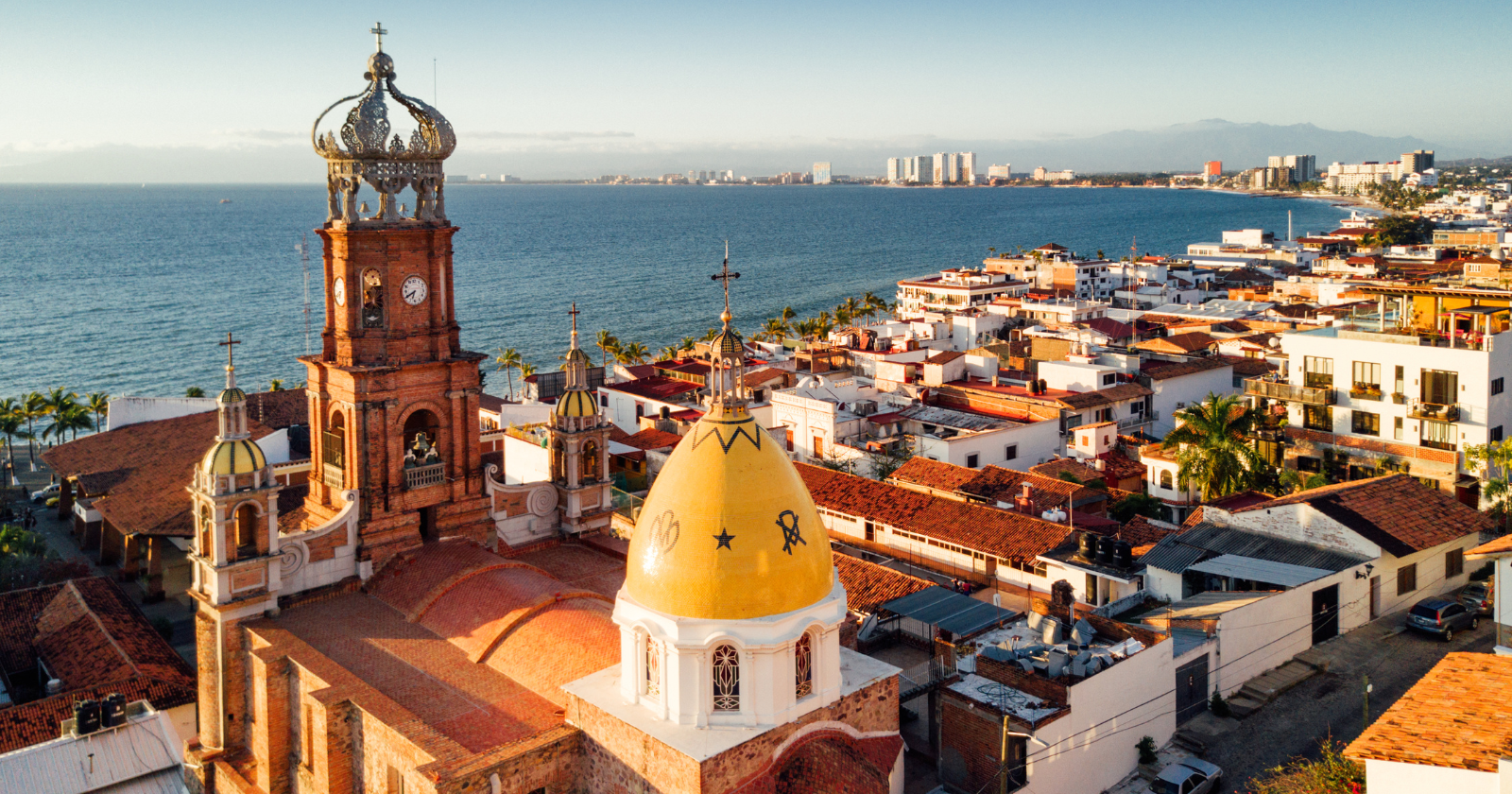
CDMX is a city that feeds you with both hands.
Stand at a street corner in Roma Norte and you’ll smell three different lives happening at once: Blue-corn tortillas puffing on a comal, espresso being pulled in a plant-filled café, and a flower stall you swear you can taste.
Here, “casual” food is not casual about craft.
Watch a taquero flick his wrist and lay down salsa with the accuracy of a surgeon.
Try a tlacoyo stuffed with fava beans, or a bowl of caldo de hongos so packed with umami you’ll start scheduling your week around mushroom season.
The lesson? Pleasure is not the enemy of health; low-quality pleasure is.
A perfect tortilla—nixtamalized, pressed, and kissed by heat—is both.
It’s also a reminder to eat closer to the field and the fire.
When I read Dan Buettner on Blue Zones years ago, something clicked: Communities that live longer tend to do simple things exceptionally well—beans, whole grains, movement, community.
Mexico City lets you live that at speed without it feeling like homework.
And yes, high dining sings too—chef-driven menus, heirloom corn, modern techniques—but the city never lets you forget who invented your lunch: Women in markets, farmers, millers, the guy who remembered your order from yesterday.
That humility is contagious.
You come back from CDMX with a new respect for the supply chain and a habit of asking, “Who made this?” That question alone deepens your culture and your gratitude.
4) Marrakech, Morocco
In the medina, time doesn’t pass—it steeps.
You walk through a lane scented with cumin and orange blossom, past a workshop hammering brass into something glowing, then into a courtyard riad where mint tea arrives as if poured by gravity itself.
Marrakech teaches you the architecture of pause.
The city pulses, then suddenly hushes in a tiled courtyard with a fig tree.
You learn to do the same: Move, then rest.
In the kitchen, that translates to letting flavors marry, letting couscous steam three times, and letting preserved lemons do their alchemy without interference.
I’m not a vegan, but I could happily live on Moroccan salads: Zaalouk (silky eggplant and tomato), carrot with cumin and citrus, tomato-pepper taktouka, and lentil stews perfumed with ras el hanout.
Add bread warm from a communal oven and you’ve got a complete education in texture and spice.
The souks also give you a PhD in negotiation—with yourself.
You start light, you smile, you learn when to walk away and when to say yes.
That shows up later when you’re pricing your work or setting boundaries with your calendar.
And there’s an old proverb I heard from a vendor while he wrapped up saffron: “Haste is from the devil.”
Brutal? Maybe. Accurate in the kitchen? Absolutely.
Once you taste what patience does to a tagine, you’ll never rush onions again.
Marrakech sends you home with better instincts for pacing—of meals, of projects, of relationships.
5) Berlin, Germany
Finally, there’s Berlin, a city that looks you in the eye and says, “Build it the way you think it should be.”
Berlin has a reputation for techno and nightlife, sure, but what stuck with me was its permission structure.
People experiment in public, food trucks turn into brick-and-mortars, and tiny bakeries obsess over hydration ratios and crumb.
You see a farmers market and suddenly you’re comparing eight kinds of rye like a sommelier.
The plant-based scene here isn’t a token section—it’s an identity.
Bakeries lean into sourdough and seed-heavy loaves.
Cafés pair oat-milk flat whites with seasonal veg plates that taste like they came from a garden you can name.
Even kebab shops have falafel that snaps with fresh herbs and salads bright enough to pass for confetti.
What does that do to you? It raises your default settings.
You become the person who asks, “What’s the best way to do this with what I have?” instead of, “What’s the easiest?” That transfers to gym sessions, work sprints, and how you rest.
Berlin also has a functional honesty I love.
If the bread sold out, the sign says so; if the bar is cash-only, it’s clear.
You start communicating that way—direct without drama, kind without fluff.
The history lesson is non-negotiable as museums and memorials make sure you carry context with your croissant.
You leave with a deeper muscle for remembrance, which is a core ingredient of culture: Knowing what came before, so you build better after.
The bottom line
Culture isn’t a souvenir; it’s a practice.
If you’ve spent time in Tokyo, Istanbul, Mexico City, Marrakech, or Berlin, you’ve trained your senses to notice more, your heart to include more, and your standards to rise without getting snobby.
That combination—curious mind, generous table, patient craft—puts you ahead of most people not because you’re better, but because you’re awake.
Keep traveling, keep tasting, and keep bringing the best of everywhere into the life you’re building right here.
What’s Your Plant-Powered Archetype?
Ever wonder what your everyday habits say about your deeper purpose—and how they ripple out to impact the planet?
This 90-second quiz reveals the plant-powered role you’re here to play, and the tiny shift that makes it even more powerful.
12 fun questions. Instant results. Surprisingly accurate.