
I thought a change of scenery would change everything. That new cities, new faces, and new adventures would quiet the noise inside me. But the truth is, travel doesn’t erase your problems; it amplifies them, forcing you to face what you tried to outrun.
For a long time, I believed that a change of scenery would fix everything.
I told myself that if I could just get away, from work, from the noise, from myself, I’d come back renewed. A blank slate. A lighter version of me.
Spoiler: it didn’t work out that way.
The thing about travel is that it amplifies what’s already inside you. The quiet places get quieter. The restless parts get louder.
What I learned, slowly and sometimes painfully, is that travel isn’t a cure. It’s a mirror. And what it reflects can be uncomfortable to look at.
1) The illusion of escape
It’s easy to romanticize travel as the ultimate reset button.
We scroll through travel influencers sipping coconut lattes in Bali and think, yeah, that’s the life I need. We see happiness and assume location is the variable.
But moving somewhere new doesn’t erase your internal wiring. The anxieties, insecurities, and old habits pack themselves neatly into your carry-on.
When I first traveled through Thailand, I expected the beaches and street food to quiet my overthinking. Instead, they gave it more space to echo.
The stillness between destinations left me face-to-face with thoughts I’d successfully drowned out back home.
The truth? You can’t outrun yourself. Not even across time zones.
2) The dopamine trap
Travel gives you constant novelty, and novelty gives you dopamine.
New cities. New foods. New people. Each day offers something to look forward to. For a while, that’s exhilarating.
But here’s the catch: the brain adapts quickly. That initial thrill fades, and you need more stimulation to feel the same spark.
I started noticing that after a few weeks in one place, I was already craving the next. I wasn’t actually living in the moment. I was chasing the next hit.
It’s the same pattern we fall into with social media, dating apps, even career jumps. We mistake “different” for “better,” thinking movement equals progress.
It doesn’t. It just keeps you busy enough to avoid sitting still.
3) The silence that reveals
Have you ever noticed how quiet it gets when you strip away routine?
When you travel alone, the noise of daily life, deadlines, errands, endless notifications, fades. And suddenly, there’s just you.
That’s when the real work begins.
During a solo trip to Japan, I spent long days wandering through temples and quiet neighborhoods. At first, it felt peaceful.
Then it got uncomfortable. My mind filled the silence with doubts I hadn’t dealt with in years.
Who was I really doing all this for? Why did I need to constantly “find myself” somewhere else?
Travel didn’t give me answers. It just gave me the space to finally hear the questions.
4) The myth of the “transformed traveler”
We love stories of transformation.
Someone quits their job, backpacks through Europe, and comes back enlightened. But real change rarely fits that timeline.
I met plenty of people on the road chasing that same narrative, hoping to come back new. But most of us just ended up the same, only with better photos.
Transformation doesn’t happen because you crossed a border. It happens because you faced yourself while you were there.
I’ve mentioned this before, but growth isn’t an event; it’s a slow recalibration. You don’t realize it’s happening until you notice you’re reacting differently to the same old triggers.
And that can happen in Paris or in your own living room.
5) The privilege of wandering
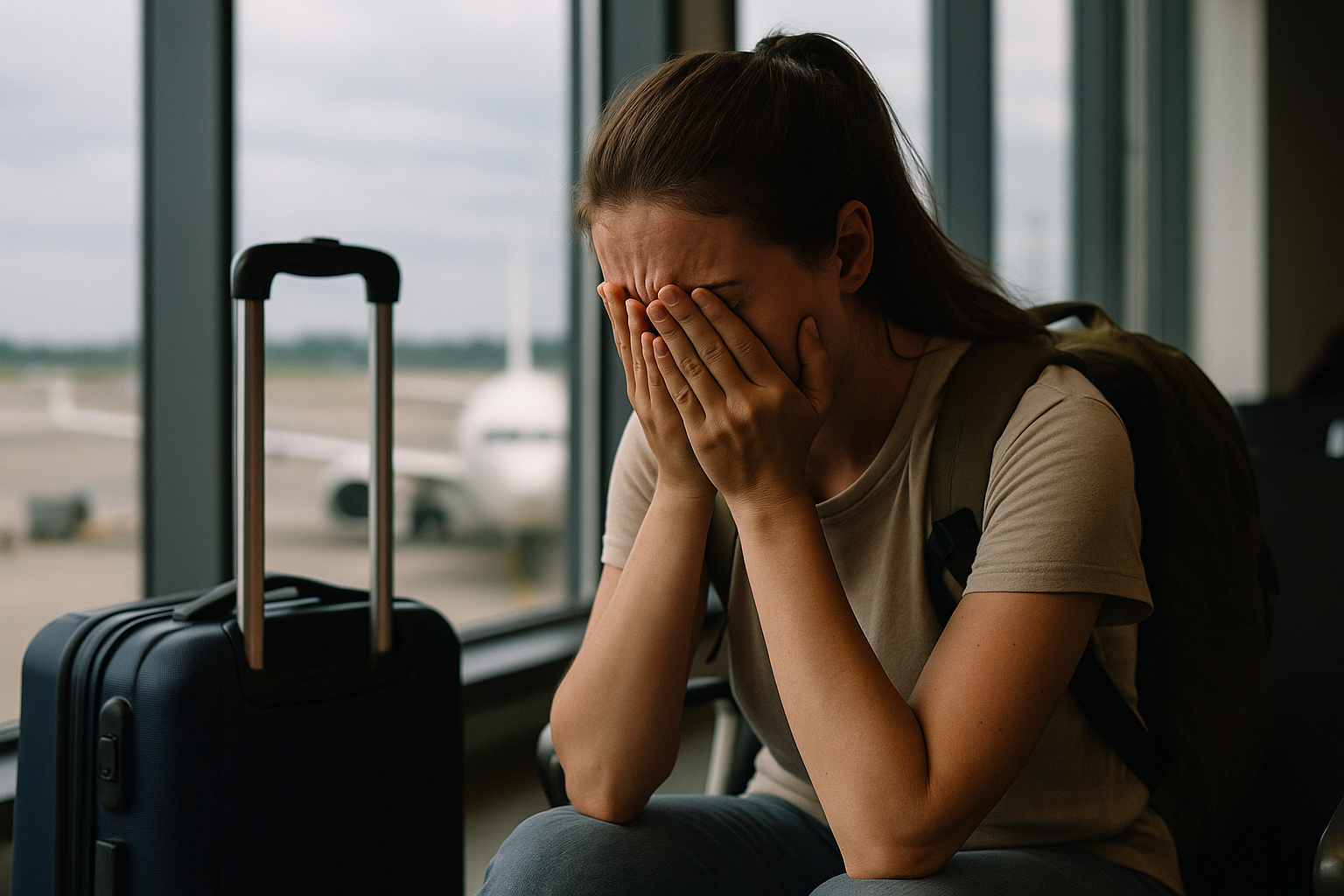
Let’s be honest: the idea that travel “fixes” you is also steeped in privilege.
Being able to take off to “find yourself” assumes you have the time, money, and safety net to do it. Not everyone gets that option.
And yet, even those who do often miss the point. Travel isn’t inherently spiritual or noble. It’s what you bring to the experience that shapes it.
I met locals in small towns who had never left their region but radiated more peace and presence than many of us backpackers combined.
They didn’t need to “go” anywhere to know who they were.
Sometimes, the most profound journeys are the ones that happen in place.
6) The burnout behind constant motion
At some point, my travels stopped feeling freeing and started feeling like a job.
Planning, packing, adjusting, moving, again and again. I was trying to live out of a backpack, but emotionally, it started to feel like I was running out of fuel.
When you keep uprooting yourself, you never give your nervous system time to settle. You’re always adapting, always reacting.
I began realizing that what I called “adventure” was often avoidance. Avoiding commitment, routine, stillness. Because those things made me feel trapped.
But here’s the irony: without roots, even beauty becomes exhausting.
Home, I learned, isn’t a location. It’s a sense of inner safety. And that can’t be booked on Expedia.
7) The lessons that actually stuck
Despite all that, I don’t regret traveling.
It didn’t fix me, but it did teach me.
It taught me humility, that the world is infinitely bigger than my own drama.
It taught me to observe before assuming. To listen more than talk.
It taught me to appreciate the texture of everyday life: a simple bowl of rice, a sunrise, a friendly nod from a stranger.
The more I saw, the more I realized that happiness wasn’t hiding somewhere exotic. It was in the moments I usually overlooked.
The irony of travel is that it can take you thousands of miles to notice what’s been right in front of you.
8) The real healing happens at home
Coming back was harder than leaving.
Reentry forces you to face the life you’d pressed pause on. The emails, the clutter, the routines that once felt unbearable.
But this time, something had shifted.
I didn’t need every day to be extraordinary. I just needed to be present for the ordinary.
I started applying what I’d practiced on the road, curiosity, openness, patience, to my everyday life.
Cooking dinner became an act of mindfulness. A morning walk felt like exploration.
Travel didn’t fix me, but it gave me new eyes to see the same world differently.
9) You take yourself wherever you go
In the end, that’s the hardest truth to accept.
You can fly halfway across the world, but your thoughts come with you.
If you don’t like yourself in Los Angeles, you won’t magically love yourself in Lisbon.
Sure, the scenery can soothe you for a while. The sunsets, the strangers, the sense of novelty, they all help distract you. But the inner dialogue remains.
That’s not a bad thing. It’s just reality.
Because the goal was never to escape yourself. It’s to understand yourself enough that you no longer need to.
The bottom line
Travel won’t fix you. But it might expose the parts that need attention.
And maybe that’s its real purpose, not to make life quieter, but to help you hear what’s been there all along.
The path to peace doesn’t start with a plane ticket. It starts with honesty.
And that journey, you can take it anywhere.
What’s Your Plant-Powered Archetype?
Ever wonder what your everyday habits say about your deeper purpose—and how they ripple out to impact the planet?
This 90-second quiz reveals the plant-powered role you’re here to play, and the tiny shift that makes it even more powerful.
12 fun questions. Instant results. Surprisingly accurate.