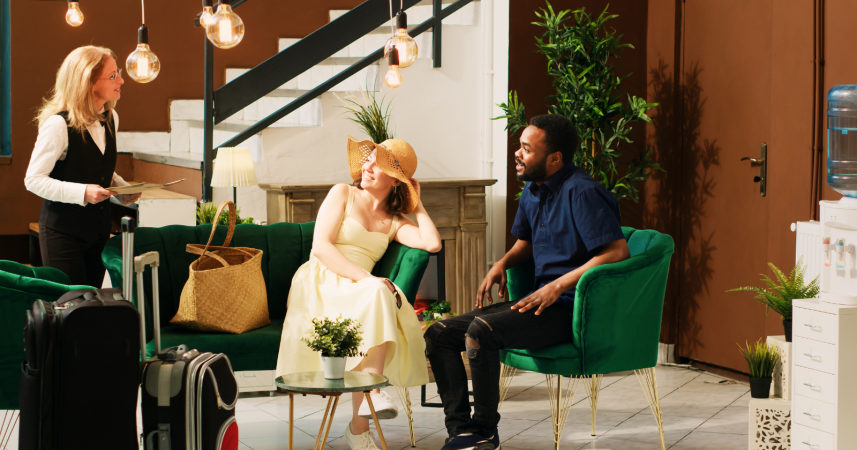
Ever wonder what subtle habits instantly give away an inexperienced traveler? From buffet behavior to how you treat staff, these small details speak volumes. Here are ten things hotel employees notice right away—and what to do instead if you want to move through the world with quiet confidence and class.
If you’ve ever worked in hospitality, you’ll know that hotel staff notice everything.
The way you check in, the questions you ask, even how you handle the breakfast buffet all say something about you.
This isn’t about shaming anyone. I’ve been on both sides of the counter.
In my 20s, I spent years in luxury hotels and fine-dining restaurants, watching guests from all walks of life.
What I learned is simple: money doesn’t always buy class, and class doesn’t always mean money.
There’s a kind of quiet elegance that seasoned travelers have. And then there are certain habits that instantly tell hotel staff you’re still learning the ropes. Let’s get into it.
1) They treat staff like servants, not professionals
Here’s a dead giveaway of someone’s character: how they treat the people serving them. In hospitality, respect is the real currency.
When guests snap fingers, raise their voices, or say things like “Do you know who I am?”, staff instantly know what kind of traveler they’re dealing with.
Ironically, the wealthiest, most well-traveled guests are usually the kindest. They say “please,” they smile, and they learn people’s names.
They understand that good service is a two-way exchange. I once served a billionaire who thanked the dishwasher on his way out. That kind of thing sticks with you.
2) They hover around the buffet like it’s their last meal
Buffets bring out something primal in people. You’ll see guests piling plates so high they’re one shrimp away from collapse. Some even sneak food into napkins or containers “for later.”
Hotel staff notice this right away. Not because of the food, but because it shows a scarcity mindset.
It screams, “I paid for this, and I’m getting my money’s worth.” Seasoned travelers don’t act like that. They take what they want, eat slowly, and enjoy the experience.
It’s not about how much you eat. It’s about how you carry yourself while doing it.
3) They demand upgrades or free perks
There’s a big difference between asking and demanding. Frequent travelers might politely inquire about upgrades: “If you have availability, I’d love to know what options there are.”
But others turn it into a battle. “I saw online there’s a suite empty. Why can’t I have that?” Or they insist, “I’ve been loyal to your brand!” when it’s their first booking.
Hotel teams can check your booking history in seconds.
If you’ve never stayed before and start demanding VIP treatment, it doesn’t land well. Confidence is attractive. Entitlement isn’t.
4) They overuse “we paid for this”
Whenever something small goes wrong — a delayed check-in, a cold croissant — some guests jump straight to, “We paid for this!” It’s the hospitality version of “I’m a taxpayer.”
Technically true, but tone-deaf. Hotel staff already know you paid; that’s how you got the room. What they respond to isn’t aggression but cooperation.
Say something like, “Hey, I think there’s a small mix-up. Could we sort this out?” and you’ll have people bending over backward to help you.
Patience and politeness open more doors than shouting ever could.
5) They act overly impressed or confused by simple amenities

There’s nothing wrong with enthusiasm.
But when guests loudly react to basic features — “Oh my God, they have slippers!” — staff instantly know they’re dealing with inexperience.
It’s not bad to be new to nice things, but when you treat standard comforts like miracles, it shows unfamiliarity.
Meanwhile, refined travelers notice the small things: thread count, lighting temperature, water pressure. They appreciate quietly.
Elegance isn’t about pretending you’ve seen it all. It’s about curiosity without the spectacle.
6) They complain loudly in public areas
Every hotel has that one guest who insists on turning frustration into a show.
They raise their voice at the front desk, sigh dramatically in line, and tell other guests how “unacceptable” everything is.
Here’s the truth: staff always want to help, but once you make a scene, everyone just wants to get you out of the way.
Loudness doesn’t make problems get solved faster — it just makes people less eager to serve you.
Polished travelers handle issues quietly. They explain calmly and give staff space to fix things.
That’s often how unexpected upgrades or extra perks happen. Quiet power beats noisy entitlement every time.
7) They treat tipping like an optional game
Tipping culture varies around the world, but in most hotels it’s an unspoken form of respect.
Some guests overdo it, tipping huge at check-in to “buy” attention. Others avoid it entirely, assuming it’s included.
Hotel staff notice both extremes. The smart traveler knows when and how to tip. A few dollars to housekeeping or the bellhop goes a long way. It’s not about the amount but the intention.
It tells the team, “I see you, and I appreciate your work.” People remember that.
8) They dress like they’re at home
You don’t need a blazer for breakfast, but presentation matters.
Guests walking barefoot in the lobby, wearing pajama shorts to the bar, or taking calls on speakerphone are instant signs of poor etiquette.
The best-dressed travelers aren’t flashy. They’re clean, comfortable, and intentional. It’s not about fashion; it’s about self-awareness.
You don’t need designer labels to look refined. Just clothes that say, “I respect the space I’m in.”
9) They try to “game” the system
Some guests get creative. They sneak extra people into the room, lie about their kid’s age to get free breakfast, or bring alcohol to the pool. Hotel staff see it all.
They might not call it out, but they notice. It’s not the rule-breaking itself that signals a lack of class — it’s the mindset behind it.
Thinking “getting away with something” equals being clever just shows you don’t understand hospitality.
True sophistication isn’t about outsmarting the system. It’s about respecting the exchange.
10) They lack situational awareness
This is the most telling behavior of all. Talking loudly in corridors at 2 a.m. Playing videos on speaker during breakfast.
Letting kids run wild in common areas.
It’s rarely malicious, just unaware. But awareness is the difference between being cheap and being considerate. The best travelers read the room.
They notice the energy, the vibe, the tone, and they adjust naturally. Class, in any setting, is really just empathy in disguise.
The bottom line
You don’t need a black card or designer luggage to travel with class.
What separates seasoned travelers from inexperienced ones usually comes down to mindset — awareness, respect, calmness, and gratitude.
Hotel staff aren’t judging your income. They’re reading your attitude.
When you treat people with quiet respect, move with awareness, and drop the need to prove you belong, you do belong.
And once you stop trying to look wealthy, you start to look effortlessly refined.
Because real class isn’t about what you can buy. It’s about how you move through the world.
What’s Your Plant-Powered Archetype?
Ever wonder what your everyday habits say about your deeper purpose—and how they ripple out to impact the planet?
This 90-second quiz reveals the plant-powered role you’re here to play, and the tiny shift that makes it even more powerful.
12 fun questions. Instant results. Surprisingly accurate.