If you’ve touched down in these 12 cities, you’ve basically installed the world’s operating system—far beyond what 95% of travelers ever see

Add VegOut to your Google News feed. 
Some trips stamp your passport.
Some trips stamp your brain.
If you’ve set foot in the right set of cities—even briefly—you’ve collected a mental map that most travelers never build.
Not because you spent more, but because these places compress whole worlds into a few walkable blocks: history rubbing shoulders with street food, subways that function like arteries, and contradictions you can feel in your bones.
Visit a handful, and suddenly you’ve seen more than 95% of travelers—not in a braggy way, more in the “oh, I get how the world stitches together” way.
Here are twelve cities that do exactly that. Each one hands you a different lens. String them together and you’ll carry a kind of global literacy you can’t fake.
1) Tokyo, Japan
Tokyo is where precision and playfulness coexist without canceling each other out. You can sip hand-dripped coffee on a quiet side street in Naka-Meguro, ride a subway that arrives to the minute, and then spend an hour in a Harajuku thrift shop that looks like it was designed by a maximalist dreamer.
Eat like you mean it—standing soba in a station nook, yakitori in a smoky alley, convenience-store onigiri that embarrass most “gourmet” snacks back home. The city teaches you how order makes room for creativity. It’s also where you realize politeness can be a civic technology, not a vibe.
Jordan’s tip: step into a depachika (department-store food hall) at 6 p.m. when the prepared bento get discounted. You’ll learn more about Japanese everyday life in ten minutes there than in two hours in a museum line.
2) Paris, France
Yes, it’s gorgeous. But the real gift of Paris is the way it insists that public life matter. Sidewalks belong to people. Dinner is a ritual. Art is not an extracurricular; it’s the point.
You’ll notice the pace change by day three: your walk slows, your eye sharpens, and you start judging baguettes you wouldn’t have noticed last week.
Have coffee standing at the zinc bar once, then park yourself at a terrace and watch the city flow. As I’ve mentioned before, Paris turned me into a better observer—nothing like a window table in the 11th to teach you the language of glances.
Jordan’s tip: skip the “must-try” lists and pick a neighborhood bakery that has a line of locals at 8 a.m. Buy whatever the person ahead of you orders. Your life will improve.
3) New York City, USA
New York is a speed test for your senses. Recalibrate to the rhythm of the subway, the density of ideas crammed into a single block, the hum of eight million private stories overlapping.
Walk the Lower East Side for immigration history in real time. Brooklyn for neighborhoods that feel like novels. Queens for food that resets your baseline.
You’ll learn how scale changes what’s possible—good and bad. Suddenly your definition of “late” shifts, your definition of “expensive” shifts, and your definition of “normal” gets deliciously wobbly.
Jordan’s tip: spend a morning in Jackson Heights crawling through Nepali, Tibetan, and Bangladeshi spots. One stop on the 7 train can export your taste buds to three countries.
4) Istanbul, Türkiye
If you want to understand what a crossroads feels like, take the ferry from Karaköy to Kadıköy at sunset. Minarets, cats, tea glasses, and centuries of trade routes stacked like layers of baklava.
Istanbul is as much a texture as a place: tiled courtyards, fish sandwiches by the Galata Bridge, call to prayer mingling with car horns. Duck into a hamam to time-travel, then argue with yourself about whether breakfast (hello, spreads) is the city’s peak experience.
Jordan’s tip: bring small bills and a big appetite to Kadıköy’s market streets. Eat your way down: simit, pickles, kokoreç if you’re adventurous, and strong Turkish coffee to end it.
5) Cairo, Egypt
Cairo is what happens when history refuses to sit quietly in the corner. The city is kinetic—honking, bargaining, storytelling on loop—and then you turn and see the Pyramids hazy in the distance like someone forgot to remove the backdrop. Stand in front of a 3,000-year-old statue and then ride an Uber through ring-road chaos.
You will learn that time is not a straight line. You’ll also learn that hospitality can be ninety percent insistence: someone will try to feed you more than you expected, and you should say yes at least once.
Jordan’s tip: hire a local guide for one morning, not a whole trip. Cairo rewards context, and a few hours of storytelling will make your solo wandering way richer.
6) Mexico City, Mexico
CDMX taught me that a megacity can feel like a string of small villages if you walk it right. Roma for leafy calm and pastries, Condesa for dogs and joggers, Centro for history, Coyoacán for Frida’s blue house, and a late-night taco al pastor that ruins you for all others.
Museums here aren’t just museums; they’re manifestos—the Anthropology Museum in particular will make you rethink the Americas. Eat quesadillas with huitlacoche in a market and you’ll understand the city’s soul: generous, layered, and bolder than your palate expected.
Jordan’s tip: go very early to Chapultepec Park on a weekday. Watch the city wake up—runners, vendors, families—and then be first through the museum doors.
7) Bangkok, Thailand
Bangkok is where chaos and comfort shake hands. The traffic is a metaphor, the skytrain is salvation, and the food vendors will feed you better for $3 than most restaurants anywhere.
Take a boat on the klongs to feel the old Bangkok, then ride the escalator to a food court where regional Thai stalls sit next to Korean fried chicken and vegan khao soi. Temples glow, malls glitter, and somewhere in between you will eat mango sticky rice and decide life is good.
Jordan’s tip: carry patience as currency. If it rains, shelter under an awning and eat whatever the nearest cart is making. Your plan B might become the trip’s core memory.
8) Mumbai, India
Mumbai doesn’t ask if you’re ready; it assumes you’ll adjust.
You’ll step into a local train, slide into a neighborhood with a universe of languages and faiths, and discover vada pav (carb-on-carb bliss) like a local secret passed down. This is a city of industries—finance, film, street food—each with its own rhythm.
Watch the dabbawalas execute a logistics ballet better than most apps. Watch the sea link at dusk and feel that mix of grit and hope that powers the place.
Jordan’s tip: take a heritage walk in Fort or Colaba. History helps you see the skyline as a story, not just a skyline.
9) Rome, Italy
Rome is proof that routine and glory can share a sidewalk.
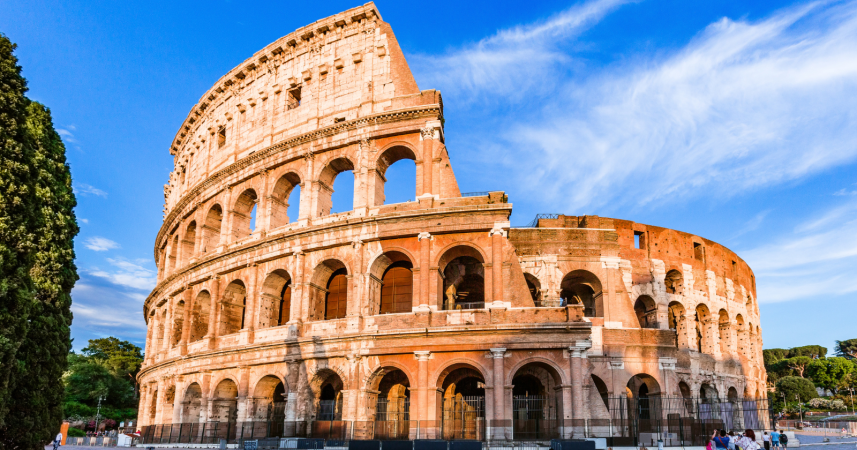
You grab a caffè standing at the bar, then turn a corner and stumble into a Bernini. You walk past ruins on the way to buy artichokes. “Layered” is cliché, but Rome makes you live it: empire, church, state, soccer, all arguing happily over a plate of cacio e pepe. Sit in a piazza long enough and you’ll understand pacing in a new way.
Jordan’s tip: one morning, skip the big sights. Follow your nose to a neighborhood market, buy a wedge of pecorino and some tomatoes, and make a picnic near the Tiber. Rome appreciates people who eat simply and smile.
10) London, United Kingdom
London is a library disguised as a city. The Tube maps your brain, the parks calm it, and you can choose a century by which pub you end up in. Free museums aren’t just a policy; they’re a worldview.
You’ll find hypermodern tech near medieval lanes and a food scene that punked the old “British food is bad” joke years ago. You learn here how a city can reinvent itself without deleting itself.
Jordan’s tip: spend one day above ground. Walk from Borough Market to St. Paul’s to the British Museum to Soho to Regent’s Park. Your feet will ache; your understanding will grow.
11) Rio de Janeiro, Brazil
Rio is geography turned theater: mountains, beaches, forest, and city all wrestling under insane light.
You’ll feel joy as a civic sport. The music leaks from apartments, the beach is democratic (everyone belongs to it), and even the bus ride along the coast feels cinematic. Eat a plate of feijoada like you earned it. Ride the cable car up Sugarloaf and watch the city prove why postcards exist.
Jordan’s tip: learn two phrases in Portuguese and use them liberally. Rio softens when you try. Also, the best view might be from Parque da Cidade across the bay in Niterói—trust me.
12) Seoul, South Korea
Seoul is speed plus ritual: a city that updates itself overnight and still bows to ancestors. One minute you’re in a neon alley eating tteokbokki; the next you’re walking a palace ground where silence is part of the architecture.
Cafés here are temples to aesthetic, and the subway could teach a masterclass in clean efficiency. You’ll leave with a higher standard for what “convenient” means and a list of snacks you can’t find back home.
Jordan’s tip: do a late-night market run at Gwangjang. Hotteok in one hand, mung-bean pancake in the other, and a stool shared with a stranger who will recommend something spicier than you planned.
What these cities teach you (that guidebooks can’t)
-
Scale without losing soul. Tokyo and London show how giant systems serve humans when designed with care.
-
History as present tense. Rome, Cairo, and Istanbul don’t “preserve” the past; they coexist with it. That changes how you understand your own city’s timeline.
-
Pluralism as daily life. New York, Mexico City, and Mumbai let you hear five languages on a single block and eat four cuisines before noon. Tolerance stops being a concept and becomes breakfast.
-
Joy as infrastructure. Paris has terraces. Bangkok has food stalls. Rio has beaches. These are not extras; they’re civic choices that produce happiness.
-
Adaptability. The way you pivot in Seoul or Bangkok becomes a transferable skill everywhere else. Travel as rehearsal for life.
The bottom line
You don’t need a million miles to feel widely traveled.
Touch down in these twelve cities—even a few of them—and you’ll carry a toolkit most travelers never assemble: how to read a crowd, how to find good food in a new alphabet, how to marry order with spontaneity, how to see history under your feet, how to be small in the best way.
If you’ve set foot in Tokyo, Paris, New York, Istanbul, Cairo, Mexico City, Bangkok, Mumbai, Rome, London, Rio, and Seoul, you’ve tasted a disproportionate slice of the world’s story.
The point isn’t to flex a map. It’s to grow a mind that recognizes patterns, respects differences, and can still find the nearest dumpling stall when you’re hungry at 11 p.m.
That, to me, is the whole game: collecting enough places that the next place feels less foreign—and more like another room in a shared house we’re all living in.
If You Were a Healing Herb, Which Would You Be?
Each herb holds a unique kind of magic — soothing, awakening, grounding, or clarifying.
This 9-question quiz reveals the healing plant that mirrors your energy right now and what it says about your natural rhythm.
✨ Instant results. Deeply insightful.

Jordan Cooper
Jordan Cooper is a pop-culture writer and vegan-snack reviewer with roots in music blogging. Known for approachable, insightful prose, Jordan connects modern trends—from K-pop choreography to kombucha fermentation—with thoughtful food commentary. In his downtime, he enjoys photography, experimenting with fermentation recipes, and discovering new indie music playlists.
More Articles by Jordan