
Add VegOut to your Google News feed. 
Some passports are full of stamps; others are full of stories.
If you’ve set foot in any of the countries below—really walked them, ate from street stalls, rode the questionable bus—you’ve pushed past checklist tourism into the better, messier territory of being truly well-traveled.
Not because these places are “hardcore” for the sake of it, but because they stretch your attention span. They ask you to stick around, to learn three phrases in the local language, to be okay when plans fall apart and become the point.
I kept this tight: ten countries that, in my experience, separate frequent flyers from people who actually know how to read a map with their feet.
1. Mongolia
You don’t visit Mongolia so much as you drift through it. The distances teach patience; the silence rewires your senses.
If you’ve spent nights in a ger with the stove ticking and the wind pressing against felt walls, you know how quickly minimalism stops being an aesthetic and starts being survival. Ulaanbaatar gives you the smoky, jazz-bar nights; the steppe gives you mornings where there’s nothing but sky and horse tracks.
There’s a kind of travel humility that only comes from bumping across the Gobi in a 4x4, eating buuz (steamed dumplings) with your hands, and finding out, hour three of a flat tire, that hospitality can show up as a stranger with a thermos and a socket set. If you’ve done Mongolia, you’ve learned to live without a strong signal—and with a stronger sense of place.
2. Bhutan
Bhutan is the curveball that makes you rethink “progress.” It’s not impossible to reach, but it’s intentional: the visa process, the daily tariff, the slow tourism model.
Get in and you get a country that measures success in Gross National Happiness, where dzongs sit like fortresses of calm and prayer flags keep conversations with wind.
Hiking to Tiger’s Nest at dawn—switchbacks, incense, bells—is not just a photo op; it’s a small sermon about patience and perspective.
You learn to walk softer. To let the day be shaped by steep paths and butter tea. If you’ve traveled here, you’ve probably learned how to be a guest in a culture that’s decided not to sell itself to the highest bidder.
3. Madagascar
Madagascar turns everyone into an amateur biologist and a better listener.
Half the species you meet exist nowhere else: lemurs leaping like punctuation marks, chameleons in colors Crayola never named, baobab trees that look like they’ve been stuck upside-down by giants. The roads will test your commitment, the zebu carts will set your pace, and the word “vanilla” will never be boring again.
The rare place where a $2 ferry and a three-hour detour can beat a fancy tour every time.
You leave understanding island time as a real thing, not a punchline. If you’ve made it to Tsingy de Bemaraha or snorkeled in Nosy Be and still craved more, yeah—you’re traveling with your curiosity on, not just your camera.
4. Namibia
Namibia is negative space as a destination. Sossusvlei’s dunes are sculpture you can climb; Deadvlei looks like a music video set built by a minimalist god.
Driving the Skeleton Coast, you feel like the ocean and the sand negotiated a truce and let a road slip through. Then there’s Etosha, where wildlife watches you.
If you’ve self-driven Namibia, handled the long gravel stretches, and learned how early mornings answer more questions than late nights, you’ve graduated from “I visited Africa” to “I learned how landscapes teach.” You also learned the surprising luxury of silence—the kind you don’t get in cities no matter how premium the hotel.
5. Kyrgyzstan
Kyrgyzstan is where the word “nomad” stops being branding and starts being breakfast.
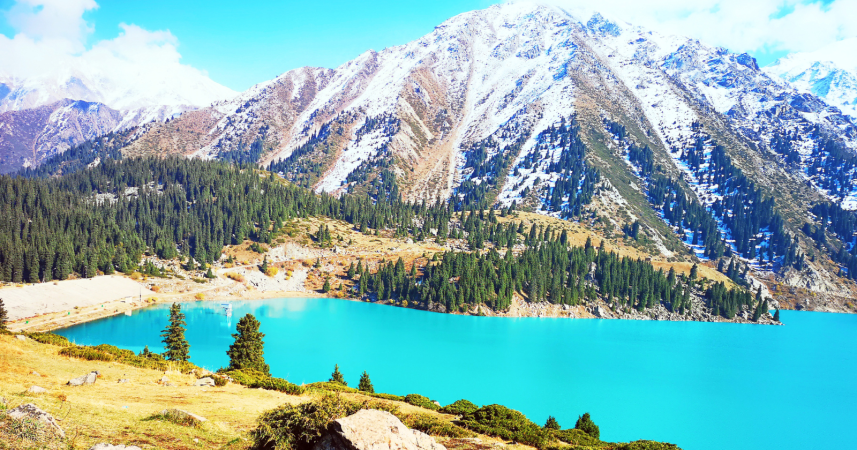
Song-Kul Lake will make a poet out of the quietest traveler, and a night in a yurt camp—with stars that look illegally bright—will change your sense of scale. Bishkek has leafy boulevards and the kind of markets that turn snacks into a syllabus.
Hike one of the Ala-Archa trails and you’ll realize how fast the world shrinks when your legs are honest and your pack is light.
If you’ve sat on a felt rug sipping kumis (fermented mare’s milk) and politely negotiating a second cup, you’ve learned how to be both open and respectful in a place that isn’t performing for you.
6. Georgia
I could write an entire love letter to Georgia (the country). Tbilisi’s balconies lean like eavesdroppers over lanes that smell like sulfur and fresh bread. Kartli wine poured from a clay qvevri will ruin you for the boxed stuff.
Supra culture—long tables, longer toasts—teaches you that hospitality is an art form and that strangers are just people you haven’t fed yet.
Then you head to Kazbegi or Svaneti, watch medieval towers stack against peaks, and you realize how much history can live in high places.
If you’ve hopped marshrutkas, learned to say madloba (thanks), and eaten khachapuri with your hands, you’ve done the work of showing up—and Georgia has a way of showing right back.
7. Papua New Guinea
Papua New Guinea is not a casual add-on. It’s complicated, costly, and utterly singular.
Step into a sing-sing (cultural festival) and the word “diversity” grows muscles: hundreds of language groups, body paint like living art, headdresses built from patience and feathers and fame within a tribe. Trek the Kokoda Track, and you’ll learn more about endurance and World War II history than any museum ever gave you.
If you’ve traveled PNG, you’ve practiced alertness without paranoia and respect without extraction. You’ve also learned the limits of your assumptions. That’s graduate-level travel.
8. Ethiopia
Ethiopia refuses to fit in the boxes outsiders try to set. It has its own calendar, its own timekeeping, and a cuisine so good it can convince skeptics to love injera (give it two days).
In Lalibela, rock-hewn churches carve faith into stone; in the Simien Mountains, gelada baboons work the meadows like shaggy botanists. Addis Ababa’s coffee ceremony is a meditation disguised as caffeine delivery.
If you’ve stood at the lip of the Danakil Depression with heat bending the air, or joined a shoulder-to-shoulder service where the singing seems to lift the room, you’ve been inside a story that started long before any of us booked a flight. It stretches you—in all the right directions.
9. Bolivia
High altitude has a way of stripping pretense.
In Bolivia, the air gets thin and the colors get loud: flamingos in impossible pinks at Laguna Colorada, the mirror-world of Salar de Uyuni after the rains, La Paz hanging like a necklace across a bowl of mountains with cable cars strung like beads.
Ride el teleférico and you’ll understand urban planning as a show. Wander the markets and you’ll meet women whose bowler hats and layered skirts look like fashion with a moral compass.
If you’ve biked Death Road and then sat quietly with a coca tea, grateful for your knees, you’ve earned your stripes without needing to brag about them.
10. Uzbekistan
Uzbekistan takes the phrase “Silk Road” off the textbook page and sets it in tile and light.
Samarkand, Bukhara, Khiva—these are cities that treat pattern like prayer.
Stand in Registan Square at sunset and try not to say “wow” in whatever language your brain defaults to. Good luck.
But it’s not just facades; it’s the rhythm of tea, the catch of a smile when you use two words of Uzbek, the way modern Tashkent surprises you with cafes and metro art.
If you’ve taken the train between these cities, learned to love plov, and gotten a little lost in an old town without panicking, you’ve learned to let beauty set the pace.
What these places teach (that you bring home)
-
Patience is a superpower. Long roads, slow trains, border quirks, and “maybe tomorrow” timetables will either break your spirit or build your calm. Choose the build.
-
Hospitality is a verb. A bowl of soup in a tent, a toast from a stranger, a hand over a map—these are not transactions; they’re invitations. Travel gets richer the moment you learn to accept, reciprocate, and not keep score.
-
Maps are suggestions. The route you planned rarely survives contact with a real place. The detour is the point more often than you think.
-
Language matters less than effort. Five phrases, learned like you mean them, out-perform a thousand apologetic smiles. People hear respect even when you get the vowels wrong.
-
Beauty is a teacher. There’s a specific kind of quiet that only arrives in the Namib at dawn or inside a painted madrasah courtyard at dusk. Stand still and let it work on you.
Two tiny scenes that stick with me
The road tea in Kyrgyzstan.
Our marshrutka driver stopped at a nothing-special roadside shack—plastic tablecloths, a pot steaming like a train. He handed our table a plate of samsa and flicked his wrist toward the sugar bowl like “don’t be shy.” No speech, no sales pitch. The air smelled like cumin and dust. It tasted like a reminder: the best meals don’t audition for you.
The night wind in Namibia.
I climbed a dune too late, legs on fire, stars arriving like someone flipped a switch. The wind erased my footprints by the time I sat. I’ve never felt so unimportant in the best possible way. Bring that feeling home and your inbox can’t boss you around as much.
How to “travel” like this even on easier routes
You don’t need to chase hardship for its own sake. You need to chase presence. Even in familiar countries, pick the slower train. Walk the long block after dinner. Learn a phrase. Sit in one place long enough to notice how the shadows change. The list above just happens to make presence unavoidable.
A quick self-test (be honest)
-
Did you learn to say “hello,” “please,” “thank you,” and “sorry” in the local language?
-
Did you ride at least one janky bus and live to laugh about it?
-
Did you eat where the plastic stools and regulars outnumber the Instagrammers?
-
Did you leave a plan unsalvaged and still have a great day?
-
Did you make one friend you might actually text later?
If you can tick those boxes in Mongolia, Bhutan, Madagascar, Namibia, Kyrgyzstan, Georgia, Papua New Guinea, Ethiopia, Bolivia, or Uzbekistan, you’re not just collecting countries. You’re collecting competencies: patience, humility, adaptability, and an appetite for contexts beyond your own.
The bottom line
“More well-traveled than 97% of people” isn’t about flexing your airport count.
It’s about how you move through places that don’t bend to your preferences. If you’ve been to any of those ten countries—and gave yourself to them a little—you already know: the brag isn’t the stamp; it’s the person you became to earn it. You listen more. You assume less. You say “wow” in buildings older than your language. You handle broken plans like a grown-up. You carry tea stories home.
That’s the good stuff. That’s what travel is for.