That compulsive passport pat-down isn’t neurosis—it’s your superpower: conscientious, contingency-ready, ritual-driven calm that gets you where you’re going
Airports reveal our habits in high definition.
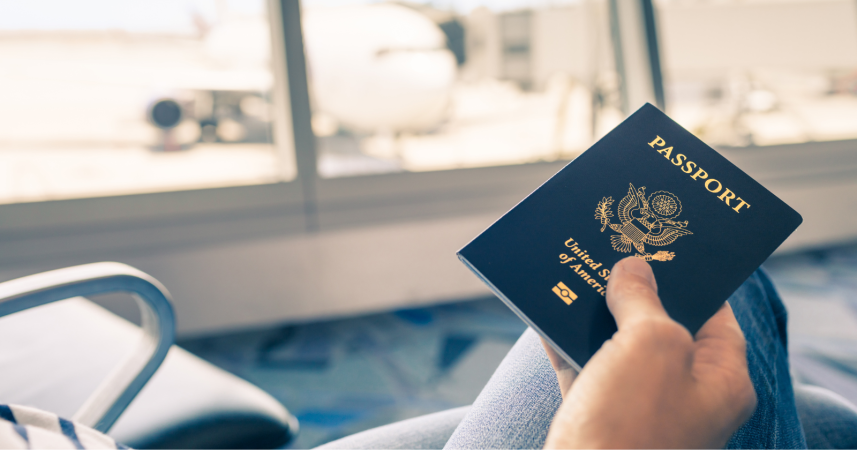
If you’re that person who taps your pocket every few minutes to make sure your passport hasn’t sprouted legs and run off, I see you. I’m you. I’ve done the pat-down in the security line, at the gate, in the restroom, and again while boarding—because apparently the 10 seconds since I last checked was a lifetime.
Here’s the thing: that little ritual isn’t random. It points to a cluster of strengths that show up far beyond Terminal B. If you constantly check where your passport is, you probably display these nine distinct traits.
1. You run on conscientiousness, not chaos
Some people “wing it.” You don’t. You like receipts, confirmations, and the dopamine hit of seeing your document where it belongs—again. That pocket tap is a micro version of how you handle life: plan first, verify often, avoid preventable mess.
I noticed this the first time I led a small group of friends on a budget flight through a connection at an unfamiliar airport. Everyone else was browsing snacks. I was rehearsing the route to the gate in my head while my hand kept drifting to my inside jacket pocket.
When we hit a surprise shuttle bus and a crowd surge, we still made it easily. Conscientiousness is a quiet superpower. It keeps your day from being a compilation of almosts and oops.
2. You self-soothe with action, not avoidance
Nervous? You don’t stew. You do. The check-tap is a tiny coping strategy that brings your nervous system down a notch without needing a pep talk. It’s the behavioral equivalent of turning a noisy dial to a quieter click.
I’ve mentioned this before but action kills more anxiety than thoughts do. You can tell yourself “it’s fine” a dozen times or you can palm the passport and feel the crisp cover.
One of those actually lands. That bias toward doing shows up outside airports too—sending the awkward email, running the quick numbers before a decision, laying out clothes the night before. You calm yourself by moving one inch toward certainty.
3. You build redundancy like a pro
People who check their passport in triplicate are the same people who keep a photo of it in a secure app, a paper copy in the carry-on, and the real thing in a zip pocket that zips. You’re not paranoid; you’re layered.
On a trip through Istanbul, a friend’s bag zipper failed and dumped half its contents into the black hole between the seat and the plane wall.
My passport stayed put because redundancy stacked in my favor: jacket pocket with a button, then a sling with a hidden compartment. Redundancy isn’t about expecting disaster; it’s about making sure inconvenience never graduates into crisis.
4. You respect systems—and know where they fail
You read signs. You follow security rules. You don’t argue with the boarding order like it’s a philosophical debate. But you also know the system misfires—barcodes don’t scan, airlines print wrong gate numbers, someone swears “boarding now” and nothing happens for twenty minutes.
The passport check is a boundary you control in a place where you control very little. That instinct travels well. At work, you can collaborate with bureaucracy without becoming it.
You’ll fill out the form and keep a copy. You’ll build the timeline and buffer it. You’re a realist about systems—respectful, not romantic.
5. You think in contingencies
If you’re a pouched-passport checker, your brain naturally runs “if-then” branches. If security snakes past the café, then we skip coffee. If the app glitches, then we have the printout. If the gate changes, then we already clocked where the nearest screens live.
I caught myself doing this on a red-eye to São Paulo: I had the seat map in my head, a mental note of the nearest empty outlets, and three ways to get to the next terminal if the primary walkway clogged.
I wasn’t stressed. I was prepared. Contingency thinking makes you the person everyone’s grateful to have around when a plan hits turbulence.
6. You care about not being “the problem”
People who overshare passport custody with their own hands tend to be hyper-aware of how their actions affect the room. You don’t want to be the person who stalls a boarding line digging through a tote. You’d rather preempt the awkwardness than apologize for it later.
That social consideration shows up at home and work, too. You reply promptly, show up on time, and bring what you promised. You don’t confuse “laid-back” with “unreliable.” There’s grace for mistakes, sure—but you make fewer of them because you prepare in a way that keeps other people’s day smooth.
7. You ritualize the important stuff (on purpose)
The pocket tap, the boarding pass glance, the bag count—those are rituals. Not superstition; scripts. You’ve built small sequences that protect big outcomes. The power isn’t mystical. It’s mechanical. Rituals reduce decision fatigue and make important behaviors automatic.
My pre-flight script is almost silly: wallet, phone, passport, charger, headphones—always in that order, always to a left-pocket beat.
Later, I realized I use the same patterning in other domains: a writing warm-up that starts with a two-sentence outline, a bedtime routine that begins with a lamp and a paperback, a gym session that opens with three mobility moves. Ritual isn’t rigidity. It’s scaffolding.
8. You notice details most people glide past
If you check your passport often, you also notice micro-shifts: the security agent changed lanes; the line with fewer roller bags moves faster; the person at the kiosk is hunting for a pen, which means the next three people will, too. You’re good at the kind of attention that saves minutes and prevents snags.
That detail radar isn’t limited to travel. You catch typos in the presentation before they go big. You spot the tiny leak under the sink before it becomes a floorboard saga.
You read rooms—voices, posture, energy—because you’ve trained your eyes to clock small differences and adjust. The passport check is just the visible tip of that habit.
9. You take responsibility for your experience
Finally, the obvious one: passport checkers don’t outsource accountability. If something gets lost, you won’t blame fate. You’ll blame a process that wasn’t tight enough and fix it for next time. That posture is a grown-up superpower. It moves you from complaint to iteration.
I once missed a regional train connection by two minutes—slow security, long walk, a well-timed yawn from the travel gods. Instead of telling the story like I’d been wronged, I updated my mental playbook: a bigger buffer for that airport, a hard rule about bathroom breaks before we approach the gate area, and a “no shopping detours within 30 minutes of boarding” clause.
Responsibility isn’t about guilt. It’s about leverage. You take it, you get better.
A few travel-tuned habits that make these strengths work even harder
-
Designate a home for documents. Same pocket, same pouch, every time. “Where it lives” beats “where it happened to be.”
-
Digitize + duplicate. Secure cloud photo, hard copy in your carry-on, physical passport on your person. Redundancy removes adrenaline.
-
Use a pre-flight checklist. Five items, not fifty. Say it out loud while you pack; the brain files it deeper when you hear yourself.
-
Board with empty hands. Stow the snack and the book before scanning the pass. Nothing slips when your hands aren’t juggling.
-
Narrate to yourself once. “Passport left inside pocket, boarding pass in phone wallet.” Silly? Maybe. Effective? Very.
-
Build buffer like it’s part of the ticket. If you make your own luck with time, you need less adrenaline to feel “alive.” You can save that for the view out the window.
Two tiny moments to land this.
A few summers ago, I led my parents through a crowded connection in Madrid. My dad’s a talented drifter—he trusts the universe; I trust signage. Every 50 steps I did the pat-down. He smirked until we hit a sudden passport-control bottleneck. Because I’d been checking, I knew exactly where everything was and could focus on reading the room. We pivoted to a shorter queue on the far right, skipped a vending-machine distraction, and made the gate with time to breathe. He patted his pocket then, too, and laughed. “Okay,” he said, “maybe the ritual works.”
Another time, I lost track of my passport for 30 hot seconds in a restroom stall at JFK. It had slid onto the tissue dispenser. My brain did a full-body alarm… and then the ritual saved me. My hand went to the pocket it lives in, felt air, and my eyes went straight to the last place it could be given my script. Found it. The lesson wasn’t “never make mistakes.” It was “build systems that help you recover fast.”
Bottom line:
Checking your passport on loop isn’t neurosis; it’s a tell. It says you’re conscientious, action-biased, layered in your planning, respectful of systems without trusting them blindly, fluent in contingencies, considerate of other people’s time, ritual-friendly, detail-attentive, and accountable for your own experience.
None of those traits require a boarding pass to matter. They make you a better collaborator, calmer under pressure, easier to travel with in the big sense—through projects, seasons, relationships, and the days that surprise you. Keep the tap if it helps. Just don’t forget the bigger story it’s telling about you: you’re the kind of person who makes a plan, checks the plan, and then actually gets where you’re going.
What’s Your Plant-Powered Archetype?
Ever wonder what your everyday habits say about your deeper purpose—and how they ripple out to impact the planet?
This 90-second quiz reveals the plant-powered role you’re here to play, and the tiny shift that makes it even more powerful.
12 fun questions. Instant results. Surprisingly accurate.