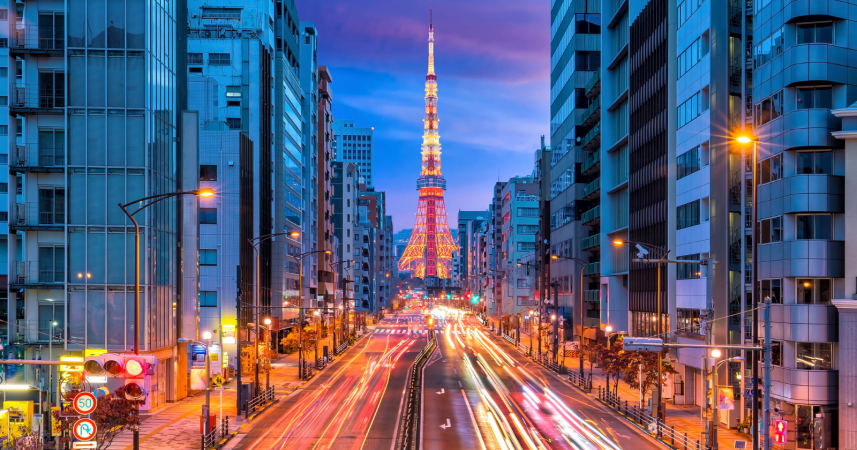
A year in Tokyo taught me that flawless timetables and quiet queues can be their own kind of noise
The first week I lived in Tokyo, a train pulled into Shinjuku at 8:02 and the doors opened at 8:02.
Not a second early. Not a breath late. Everyone filed in without touching, stood in silent rows, and adjusted their bags so strangers had space.
I felt like I had been invited inside a flawless machine. Then a man in a suit fell asleep standing up. He slept through four stops, woke up suddenly, and sprinted off like his shoes were on fire.
That was my first hint. Order can be another kind of chaos. You just have to learn how to see it.
The city that whispers loud
Tokyo does not shout. It hums. Elevators sing a two-note chime. Crosswalks tweet like small birds. Vending machines blink politely. Even the sirens sound apologetic. The noise is a careful stack of signals so the city can move millions of people without collisions.
I got used to reading those signals like weather. The sound the ticket machine makes when a card fails. The extra bow from a clerk when something is slightly off. The quiet shuffle when a platform fills three layers deep. It felt like grace. It also kept my nervous system on high alert. If the city never bumps you, it is still asking you to stay in your lane.
The freedom of lines
Everywhere I went, there were lines. Painted arrows on platforms. Dots on sidewalks. Tape on convenience store floors. At first I thought the lines were rules. Then I realized they were gifts. Lines reduce negotiation. You do not have to fight for space or invent etiquette in the moment. You make fewer micro-decisions. Your brain gets a break.
But there is a cost. When I broke a line without meaning to, the air stiffened. No one said a word. I felt fifty polite stares land like feathers. Order, once broken, creates a different kind of noise. You hear it with your skin.
I learned to step back, bow slightly, and reset. The line held. So did I.
Trash day is a philosophy
In my neighborhood, you could not just take out the trash. You joined a civic ritual. Burnable on Monday and Thursday. Plastics on Tuesday. Bottles and cans on Wednesday. Cardboard tied in neat bundles. Everything washed. Everything in clear bags so the rules can be seen.
At first I was annoyed. Then it became meditative. I rinsed a yogurt cup and thought about how easy it is to outsource mess to whatever is farthest from view. In Tokyo, there is no far. The city asks you to face what you make. Order here is not a display. It is a mirror.
The chaos sneaks in on rainy weeks when schedules slip and bags swell. You miss a morning and the apartment smells like a tiny, polite rebellion.
Convenience can be compulsion
The convenience store is a cathedral. Seven hundred square feet of perfect logic. Onigiri that tastes like it got a pep talk. Toothbrushes when you forget. Socks when you rip a pair. Hot coffee from a machine that never blinks. It is impossible to overstate how much a konbini can rescue a day.
I started going three times a day because it made me feel competent. A banana here, a rice ball there, a magazine, a pen, a bottled tea. It looked like ease. It was also a habit loop that smoothed every bump so well I stopped noticing bumps.
Halfway through the year, I took a week off convenience. I shopped once. I cooked. I carried the annoying things. Turns out I do not always need a rescue. Sometimes the friction is information.
The quiet of crowded places
Tokyo taught me a new kind of silence. It lives inside crowded trains, in a soba shop at lunch, in a queue that wraps a block. People stand shoulder to shoulder and lower the volume on their lives. The quiet is not empty. It is a social agreement. You get your square of air. I get mine. We share the same six inches between us like good neighbors.
There were days I adored it. There were days it made me lonely. That is the chaos under the order. When a city removes noise, it also removes excuses to talk to strangers. You have to invent your own collisions. You have to choose connection.
I learned to say small things. “Sumimasen.” “Koko, ii desu ka.” “Arigatou.” I learned to ask the fishmonger what was best that day and to nod like I meant it when he said mackerel and handed me the brightest fish I have ever cooked.
Punctuality makes time elastic
People joke about Japanese punctuality. It is not a punchline. It is an ethic. If a train is late, an announcement apologizes like a ruined wedding. If a friend says 6:30, they arrive at 6:28 and stand ten feet from the door so you can find them without fuss.
At first, punctuality gave me a sense of control I had never felt in a big city. The day obeyed the clock. Then I felt the other edge. When everything runs on time, you start measuring yourself by the same standard. A late morning feels like a moral failure. A missed transfer feels like a character flaw.
Halfway through winter, I started leaving ten minutes early on purpose, not because I am a hero, but because I am human. If I arrive with time to spare, I breathe. If I am late, the world does not end. Punctuality can be kindness. It can also be a whip. I tried to make it the first one.
Rituals that hold you still
Seasons in Tokyo are not just weather. They are calendars with assignments. Plum blossoms. Cherry blossoms. Maples. New Year’s temple bells. Summer festivals. Autumn moon. End-of-year cleaning. It is a year plotted like a song.
I walked to the same small shrine each month and bowed the way I had learned, two times, clap, one time. I did not need a translation. The ritual worked anyway. It held me still long enough to notice I was there.
Order, in that context, is not control. It is a place to stand. The chaos is what your head will do if you never stand still.
Rules and the shadow of rules
Every culture has things you say and things you do not. Tokyo taught me the dance between tatemae and honne, the face you show and the truth you hold. In a place where order keeps the wheels greased, the shadow side is that feelings get folded and put away until there is a private moment to unfold them.
I felt this most in apologies. People apologized for bumping elbows, for not having change, for giving me directions that might be inconvenient. It was lovely. It also made real apology harder to spot. The words were the same. The weight was different.
By spring, I learned to listen for the weight, not the words. It helped me be a better friend.
The kindness behind the counter
Small businesses in Tokyo gave me a masterclass in service. The way a clerk aligns a receipt with both hands. The way a bento shop stacks chopsticks so the grain faces the same direction. The way a barista rotates a cup so the logo meets your eyes when you lift it.
None of this is accident. It is a choreography of care. It can also turn obsessive. The new hire who spends two minutes adjusting a bag seal when thirty seconds would keep it closed just fine. The manager who apologizes to me while correcting an employee for a wrinkle I could not see.
In that tension, I learned to separate intention from performance. I kept the parts that made me kinder to strangers. I let go of the parts that made me unforgiving with myself.
Bureaucracy as endurance sport
Order looks beautiful until you need paperwork. Then it becomes a maze. Stamps. Forms. Counters where you take a number and hope you guessed the right line. I learned to bring extra copies, a calm voice, and a water bottle.
The chaos here is not anger. It is patience. You become a student of your own temper. I failed on a humid afternoon with a stack of documents that kept being not quite right. I raised my voice. The clerk did not flinch. She slid me a new form and a small smile and circled a section I had missed.
I sat down, filled it out, and felt my face cool. Order is a discipline. Sometimes the person across from you is better at it than you are. You can learn.
The apartment that taught me scale
My place was the size of a well organized closet. The washing machine lived outside. The shower room felt like a spaceship. The kitchen had two burners that acted like opinionated poets. With that scale, order is not optional. If you do not put something away, it lives with you. If you do not clean, you walk through dust.
The chaos lives in what the space asks you to admit. You cannot be a person who hoards. You cannot be a person who cooks six pans at once. You cannot be a person who shops like a Costco ad. You have to become someone else, or at least a smaller version of yourself. That shrinking is humbling and, if you let it be, freeing.
I learned that two bowls can be enough, that one knife is plenty if it is sharp, and that a table can serve as desk, dining, and workbench if you treat it with respect.
Friends made at walking speed
In a city of trains, you still walk. A lot. I thought the walking would be background. It became the thread. I met a neighbor because our routes matched most mornings and we nodded until one day we did not nod. We spoke. He taught me the word for the specific yellow of ginkgo leaves. I taught him the word for the smell of rain on hot pavement. We did not need the internet to feel like we belonged to a larger conversation.
Order gives you the power to predict where people will be. Chaos arrives when you step out of your script and say something. That is where friendship lives.
Leaving, and what stayed
When I left Tokyo after a year, I packed tidy habits into my suitcase with my shirts. Shoes by the door. Lines on the floor of my mind. Bowing slightly when I hand someone a bag, even in places where bowing is not the language. I also carried the memory of small rebellions that kept me sane. Sleeping in one morning. Taking the wrong train on purpose. Sitting in a park and letting a day be useless.
Order can be a shelter. It can also be a trap. The trick, I learned, is to keep the parts that help you treat others well and release the parts that make you vanish inside your own choreography.
Final thoughts
Tokyo taught me that order is not the opposite of chaos. It is one way to carry it. Schedules, lines, trash days, rituals, small courtesies, all of it lets millions of people share a tight space without tearing the seams. In that fabric, you can forget there is a body underneath. You can mistake flawless flow for a full life.
A year in that city reset my compass. I want the quiet lines that save my energy and the rituals that steady my week. I also want the messy moments that prove I am alive. Order, yes. But not at the cost of spontaneity, mercy, or time with people who will laugh too loud in a small room.
If you ever get the chance to live in a place that runs like a watch, learn the rhythm. Then, when the second hand tempts you to move like a machine, step to the side, miss a beat on purpose, and let the human part catch up. That is where the real city is. It is where you are too.
If You Were a Healing Herb, Which Would You Be?
Each herb holds a unique kind of magic — soothing, awakening, grounding, or clarifying.
This 9-question quiz reveals the healing plant that mirrors your energy right now and what it says about your natural rhythm.
✨ Instant results. Deeply insightful.