The romantic cafes and charming strangers exist, but the real Paris involves language barriers, tiny apartments, and a lot more loneliness than Hollywood ever shows
You know that moment in movies where someone steps off the plane in Paris and immediately meets a charming stranger at a cafe, all while looking effortlessly chic? Yeah, that didn't happen to me.
I spent a year living in Paris back in my twenties, and while it was one of the most formative experiences of my life, it looked nothing like what I'd seen on screen. The gap between Hollywood's Paris and the actual city where real people live and work is wider than the Atlantic Ocean.
Let me tell you what really happens when you move to Paris.
1) The language barrier is real and humbling
Despite what every Paris-set rom-com suggests, most Parisians don't speak fluent English and wait around to help confused Americans.
I arrived with three years of high school French and the confidence that came from watching subtitled films. Within my first week, I stood in a pharmacy for fifteen minutes trying to explain that I needed cold medicine, eventually resorting to an elaborate pantomime of sneezing and coughing.
The pharmacist just stared at me.
Here's what the movies don't show: you will mispronounce things constantly. You will order the wrong food. You will accidentally insult people because you used the informal "tu" instead of the formal "vous." And unlike the charming misunderstandings in films that lead to romantic moments, real miscommunication just leads to frustration on both sides.
Learning French isn't a cute montage set to accordion music. It's months of feeling like a child who can't express basic thoughts, of missing jokes, of being exhausted by 2pm because your brain has been translating all day.
2) Parisians actually work really hard
Movies love to show Parisians leisurely sipping wine at 2pm on a Wednesday, taking two-hour lunch breaks, and generally treating work as an afterthought.
The reality? Most French professionals I knew started work around 8:30am and didn't leave until 7pm.
My roommate worked in marketing and regularly brought her laptop home. My neighbor was a teacher who spent evenings grading papers. The guy at my local boulangerie was there at 5am every single morning to start the ovens.
Yes, the French have strong labor protections and value work-life balance. But that doesn't mean they're lazy. It means they have boundaries between work time and personal time that Americans often lack. After 7pm, work emails go unanswered. Weekends are sacred. Vacation time is actually used.
But during work hours? They're as productive and stressed as anyone else in a major global city.
3) The apartments are tiny and often terrible
In movies, even struggling artists have spacious apartments with floor-to-ceiling windows overlooking the Seine.
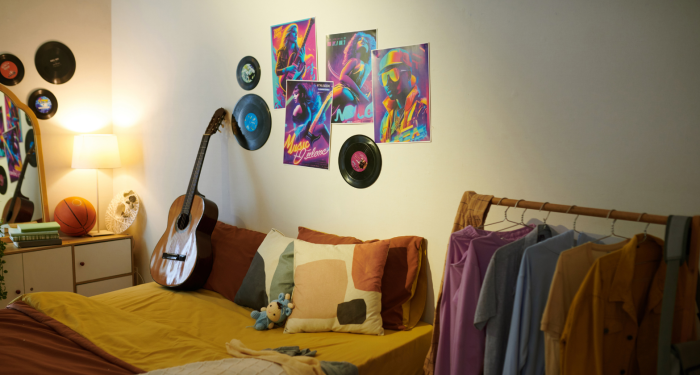
My studio was 18 square meters. That's about 190 square feet. My bed was also my couch, which was also my dining table. The shower was basically a phone booth where you had to be careful not to knock your elbows. The toilet was in a separate closet so small that your knees touched the door when you sat down.
And I was lucky to have my own place.
Many young Parisians live in chambre de bonne, former servants' quarters on the top floors of buildings with no elevators. Some share apartments with three or four roommates well into their thirties because rent is astronomical.
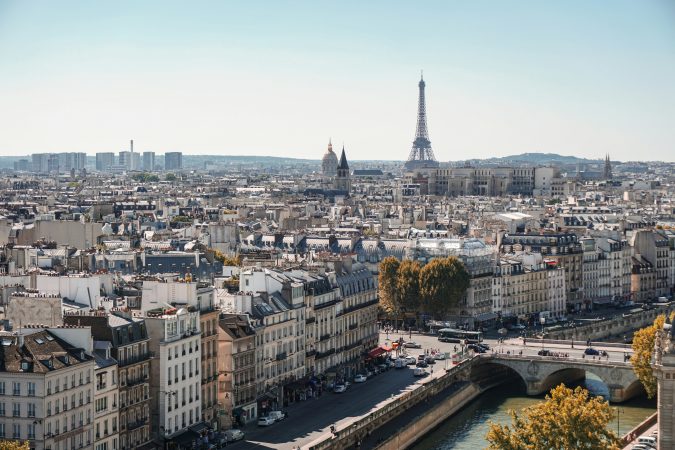
Paris is one of the most expensive cities in the world. Housing is a genuine crisis. The charming Haussmann buildings you see in films? Most people can't afford to live in them.
4) The Metro smells and breaks down constantly
Movie Metro rides are atmospheric and romantic, with beautiful strangers making eye contact across the car while a busker plays violin.
Real Metro rides involve being packed shoulder-to-shoulder with commuters during rush hour, the smell of urine in certain stations, and regular delays due to signal problems or strikes.
I once got stuck between stations for 45 minutes during a heatwave. No air conditioning. No explanation. Just hundreds of sweaty people pressed together, getting progressively more irritated.
The Metro is efficient and extensive, sure. It'll get you most places you need to go. But it's public transportation in a massive city, not a romantic backdrop. It's crowded, sometimes dirty, occasionally sketchy, and absolutely not a place where you're likely to lock eyes with your soulmate.
5) Nobody dresses like they're in a fashion show
The stereotype of the effortlessly chic Parisian is one of cinema's most persistent lies.
Real Parisians wear jeans and sneakers. They wear North Face jackets. They dress for the weather and for comfort, just like people everywhere.
Yes, there's a certain aesthetic that some people cultivate. But for every woman in a trench coat and silk scarf, there are fifty people in hoodies waiting for the bus. Paris has its share of badly dressed people, just like any city.
I spent my first month there trying to dress like I thought Parisians dressed, wearing uncomfortable shoes and impractical outfits. Then I watched actual Parisians and realized most of them were just trying to get through their day without blisters.
The "Parisian style" you see in movies represents a tiny, wealthy sliver of the population. Most people are just wearing whatever's clean.
6) The city is diverse in ways Hollywood ignores
Watch most Paris-set films and you'd think the city is 99% white people speaking French with perfect diction.
The real Paris is wildly diverse. Huge communities from North Africa, West Africa, Asia, and Eastern Europe have made the city their home. You hear Arabic, Vietnamese, Portuguese, and dozens of other languages on any given street corner.
Entire neighborhoods have their own distinct character based on immigration patterns. Belleville feels nothing like the Marais, which feels nothing like the 13th arrondissement with its substantial Chinese community.
This diversity creates incredible food, vibrant culture, and complex social dynamics. It also means Paris deals with the same racial tensions and integration challenges as any major global city.
The homogenous, pristine Paris of cinema is a fantasy that erases huge swaths of the actual population. It's also boring compared to the real thing.
7) Customer service is not what you expect
In American movies set in Paris, waiters and shopkeepers are either charmingly rude in a cute way or obsequiously helpful.
Real Parisian service culture is different from American expectations, but not in the way movies portray it.
Waiters aren't trying to turn tables quickly, so they won't rush you. They also won't check on you every five minutes. You have to actively flag them down when you want something. This isn't rude; it's giving you space to enjoy your meal.
Shop employees aren't there to hover and help. You're expected to browse on your own and ask if you need assistance. Greeting people when you enter a shop is considered basic politeness. Not doing so marks you as rude.
I remember a particularly painful interaction at a bakery where I pointed at what I wanted instead of using words. The woman behind the counter just stared at me until I managed to croak out "S'il vous plaît" and ask properly. She wasn't being mean; I was being rude by her cultural standards.
These aren't quirky personality traits. They're different cultural norms around service, personal space, and social interaction.
8) The weather is grey and rainy more than it's sunny
Every film set in Paris seems to take place during a perpetually golden afternoon or a light, romantic rain that makes everything glisten.
Paris weather is actually pretty dreary. It's grey and drizzly for much of the year. Not the dramatic downpour kind of rain that looks good on film, but a persistent, depressing mist that seeps into your bones.
Winter is dark. I mean really dark. The sun didn't rise until after 8am and set by 5pm. Combined with the grey skies, it felt like living in permanent dusk.
I struggled with this more than I expected. The lack of light affected my mood in ways I hadn't anticipated. I bought a sun lamp. I spent weekends just sitting in cafes near windows, trying to absorb whatever weak sunlight filtered through the clouds.
Summer is better, obviously. But even summer has more overcast days than the movies would have you believe.
9) Loneliness is incredibly common
Movies show Americans in Paris immediately finding a quirky group of expat friends or being embraced by charming locals.
The reality is that making friends in a foreign city where you're not fluent in the language is hard. Really hard.
I spent many evenings alone in my tiny apartment, eating takeout and wondering what I was doing there. I'd see groups of friends laughing in cafes and feel invisible. I'd try to join expat meetups and find them full of people just as lonely and desperate for connection as I was.
Parisians aren't unfriendly, but they have their established friend groups. French culture doesn't do the "let's grab coffee sometime" thing Americans do. Friendships develop slowly, over time, through repeated interactions.
It took me months to develop even casual friendships. A year to feel like I had a small social circle. The isolation was the hardest part of the experience, and it's something movies completely gloss over in favor of showing instant connections and whirlwind romances.
Conclusion
None of this is to say I regret my year in Paris. It changed me in profound ways. I learned resilience, humility, and how to be comfortable with discomfort.
But it wasn't a movie. It was real life, with all the mundane struggles and unglamorous moments that real life contains.
The Paris of cinema is a beautiful fantasy, and there's nothing wrong with enjoying that fantasy. But if you're actually planning to live there, it helps to know what you're getting into.
The real Paris is messier, more challenging, and more diverse than anything Hollywood shows. It's also, in its own way, far more interesting.