Real wealth is quiet and shows up in comfort level, not in showing off
I was halfway through a red-eye from Los Angeles to New York when the guy next to me quietly ordered a second water without glancing up from his book.
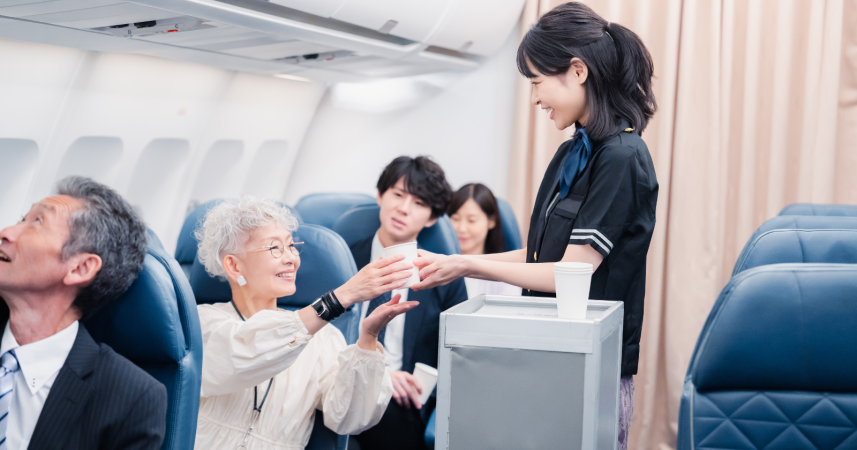
No call button. No flagging down the flight attendant. He just caught her eye as she passed, smiled, and made a simple request.
That's when it hit me. After hundreds of flights and countless hours observing people at 30,000 feet, I've started to notice patterns. Not the obvious ones like who's sitting in first class versus economy. The subtle behaviors that separate people who fly regularly from those who treat it like a special occasion.
Cabin crew notice these things instantly. They're trained observers who can read a passenger within seconds of boarding. And while they'd never judge you for not having money, they definitely pick up on the signals that suggest you're comfortable financially.
Here's what actually gives you away.
1) You board last and unbothered
Watch the gate area before boarding begins. There's always a cluster of people hovering near the boarding line, ready to rush on the second their group is called.
Contrast that with passengers who barely look up from their phones until the final boarding group is announced.
This behavior screams confidence. People who fly frequently know their bag will fit in the overhead bin because they've perfected their packing. They're not stressed about finding space because they understand the system.
I used to be that person anxiously hovering at the gate. These days, I've learned to stay seated until the chaos dies down. There's no prize for being first on the plane.
Flight attendants notice passengers who board calmly, without the frantic energy that suggests this is a rare and precious experience.
2) You never ask what's free versus what costs extra
Budget-conscious travelers track every perk included in their ticket price. They want to make sure they're getting their money's worth.
Wealthier passengers simply don't think about it.
When the drink cart comes by, they order what they want without mentally calculating whether that second soda is included. They don't ask if the snack box is complimentary. They just request it if they're hungry.
This isn't wasteful. It's just a different relationship with air travel. When flying is routine rather than a splurge, you stop keeping a running tally of the small stuff.
I caught myself doing this math on a recent flight and realized how exhausting it was. Now I just order what I actually want.
3) You pack light with quality over quantity
There's a direct correlation between wealth and luggage minimalism that cabin crew recognize immediately.
People with money tend to travel with a single carry-on, often expensive brands like Tumi or Away. Everything fits because they're not trying to avoid checked bag fees. They pack light because it's more convenient.
Compare that to passengers struggling with overstuffed bags, trying to force them into overhead bins. They're maximizing what they can bring to avoid the $35 checked bag charge.
The difference isn't about judgment. It's about priorities. When money isn't tight, convenience trumps savings every time.
Flight attendants can spot a seasoned business traveler from their luggage alone. Small, well-made, easy to handle.
4) You don't collect or hoard the amenities
Blankets, pillows, headphones, amenity kits on international flights. Some passengers treat these like collectibles, taking extras whenever possible.
This behavior stems from a scarcity mindset. If you rarely fly, these small extras feel valuable. You might as well stock up while you can.
Passengers who fly regularly barely touch them. They bring their own noise-canceling headphones. They don't need the airline blanket because they know it won't keep them warm anyway.
On a long-haul flight to Bangkok last year, I watched a woman in my row politely decline every amenity offered. She had her own travel pillow, her own eye mask, her own everything. The flight attendant's face lit up with what looked like relief.
When you're financially comfortable, you optimize for quality over freebies.
5) You stay calm during delays and disruptions
Flight delays bring out the worst in people. Gate agents and flight attendants face angry passengers demanding explanations, compensation, immediate solutions.
The passengers who stay calm? They're usually the ones who can afford to miss the flight.
They're not going to lose their job if they show up late to that meeting. They can book another flight if needed. Or they have travel insurance that covers these situations.
There's a visible difference in body language. Some people are visibly stressed, pacing, making heated phone calls. Others are calmly reading or working on their laptop, unbothered by the chaos.
Cabin crew notice this composure immediately. It signals someone who has options, which usually correlates with financial security.
6) You don't bring strong-smelling food onboard
Airport food is expensive. Terminal burgers, fried chicken, ethnic food with strong spices. Budget-conscious travelers grab these before boarding because it's cheaper than buying snacks on the plane.
The problem is that recirculated airplane air amplifies every smell. That burger becomes everyone's problem at 30,000 feet.
I learned this the hard way with a vegetarian burrito on a morning flight from Los Angeles. The family next to me was not pleased.
Wealthier passengers either eat before the flight or bring neutral items. Granola bars, fruit, maybe a sandwich. Nothing that announces itself to the entire cabin.
It's not about spending more money. It's about being aware of shared space and having alternatives.
Flight attendants appreciate passengers who understand this unwritten rule.
7) You treat cabin crew with effortless courtesy
This is the big one. The genuine marker that separates passengers who are comfortable in life from those who aren't.
Wealthy passengers tend to be unfailingly polite to service workers. Not performatively polite. Just naturally courteous.
They make eye contact. They say please and thank you. They never treat flight attendants like servants.
Research suggests people who've had privilege for a long time often have better social skills in these interactions. They're not trying to prove anything. They're just being human.
Contrast that with passengers who are rude, demanding, or completely ignore crew members. Often these are people who feel insecure about their status and overcompensate by treating others poorly.
Flight attendants remember the genuinely kind passengers long after the flight ends. And kindness paired with other signals of wealth? They notice that combination immediately.
Final thoughts
None of these behaviors are about showing off. That's actually the point.
Real wealth tends to be quiet. It's visible in how comfortable someone is in their environment, how little they worry about the small stuff, how easily they extend courtesy to others.
I've noticed these patterns in my own travel as my career has become more stable. The things that used to stress me out barely register now. I'm less focused on maximizing every perk and more focused on just getting where I need to go comfortably.
Cabin crew see thousands of passengers. They develop an instinct for reading people. These subtle signals aren't about judgment. They're just patterns that emerge when you spend that much time observing human behavior in a confined space.
The interesting thing? Once you notice these patterns, you can't unsee them.
What’s Your Plant-Powered Archetype?
Ever wonder what your everyday habits say about your deeper purpose—and how they ripple out to impact the planet?
This 90-second quiz reveals the plant-powered role you’re here to play, and the tiny shift that makes it even more powerful.
12 fun questions. Instant results. Surprisingly accurate.