Turns out flight attendants are basically behavioral psychologists at 30,000 feet, and your carry-on luggage just told them your entire economic story

Add VegOut to your Google News feed. 
Ever been on a flight and noticed how flight attendants seem to have this sixth sense about passengers?
They can tell who's a frequent flyer and who isn't within seconds of you stepping on board. They know who's going to be trouble and who's going to make their job easier.
I've done my share of flying over the years, from red-eyes to cross-country hauls, and I've picked up on some of the patterns that separate different types of travelers. It's not about judgment. It's about understanding how our backgrounds shape our behavior in unfamiliar situations.
Flight attendants notice everything. And certain behaviors immediately signal to them that you're not a seasoned traveler or someone who regularly flies business class.
Here are seven things lower-middle-class passengers do on airplanes that the flight crew notices instantly.
1) They over-pack carry-on luggage
Walk onto any flight and watch the boarding process. You'll see it immediately.
Some passengers are wrestling with bags that clearly exceed the size limits. They're stuffing backpacks under seats that were never meant to accommodate them. They're playing Tetris with the overhead bins, rearranging everyone else's belongings to make their oversized roller bag fit.
Flight attendants spot this instantly because they've seen it a thousand times.
It's not malicious. Most people are just trying to avoid baggage fees. When you're watching your budget, paying an extra thirty or forty bucks to check a bag feels wasteful. I get it. I've been there, cramming an extra pair of shoes into my carry-on to avoid the charge.
But here's what I learned from a conversation with a flight attendant during a delay in Denver: they notice because it slows down boarding for everyone. That five minutes you spend jamming your bag into a space it doesn't fit affects the entire flight schedule.
Frequent flyers and those who regularly travel business class? They've either mastered the art of packing light or they've accepted that checked baggage is just part of the cost.
2) They immediately ask about free snacks and drinks
There's a particular energy around complimentary items on planes.
I remember my first few flights in my twenties. The moment I sat down, I'd be mentally cataloging what came free. Peanuts? Pretzels? Are the drinks complimentary on this airline? What about the headphones?
Flight attendants can tell who's hyper-aware of what's included versus what costs extra.
It's not about being cheap. It's about maximizing value when you're on a tight budget. When you don't fly often, and when every dollar matters, you want to make sure you're getting what you paid for.
I've watched passengers flag down flight attendants multiple times during a two-hour flight, asking if they can have another Coke, another bag of pretzels, another coffee. They're not being unreasonable. They're just making sure they don't miss out on anything that's included in their ticket price.
Compare that to business class passengers who often don't even finish their first drink. They're not worried about missing out because flying is routine for them.
3) They take every amenity offered
Pillows, blankets, headphones, those little amenity kits on international flights. Some passengers collect them all like they're gathering supplies for winter.
Flight attendants notice when someone takes multiples of everything offered or pockets items that are technically meant to stay on the plane.
Again, this comes from a scarcity mindset. When you don't fly regularly, these little extras feel valuable. That thin airplane blanket might be useful at home. Those headphones could replace a broken pair. That tiny bottle of lotion? Into the bag it goes.
I'm not saying I've never done this. A few years back, I definitely took home more amenity kits than I needed from a long-haul flight. They sat in my bathroom drawer for two years before I finally donated them.
The psychology here is straightforward. If you're paying hundreds of dollars for something, you want to extract every bit of value. It makes perfect sense until you realize that frequent travelers often leave these items untouched because they have drawers full of them at home.
4) They dress too casually or uncomfortably
Flight attendants immediately clock what you're wearing when you board.
Not because they're judging your fashion sense, but because your clothing tells them a lot about your flying experience and potentially your comfort level during the flight.
Flip-flops, pajama pants, overly tight jeans, fancy shoes that pinch. These choices signal someone who either doesn't fly often or hasn't learned the art of airplane comfort yet.
I used to show up to flights in whatever I was wearing that day. Jeans, regular sneakers, maybe a button-up shirt if I was coming from work. It took me years to figure out that there's a sweet spot between looking presentable and being comfortable for six hours in a pressurized tube.
Flight attendants look at shoes particularly closely. If there's an emergency evacuation, they need to know who can move quickly. Those platform heels or brand-new leather shoes that clearly hurt? Red flags.
Seasoned travelers dress in layers with comfortable shoes. They know the temperature on planes is unpredictable and that you might need to walk a mile through the airport during a connection.
5) They board with fast food or strong-smelling meals
Nothing announces "I don't fly much" quite like boarding a plane with a bag from McDonald's or a container of leftover pad thai.
Flight attendants notice immediately because the smell fills the cabin within minutes.
This is one of those behaviors rooted in practicality. Airport food is expensive. If you're trying to save money and you've got a long travel day ahead, grabbing something cheaper before you board makes perfect sense.
But here's the thing about bringing your own food on a plane: not all food travels well. The recirculated air amplifies every smell. That burger that seemed like a good idea in the terminal becomes everyone's problem at 30,000 feet.
I learned this lesson the hard way after bringing a vegetarian burrito onto a morning flight from Los Angeles. The family next to me spent the entire flight shooting me sideways glances. I felt terrible.
Business class passengers who bring food typically pack neutral items. Granola bars, fruit, maybe a sandwich. Nothing that announces itself to the entire cabin.
6) They use the call button frequently for non-urgent requests
Flight attendants have seen a significant increase in call button usage recently. Some reports suggest it's up by as much as 40 percent.
What's interesting is who's pressing that button and why.
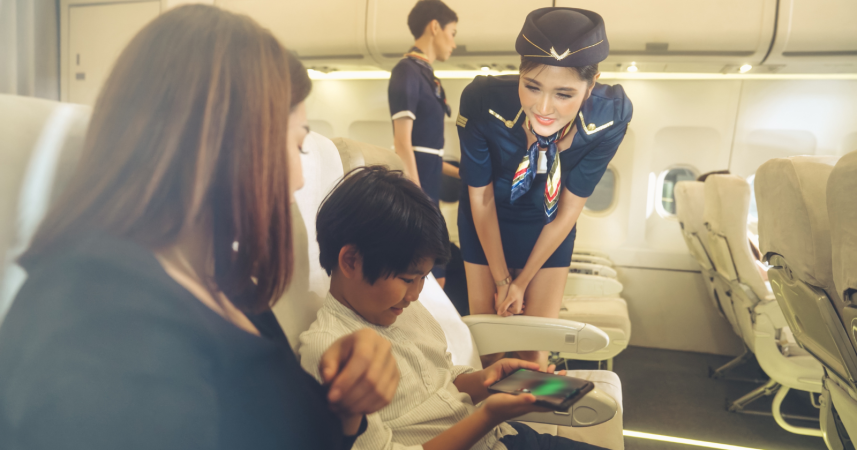
Passengers who don't fly regularly tend to use the call button for every small request. Can I get another pillow? Do you have any more of those cookies? Can you help me with this tray table?
Meanwhile, frequent flyers typically wait until a flight attendant passes by or they get up themselves to ask for something.
The difference comes down to understanding the rhythm of a flight. When you fly often, you learn when attendants are busy with safety protocols, when they're in the middle of service, when they're likely available for requests.
Flight attendants aren't annoyed by the button itself. They're there to help. But they definitely notice patterns in how it's used. Someone pressing it during taxi, immediately after the seatbelt sign turns on, or right in the middle of meal service stands out.
7) They're excessively grateful or apologetic
This might seem counterintuitive, but flight attendants notice when passengers are overly thankful for basic service.
Thanking someone for doing their job is polite and appreciated. But there's a difference between normal courtesy and the kind of excessive gratitude that comes from feeling like you're taking up space you don't quite deserve.
When you're not used to being served, when flying feels like a luxury rather than a routine inconvenience, every interaction with the flight crew feels weighted. You apologize for asking for water. You profusely thank them for doing their job. You feel like you need to earn your place in that seat.
I caught myself doing this for years before I realized it. "I'm so sorry to bother you, but could I possibly get some water when you have a moment? Thank you so much. I really appreciate it."
Compare that to someone who flies weekly: "Water please, thanks."
Neither approach is wrong. But flight attendants can tell who's comfortable in the airplane environment and who isn't.
Conclusion
None of these behaviors are inherently bad or shameful.
They're just markers of experience and economic reality. How we act on planes reflects our relationship with air travel, whether it's a rare luxury or a regular occurrence.
Flight attendants aren't judging passengers for these habits. They're trained observers who use these patterns to provide better service and maintain safety. Someone struggling with baggage needs different assistance than someone who boards with a single slim briefcase.
What matters more than any of these behaviors is basic courtesy. A smile when you board, a genuine "thank you" when appropriate, and respect for the people doing a difficult job under challenging circumstances.
That's what flight attendants remember long after you've left the plane.