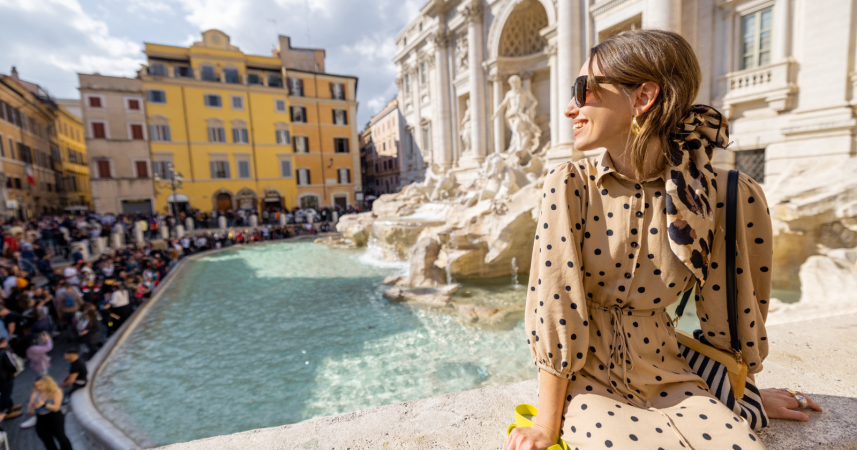
Travel Europe like someone locals respect by adopting a few simple habits that shift how you show up, connect, and move through their world.
Traveling through Europe teaches you things you don’t learn from guidebooks.
Some lessons hit you in the first hour. Others take a few train rides, a couple of late-night dinners, and maybe one slightly embarrassing faux pas to sink in.
And the funny thing? Most of what earns you genuine respect abroad is not about speaking perfect French or knowing the entire history of the Habsburg Empire.
It’s about your presence. Your awareness. Your willingness to show up with humility instead of a highlight-reel version of yourself.
In my twenties I worked in luxury F&B, so I’ve always paid attention to etiquette, food culture, and how people relate to each other.
Europe sharpened those instincts even more. The slower meals. The direct conversations. The way people treat hospitality is almost like a shared ritual rather than a transaction.
And there is one quote from Dale Carnegie that I think about every time I’m abroad: “You can make more friends in two months by being interested in other people than in two years by trying to get other people interested in you.”
This mindset alone will save you from being the stereotype we all swear we’re not.
So let’s get into the eight things that instantly boost your credibility on the other side of the Atlantic.
1. Speak softly
If you’ve been to Europe before, you probably saw this coming.
Americans are not loud on purpose. We just talk at a volume that feels completely normal at home.
But in Europe, public life leans quieter. Conversations in cafés stay low. Voices on trains drop even more.
I learned this the hard way while grabbing pastries in Amsterdam. I asked my friend if she wanted another croissant, and a woman nearby actually smiled and said, “Perhaps...a little quieter?” Not rude. Just gently pointing out a cultural difference.
It was a reminder that respect abroad often comes from adapting quickly. Lowering your volume is basically saying, “Hey, I’m aware of the room I just walked into.”
And when you do that, people relax around you. They engage more openly.
The American Psychiatric Association notes that “Positive social connections have consistently been shown to support mental health and well-being”.
Volume affects connection. When you bring calm energy, people feel safer opening up to you.
2. Learn basic phrases
Do you need to be fluent? No. Will locals respect you more if you try? Absolutely.
Even something as simple as “hello,” “please,” or “thank you” signals that you’re there for more than the Instagram shots.
One night in Rome, a waiter stopped mid-order and said, “Most Americans don’t try. You tried.” Then he brought us a free tiramisu.
Respect pays in dessert.
What matters most is the curiosity behind the effort, not perfect grammar. It’s you saying, “I’m here to participate, not just observe.”
3. Slow down your meals
In the US we’re trained to eat quickly. Restaurants flip tables fast. Meals sometimes feel like a pit stop.
Europe is different. Eating is more like a social ritual. Plates stay longer on the table. Wine refills appear slowly. Conversations stretch and breathe.
I remember having dinner in Portugal with a group of locals. Hours went by. We talked about food, work, politics, travel. No one rushed. No one glanced at the time. And by the end of it, I felt an unexpected sense of belonging.
That didn’t surprise me later when I came across the Breaking Bread study, which found that people who eat socially more often are happier, more satisfied with life, and more connected to their communities.
Europeans live this truth. When you embrace it too, people notice.
Travel tip: if you want to blend in, don’t ask for the check early. Trust the flow.
4. Show genuine interest in other people
This is where Americans shine when we get it right. We’re friendly, curious, and open. The trouble is we sometimes rush. We ask questions the way we do business: fast and forward.
In Europe, interest is calmer and more intentional. Conversations unfold more slowly. People share pieces of themselves over time, not all at once.
One thing I’ve learned from reading psychology and from years in hospitality is that connection isn’t about the volume of words. It’s about the warmth behind them. When you make space for others to speak, people lean in.
Focusing on others creates trust, not performance. It works everywhere, but in Europe it earns you instant respect.
5. Dress like you thought about it
You don’t need designer clothes to fit in. But you do need intention.
While living in Spain for a short stretch, I noticed something: even people running simple errands looked put-together. Not fancy. Just considered.
Europeans see clothing as a form of respect toward others. When you carry yourself with care, it signals maturity and awareness.
And as someone who spent years around fine dining guests, I can tell you people respond differently when they feel you’ve put effort into how you show up.
Think clean lines. Neutral colors. Better-fitting clothes.
Dressing with intention sends a quiet signal that you understand and appreciate the culture around you.
6. Embrace the local rhythm instead of trying to optimize everything
This one took me a while.
In America we love efficiency. Fast service. Short wait times. Everything optimized
In Europe, life has texture. A latte takes longer. Bureaucracy is slow. Dinner lasts forever. People walk instead of rush.
And to be honest, this slower pace can feel uncomfortable at first. But it’s also deeply human.
Recently I was reading Rudá Iandê’s Laughing in the Face of Chaos, and one line hit me hard:
“We live immersed in an ocean of stories, from the collective narratives that shape our societies to the personal tales that define our sense of self.”
That insight made me realize how much of my own pace was just inherited programming. I wasn’t choosing my rhythm. I was following a script.
Letting go of urgency changed everything.
European culture taught me to accept the moment rather than force it. Locals appreciate visitors who don’t try to bend the pace to their expectations.
7. Respect personal space and privacy
Europeans tend to hold boundaries pretty firmly. They don’t overshare quickly. They don’t ask intrusive questions right away. And they definitely don’t appreciate being approached too aggressively.
On one of my early trips, I made the mistake of asking a new acquaintance in Germany about their job within the first few minutes. They politely changed the subject, and later someone explained that this kind of question is considered too personal when you’ve just met.
Ever since, I’ve learned to let conversations develop slowly.
Give people room.
Let silence exist.
Don’t push for connection before it’s naturally there.
When you honor this boundary, Europeans tend to invite you in more freely.
8. Tip appropriately, not excessively
This might be the most confusing thing for Americans traveling abroad.
In the US, tipping is basically built into the culture. In Europe, tipping is appreciated but modest.
Leave too little and you look rude. Leave too much and you look unaware.
Ask locals what’s normal. Follow their lead. It shows cultural sensitivity.
Similarly, understand that service styles differ. A waiter not checking on you constantly isn’t ignoring you. They’re respecting your space.
Dining is a shared experience where you and the restaurant move at the same rhythm.
The bottom line
Travel only really works when you’re willing to let it change you.
When you see how others live and think, not through a lens of comparison but through curiosity.
These eight habits are small on the surface. But together, they signal something bigger.
They show that you’re not just on vacation. You’re present. You’re paying attention. You’re here to participate in the culture instead of making it bend around you.
Europe rewards that version of you. And honestly, so will you.
What’s Your Plant-Powered Archetype?
Ever wonder what your everyday habits say about your deeper purpose—and how they ripple out to impact the planet?
This 90-second quiz reveals the plant-powered role you’re here to play, and the tiny shift that makes it even more powerful.
12 fun questions. Instant results. Surprisingly accurate.