Eight classic vacation spots once loved by boomers and what their quiet decline reveals about nostalgia, change, and the art of slowing down.

Add VegOut to your Google News feed. 
We all have that one place that used to feel magical, don’t we? Maybe it was a beach town that smelled like salt and sunscreen, or a lakeside lodge where time seemed to slow down.
But as travel trends changed, some of those once-bustling spots started to fade. They were the heartbeats of another generation’s idea of “getting away” and now, they sit quietly, waiting for new footsteps that rarely come.
I’ve been to a few of these places myself, half curious, half nostalgic, and it’s wild how silence can hold so many stories.
Let’s wander through eight of them.
1. Atlantic City, New Jersey
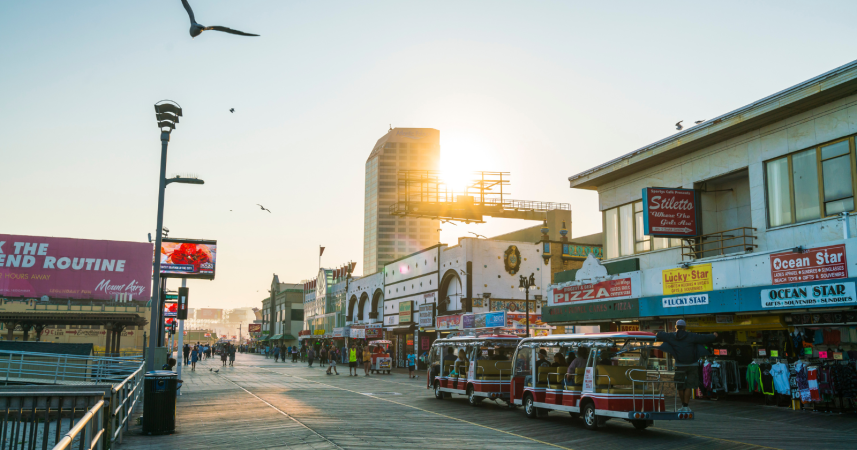
Once the “Las Vegas of the East,” Atlantic City was where boomers went for glitz, gambling, and ocean air all in one place.
I still remember walking that boardwalk as a kid, the scent of funnel cakes blending with the sound of slot machines.
But the sparkle has dulled. Competition from newer casinos, economic downturns, and changing entertainment habits hit the city hard.
Now, the old glamour lingers like a faded postcard, pretty, but out of time.
As the Yale School of Public Health notes, people who embrace aging with positivity often lead fuller lives.
I think the same goes for cities. When a place doesn’t evolve with grace, it loses its pulse.
Atlantic City could use a dose of that self-acceptance, less chasing what it was, more leaning into what it could be.
2. Niagara Falls, New York
There was a time when a trip to Niagara Falls was the ultimate romantic getaway.
Boomers honeymooned there, took family photos in plastic ponchos, and bought snow globes that hummed with memories.
Today, the magic’s still there, but travelers are chasing newer thrills like glamping in Iceland or street food in Bangkok. Niagara feels like an old song that doesn’t play on the radio anymore.
When I visited a few years ago, I watched the mist rise at sunrise. It struck me how nature keeps performing even when the audience thins out.
The falls don’t need validation. They just are, majestic, unapologetic, enduring.
There’s a quiet lesson in that, don’t you think?
3. Branson, Missouri
For decades, Branson was the family entertainment capital of the Midwest. There were country shows, lake cruises, and more Elvis impersonators than you could count.
These days, younger travelers tend to fly past it, literally, on their way to trendier destinations.
But underneath the neon signs, there’s still a charm that feels deeply human.
The National Institute on Aging reminds us that healthy aging requires engagement in meaningful activities.
Watching retirees volunteer at Branson theaters, greeting guests with warm smiles, I saw that principle in real life.
They’re not clinging to the past. They’re keeping it alive through purpose.
Related: 9 Times In Life A Man Will Show His True Colors, According To Psychology
4. Palm Springs, California
Once a desert playground for Sinatra and his friends, Palm Springs defined mid-century cool.
Boomers loved its glamour, poolside martinis, pastel convertibles, and endless sun.
But then came the crowds of Coachella-goers and digital nomads. Ironically, Palm Springs’ reinvention made it too hip for some of its earliest fans.
Many boomers quietly drifted away, trading the heat for coastal calm.
Still, when I went there last winter, I could feel why it mattered. The slow rhythm of the desert, the honesty of its stillness, it’s like the world whispers instead of shouts.
Maybe it’s not forgotten so much as resting.
5. Myrtle Beach, South Carolina
Ah, Myrtle Beach. The family road trip staple. Mini-golf, seafood buffets, boardwalk lights—it had everything.
But with time, the novelty faded. Travelers started craving “authenticity” over nostalgia, and Myrtle Beach became a symbol of overdevelopment and summer crowds.
I met a retired couple there last summer who go every year without fail. They told me, “It’s about the feeling.”
That stayed with me. The real loss, I realized, isn’t so much that the place has changed, it’s that our idea of joy has.
Rudá Iandê wrote in his book Laughing in the Face of Chaos, “When we let go of the need to be perfect, we free ourselves to live fully, embracing the mess, complexity, and richness of a life that's delightfully real.”
That line reminded me that beauty doesn’t depend on polish. What makes a place special often lies in its rough edges, the details that reveal where time and memory have left their mark.
6. The Catskills, New York
If you’ve ever seen Dirty Dancing, you know what I mean. The Catskills were the vacation crown jewel for East Coast families, with rustic lodges, live music, and all-you-can-eat buffets under twinkle lights.
Then air travel got cheaper, resorts shuttered, and the area became a memory more than a movement. Some of those once-packed ballrooms now echo with the ghosts of laughter.
When I hiked there recently, I thought about how easily we trade depth for novelty.
The mountains are still stunning, the air still sweet, but our attention span as travelers? It’s become restless.
7. Lake Tahoe, California/Nevada
Boomers saw Lake Tahoe as a four-season wonder, skiing in winter, hiking in summer, a quiet beauty all year round.
But lately, over-tourism and rising costs have pushed many away.
Locals told me they’ve watched lifelong visitors disappear as rental prices soared. It’s bittersweet, progress that prices out the people who built the memories.
It made me reflect on how even beauty has limits when it’s commodified. A view can’t be “owned,” no matter how many luxury chalets are built around it.
Real connection to a place comes from time spent, not money spent.
8. Key West, Florida
Before Instagram made tropical escapes a status symbol, boomers loved Key West for its laid-back charm. Hemingway’s house, Duval Street jazz, lazy sunsets, it was a place to just be.
Now, many say it’s lost that easy rhythm. Cruises flood the docks, prices climb, and the quiet corners feel harder to find.
But when I sat at Mallory Square one evening, watching a street musician play as the sun dipped low, I realized something.
The spirit’s still there. It’s just quieter. You have to listen between the noise.
Reflections on change
As I wrote this, I realized these forgotten destinations aren’t really lost, they’ve just drifted out of the spotlight.
They remind us of a different rhythm of travel. One that was slower, less curated, and more connected to people than hashtags.
And maybe, that’s what many of us are craving again.
We talk so much about “bucket lists” and “must-sees,” but what about places that teach us patience? What about the ones that don’t demand attention but reward it?
There’s something beautiful about revisiting a place that’s fallen quiet. It mirrors the way we grow older ourselves. Less performance. More presence.
When I think about that, I can’t help but return to another idea from Laughing in the Face of Chaos, that “peace comes from belonging, from allowing every part of ourselves to take its rightful place in the whole.”
That’s what these old vacation spots are doing: belonging to time, not fighting it.
They remind us that fading doesn’t mean forgotten. It just means they’ve entered a gentler season.
Final thoughts
Nostalgia helps us see which moments from the past still hold meaning today.
These places may not make the travel blogs anymore, but maybe that’s the point.
They’ve done their part in shaping generations of joy, love, and laughter.
And maybe, just maybe, they’re inviting us to slow down long enough to hear the echoes.
So the next time you’re tempted to chase the latest travel trend, pause.
Listen to where your heart wants to return. Sometimes, the quietest destinations are the ones that still have the most to say.
What’s Your Plant-Powered Archetype?
Ever wonder what your everyday habits say about your deeper purpose—and how they ripple out to impact the planet?
This 90-second quiz reveals the plant-powered role you’re here to play, and the tiny shift that makes it even more powerful.
12 fun questions. Instant results. Surprisingly accurate.