Some hotel types seem stuck in a different era, and boomers can’t get enough of them, even as younger travelers quietly check out.
Every generation travels differently.
For boomers, hotels aren’t just a place to sleep; they’re part of the destination. For millennials and Gen Z, they’re often just a means to an end: a quick recharge between exploring, eating, and documenting it all for the feed.
That difference in philosophy shows up clearly in the kinds of hotels each generation gravitates toward.
And honestly? Some of the hotel types that boomers swear by are exactly the ones younger travelers now go out of their way to avoid.
Let’s unpack this generational travel gap and maybe laugh a little along the way.
1. The sprawling resort that could be anywhere
You know the type. Massive buffet breakfast, palm-tree wallpaper, and an ocean view you pay extra for even if you never step onto the sand.
Boomers love these “everything-in-one-place” resorts because they offer predictability. You don’t have to think about where to eat, what to do, or how to get around. It’s safe, convenient, and polished.
But for younger travelers, that’s kind of the problem.
Millennials and Gen Z crave authenticity. They want the smell of the local market, the uneven sidewalks, the café where nobody speaks English.
When you’ve got 50 identical resorts across five continents, the experience becomes interchangeable.
As I learned on a trip to Bali, staying in a resort can feel like being in a cultural quarantine. Sure, the Wi-Fi’s strong, but the soul? Not so much.
2. The “historic” hotel that smells like nostalgia (and carpet cleaner)
Boomers have a deep appreciation for “old-world charm.” They see a creaky elevator or gold-plated fixtures and feel like they’ve stepped back into a time when people dressed for dinner and hotels had doormen with stories.
But for younger guests, the same place often reads as outdated and overpriced. They see “heritage” and think “no outlets near the bed” or “faint scent of mildew.”
The psychology here is fascinating: boomers often equate heritage with authenticity and cultural depth, a sense of connection to the past that feels real and grounded.
Research on heritage hotels shows that they play a key role in preserving local architectural and cultural identity, and that their appeal often lies in that authenticity and sense of continuity.
Younger travelers, meanwhile, associate novelty with trust and comfort, preferring modern design, sustainability, and tech-friendly spaces that reflect a contemporary worldview.
The trouble is, those stories don’t always translate to generations who’d rather spend their nights somewhere that doesn’t have a chandelier older than their parents.
3. The all-inclusive cruise “hotel” at sea
Technically, it floats, but functionally, it’s a giant mobile hotel filled with karaoke bars, buffets, and bingo.
Boomers adore cruises. You unpack once, everything’s handled, and the entertainment is structured to the minute.
Younger people, however, often see cruises as the opposite of adventure. They’re like a mall that moves, loud, crowded, and divorced from any sense of place.
When I was younger, my parents tried to convince me to go on a cruise with them. “It’s easy!” they said. “You’ll love it!” I lasted exactly one day before feeling like I’d been trapped inside a floating Vegas for retirees.
For the younger generation, travel is about agency, making spontaneous choices, not following a pre-set itinerary. Cruises, in contrast, feel like a pre-packaged simulation of freedom.
4. The chain hotel “for business travelers”
If you’ve ever walked into a beige lobby that smells faintly of printer ink and decaf coffee, you know this one.
Boomers find comfort in chain hotels because they’re consistent. You know what you’re getting, whether you’re in Dallas or Dubai.
But younger travelers grew up in the age of personalization, curated feeds, custom playlists, and niche experiences. A one-size-fits-all room can feel sterile.
Research backs this trade-off: familiarity does bring comfort, but it can dampen the novelty and discoveries that make a trip feel inspiring.
Younger travelers would rather take the risk of a quirky boutique hotel or an offbeat eco-stay than spend another night in a room with identical curtains and a framed photo of clouds.
Consistency used to equal trust. Now, it often just equals boredom.
5. The wellness retreat that feels like a brochure for 1997
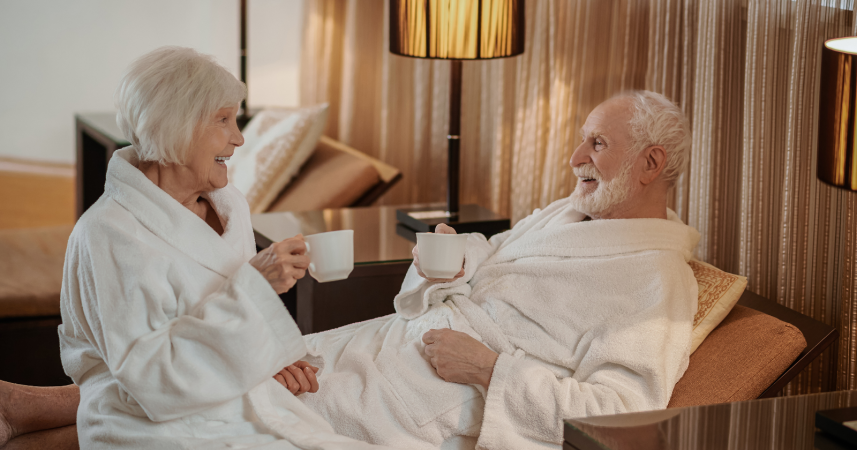
Boomers were the original “self-care” crowd, think spa robes, cucumber water, and Enya playing softly in the background.
But here’s the thing: many of those wellness hotels haven’t evolved much since then.
Younger travelers are drawn to modern wellness that focuses on authenticity, inclusivity, and mental health, places where you might journal after a cold plunge or do yoga under a brutalist sculpture.
Boomers, on the other hand, are more likely to seek out spaces that promise pampering and escape rather than self-exploration.
And that’s where Rudá Iandê’s Laughing in the Face of Chaos hit home for me. As he writes, “When we stop resisting ourselves, we become whole. And in that wholeness, we discover a reservoir of strength, creativity, and resilience we never knew we had.”
That line stayed with me because it captures the generational divide perfectly. Boomers often treat wellness as a break from life; younger travelers see it as a deeper dive into it.
6. The “romantic getaway” with floral bedspreads and heart-shaped tubs
If you’ve ever seen a hotel with red velvet drapes, faux roses on the nightstand, and a jacuzzi shaped like a heart, you know exactly the kind of place I’m talking about.
For boomers, these hotels were once symbols of luxury and intimacy. For younger travelers, they’re the opposite, symbols of kitsch and awkwardness.
Romance today is less about scripted gestures and more about shared experiences: hiking a volcano, cooking vegan ramen together, watching the northern lights.
One of my friends once booked a “romantic package” at an old hotel in upstate New York. It came with champagne, chocolates, and an unsettling number of mirrors. We laughed about it for weeks, but it was also a perfect snapshot of the generational divide.
Younger people want intimacy through realness, not rituals.
7. The timeshare that “pays for itself” (spoiler: it doesn’t)
Boomers were sold the dream of the timeshare, an investment that would supposedly guarantee affordable vacations for life.
They loved the idea of ownership. It represented stability, pride, and belonging.
But for younger travelers, commitment is the new red flag. With flexible jobs, remote work, and an obsession with freedom, the idea of being tied to one vacation spot for decades feels claustrophobic.
And of course, many have watched their parents or grandparents struggle to offload timeshares that depreciated faster than an old smartphone battery.
Timeshares appeal to a mindset rooted in security. But younger generations are comfortable with uncertainty; they’d rather chase variety than consistency.
This shift isn’t just about money; it’s about identity. We don’t define ourselves by what we own but by what we experience.
So, what’s really going on here?
At the heart of it, these hotel preferences reflect deeper generational psychologies.
Boomers came of age during a time when comfort, safety, and luxury were aspirations; they were symbols of having “made it.” For them, a nice hotel represented success and reliability.
Younger travelers, on the other hand, grew up in a hyperconnected world where authenticity and adaptability are the new currency. We don’t need marble lobbies to feel fulfilled; we need stories worth telling.
Boomers seek reassurance; younger travelers seek resonance.
Our travel choices are rarely just about beds and breakfast buffets; they’re about identity, values, and how we want to feel in our lives.
The bottom line
It’s not a matter of right or wrong, but of how things naturally evolve.
Each generation builds its version of “a good trip” based on its collective experiences.
Boomers found meaning in comfort and consistency. Younger travelers find it in curiosity and connection.
The real takeaway?
Whether you’re booking a five-star resort or sleeping in a van by the coast, what matters most is that it aligns with who you are now, not who the world told you to be.
Travel, like everything else, is just another way of asking: What kind of life am I choosing to live?
If You Were a Healing Herb, Which Would You Be?
Each herb holds a unique kind of magic — soothing, awakening, grounding, or clarifying.
This 9-question quiz reveals the healing plant that mirrors your energy right now and what it says about your natural rhythm.
✨ Instant results. Deeply insightful.