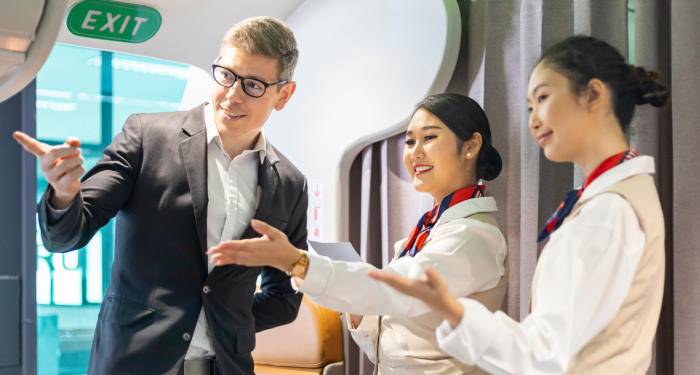
These upgrade magnets aren't just randomly blessed by the travel gods, they're displaying specific behaviors that make service professionals want to help them out.
Ever notice how some people seem to glide through airports, hotels, and restaurants getting upgrades left and right while the rest of us are stuck in economy?
I used to think it was pure luck or maybe just frequent flyer status. But after years of observing these upgrade magnets in action, I've realized there's something more deliberate happening.
These folks aren't just randomly blessed by the travel gods. They're displaying specific behaviors that make service professionals want to help them out.
Let's break down what they're doing differently.
1. They make genuine eye contact and smile
This might sound ridiculously simple, but think about the last time you checked into a hotel or boarded a flight.
Were you scrolling through your phone? Rushing through the interaction? Treating the person helping you like a vending machine that dispenses boarding passes?
People who consistently get upgrades do something different. They look the staff member in the eye, offer a genuine smile, and treat the interaction like an actual human exchange.
I learned this lesson the hard way during a trip to Bangkok a few years back. I was exhausted, jet-lagged, and barely acknowledged the hotel receptionist. No upgrade. The couple behind me? Warm smiles, friendly chat. Suite upgrade.
The difference was stark.
Eye contact and a smile signal respect and create an immediate connection that makes people want to help you.
2. They acknowledge the other person's power to help
Here's something most people miss: the person behind the counter has way more discretionary power than you think.
Those folks checking you in aren't just button-pushers. They can often comp things, move you to better rooms, or find availability that doesn't officially exist.
People who get upgraded understand this. They don't demand or expect anything, but they do acknowledge that the staff member might be able to help if circumstances allow.
There's a huge difference between "Can you upgrade me?" and "I know you're probably fully booked, but if there happens to be anything available, I'd be grateful."
One assumes entitlement. The other recognizes the person's agency while making the request easy to decline without awkwardness.
3. They're unfailingly polite, especially when things go wrong
Want to know the real test of someone who gets consistent upgrades?
Watch how they behave when their flight is delayed, their reservation is messed up, or something goes sideways.
The upgrade magnets don't lose their cool. They don't raise their voice or make threats about never using that airline again. They stay calm, acknowledge the difficulty of the situation, and remain courteous.
I've mentioned this before, but working in customer-facing roles teaches you quickly which customers you want to help and which ones you'll do the bare minimum for.
When you're kind during chaos, you become memorable. Staff members will go out of their way to make things right for someone who treated them with dignity during a stressful moment.
And sometimes that means finding a way to upgrade you as an apology or gesture of appreciation for your patience.
4. They dress one notch above everyone else
I know we live in an era where people wear pajamas on planes, but here's the reality: appearance still matters when it comes to upgrades.
People who consistently score better seats or rooms tend to dress just slightly more put-together than the average traveler.
I'm not talking about showing up in a three-piece suit. I mean wearing actual pants instead of sweatpants. A collar instead of a hoodie. Clean shoes instead of beat-up sneakers.
Why does this work?
Because when an airline employee or hotel manager has discretion to upgrade someone, they're thinking about the optics. They want someone in that premium seat or suite who looks like they belong there.
Fair or not, that's how the game works. And the people who understand this adjust their travel wardrobe accordingly.
5. They arrive with a pleasant attitude, not demands
Think about how most people approach a check-in counter or gate agent.
They're stressed. They're in a hurry. They're already mentally preparing their arguments for why they deserve special treatment.
The people who actually get upgrades arrive differently. They show up with what I call "pleasant neutrality." They're friendly, they're open, but they're not walking up with an agenda.
This matters because service professionals can smell entitlement from a mile away. When someone approaches expecting an upgrade, it triggers defensiveness. When someone is simply pleasant and making conversation, it opens up possibilities.
I saw this play out perfectly at a rental car counter in Iceland. The guy ahead of me was listing his status levels and hinting heavily at an upgrade. Shot down. I walked up, chatted about the weather, asked for recommendations for the drive. Got offered a free upgrade to a larger vehicle.
The difference wasn't status. It was approach.
6. They build micro-relationships quickly
Here's a subtle pattern I've noticed: people who get upgraded are often really good at creating small moments of connection.
They might comment on something personal but not intrusive. They remember names and use them. They find common ground quickly without it feeling forced.
This isn't manipulation. It's genuine interest in other people.
During a hotel stay in Portugal, I chatted with the front desk person about a book she was reading during a quiet moment. Two days later, she called my room to let me know a better room had opened up if I wanted to switch.
These micro-relationships matter because they transform a transaction into an interaction between two humans. And humans like helping other humans they feel connected to.
7. They express gratitude, whether they get upgraded or not
This might be the most important behavior of all.
People who consistently receive upgrades thank staff members genuinely and specifically, regardless of the outcome.
If they get upgraded, they express authentic appreciation without going overboard. If they don't get upgraded, they still thank the person for checking and remain just as friendly.
This creates a reputation effect. Service industry folks talk to each other. They remember the good customers.
I've watched this play out repeatedly at my regular coffee shop. The customers who always thank the baristas by name, whether their drink is perfect or not, are the ones who get the occasional free upgrade or the heads up about a new pastry before it hits the display.
The same principle applies everywhere. Gratitude builds goodwill, and goodwill opens doors.
The bottom line
Here's the thing about upgrades: they're rarely about gaming the system or knowing secret hacks.
They're about being the kind of person that others want to help. They're about recognizing the humanity in service workers and treating interactions as opportunities for genuine connection rather than transactions to be optimized.
Do these behaviors guarantee you'll always get upgraded? Of course not. Sometimes flights are full, hotels are booked solid, and there's simply nothing available.
But these subtle behaviors dramatically increase your odds while also making you a better, more pleasant person to be around.
And honestly? That might be the real upgrade.
What’s Your Plant-Powered Archetype?
Ever wonder what your everyday habits say about your deeper purpose—and how they ripple out to impact the planet?
This 90-second quiz reveals the plant-powered role you’re here to play, and the tiny shift that makes it even more powerful.
12 fun questions. Instant results. Surprisingly accurate.