Europe is filled with hidden corners where life moves at a different pace, where the bakery owner still remembers your order after just one visit, and where getting lost down a cobblestone alley feels more like an adventure than an inconvenience.
You know that feeling when you stumble upon something magical that feels like it's yours alone to discover?
That's exactly how I felt a few years back when I took a detour through a tiny Portuguese village during what was supposed to be a straightforward trip to Lisbon. No crowds, no selfie sticks, just me and the locals going about their daily lives. It was transformative in a way that those over-touristed hotspots never quite manage to be.
The truth is, Europe is filled with these hidden corners where life moves at a different pace. Places where the bakery owner still remembers your order after just one visit, and where getting lost down a cobblestone alley feels more like an adventure than an inconvenience.
I've spent years seeking out these overlooked towns, and I'm about to share seven of them with you. Fair warning though: the locals would probably prefer I kept these to myself.
1. Cavtat, Croatia
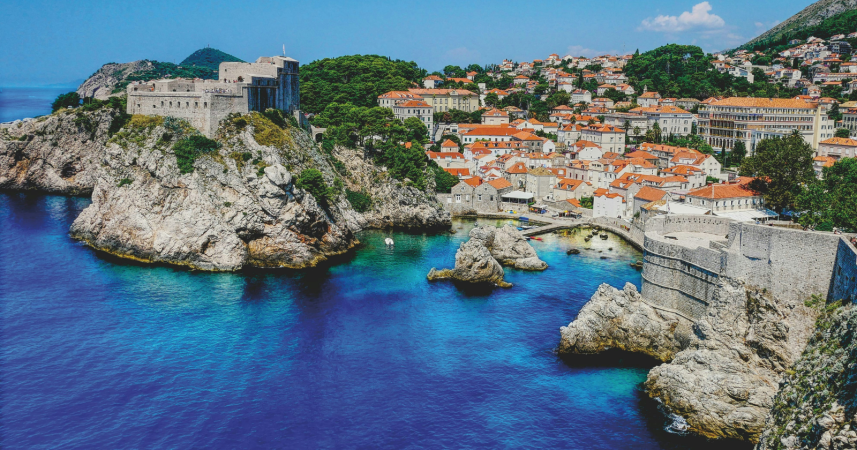
While everyone piles into Dubrovnik, this quiet coastal town sits just 20 kilometers south, blissfully unaware of what mass tourism feels like.
Cavtat wraps around a peaceful bay with crystal-clear water that makes you want to dive in fully clothed. The waterfront promenade is lined with family-run restaurants where the fish was swimming that morning, and the owners will chat with you about their grandmother's recipes if you show genuine interest.
What struck me most was the unhurried nature of everything. People actually sit at cafes without checking their phones every thirty seconds. They watch the sunset like it's a daily meditation practice, not a photo opportunity.
The town has Roman ruins, Renaissance art, and beaches where you can actually spread out a towel without elbowing three strangers. There's a lovely cemetery on a hilltop where the sculptor Ivan Meštrović is buried, offering views that made me understand why someone would choose this as their final resting place.
If you go, skip the tour groups and just wander. That's when Cavtat reveals itself.
2. Colmar, France
Tucked away in the Alsace region near the German border, Colmar looks like someone painted a fairy tale and forgot to tell anyone about it.
Half-timbered houses in candy colors lean over narrow canals in an area called Little Venice. It sounds too precious to be real, but somehow it works. The town has managed to preserve its medieval architecture without turning into a theme park, which is no small feat.
I visited during autumn when the vineyards surrounding the town were heavy with grapes destined for Riesling and Gewürztraminer. The wine culture here isn't pretentious or intimidating. It's just woven into daily life, the way coffee is for some people.
What makes Colmar special is that it hasn't lost its purpose beyond tourism. Real people live here, work here, argue about local politics in the town square. You'll see more French locals than international visitors, which tells you something.
The Unterlinden Museum houses the Isenheim Altarpiece, one of the most moving pieces of religious art I've ever encountered. Even if museums aren't your thing, this one deserves an hour of your time.
3. Sighișoara, Romania
This medieval citadel town in Transylvania is where Vlad the Impaler was born, but don't let that gothic association fool you. Sighișoara is actually charming in the most unexpected way.
The fortified old town sits on a hill, its pastel-colored buildings and cobblestone streets completely intact from the 12th century. Sighișoara is arguably Romania's most atmospheric town, with a delightfully intact medieval quarter.
I climbed the covered wooden staircase with 175 steps that students once used to reach the school at the top. My lungs burned, but the view was worth every labored breath.
What surprised me was how alive the town felt. This isn't a museum piece. Families hang laundry from windows in centuries-old buildings. Kids play football in squares that have seen empires rise and fall. There's a yearly medieval festival, sure, but mostly Sighișoara just exists, beautifully and unpretentiously.
The Clock Tower dominates the skyline, and you can climb it for a view that stretches across orange rooftops to the rolling hills beyond. Go at sunset if you can manage it.
4. Èze, France
Perched on a cliff between Nice and Monaco, Èze is what happens when a medieval village and the French Riviera have a stunning baby.
The village literally clings to a rocky peak 427 meters above the Mediterranean. Getting there involves a winding road with hairpin turns that made me question my driving skills, but that's part of what keeps the crowds manageable.
Stone pathways wind upward through the village, lined with artisan shops and hidden courtyards. The real treasure is the Jardin Exotique at the summit, a garden of cacti and succulents that seems impossible given the location. From there, the view spans the entire coastline in shades of blue that don't seem real.
I sat there for over an hour, watching sailboats drift across the water far below. A local woman told me she comes up every morning for this exact view, and I understood completely. Some places just feed something in you that you didn't know was hungry.
The village has maybe 2,000 residents, and you get the sense they're protective of what they have. Tourism exists but hasn't consumed everything. There's still space for the town to breathe.
5. Gruyères, Switzerland
Yes, this is where that cheese comes from, but Gruyères is so much more than dairy products.
This hilltop medieval town in the Swiss Alps has a single cobbled main street leading to a fairytale castle. The whole place covers maybe a few blocks, but every corner offers something worth pausing for.
I visited the HR Giger Museum, dedicated to the artist who designed the Alien creature for the films. It's delightfully bizarre and completely unexpected in this traditional Alpine setting. The contrast between medieval architecture and biomechanical art shouldn't work, but somehow it does.
The castle itself offers gorgeous views of the surrounding mountains and valleys. You can tour the rooms and imagine what life was like for the counts who lived here centuries ago. After working in corporate environments with fluorescent lighting for years, I found something deeply satisfying about spaces built for actual human experience rather than efficiency.
Obviously, you should try the cheese. The fondue here isn't tourist trap food. It's made by people whose families have been perfecting the recipe for generations. Pair it with local white wine and thank me later.
6. Cesky Krumlov, Czech Republic
This town is slowly being discovered, so get there before everyone else figures it out.
The Vltava River makes an S-curve around the old town, creating a natural moat effect. Medieval and Renaissance buildings crowd together in warm yellows, oranges, and reds. The castle complex is the second largest in the Czech Republic, and you can climb the tower for views that make you understand why people used to paint landscapes.
What I loved most was the energy. Maybe it's the university students, or the thriving arts scene, but Cesky Krumlov feels alive in a way that purely touristic places don't. There are galleries, theaters, and a genuine cultural life beyond showing visitors around.
I stumbled into a small concert in one of the castle courtyards. Local musicians playing Dvořák as the sun set behind Renaissance architecture. No tickets required, just an open door and a willingness to sit and listen. Those are the moments you can't plan for.
The town does get day-trippers from Prague, so spend the night if you can. Early morning and evening belong to the locals, and that's when Cesky Krumlov shows its true character.
7. Albarracín, Spain
Carved into a mountainside in Aragon, Albarracín is the kind of place that makes you wonder how it isn't overrun with visitors.
The entire town is pink. Not paint pink, but natural pink from the iron-rich soil and stone used to build everything. It glows at sunset like someone lit it from within. The medieval walls snake up the hillside in seemingly impossible positions, protecting a town that time seems to have skipped over.
Albarracín is one of Spain's most beautiful villages with its rose-colored medieval buildings.
Walking the narrow streets feels like exploring a three-dimensional maze. You'll get lost. Just accept it and enjoy the journey. Every wrong turn leads to another stunning viewpoint or hidden plaza.
I met a local artist who told me the town has strict preservation laws. Nothing can be altered without approval, which has kept Albarracín authentically itself. It's protected not just by geography but by people who understand what they have.
The surrounding landscape is dramatic, with red rock formations and the Guadalaviar River cutting through narrow gorges. If you're into hiking or trail running like me, this area offers routes that combine natural beauty with legitimate solitude.
Final thoughts
Here's what these seven towns have in common: they've all managed to preserve their soul while still welcoming visitors.
They haven't optimized themselves for tourism. They haven't smoothed out their rough edges or created Instagram-perfect moments on every corner. They're just themselves, fully and unapologetically.
Will sharing them here change that? Maybe a little. But I'd like to think that the people who seek out places like these are also the ones who'll respect them. Who'll eat at the family restaurants instead of international chains, who'll learn a few words of the local language, who'll understand that being a guest somewhere comes with responsibilities.
Travel at its best isn't about collecting destinations like trophies. It's about those moments when a place opens itself to you, when you connect with something real and untouched by the machinery of mass tourism.
These towns offered me that. I hope they do the same for you.